Shared Legacies
Ngahiraka Mason
First published in Gottfried Lindauer: die Maori-portraits for the Nationalgalerie, Staatliche Museen zu Berlin in collaboration with Auckland Art Gallery Toi o Tāmaki; edited by Udo Kittelmann und Britta Schmitz. Verlag der Buchhandlung Walther König, 2014. Reprinted online with the kind permission of the author and publishers.
Contemporary Māori live in different cultural circumstances compared to our ancestors depicted in the 19th century by Bohemian artist Gottfried Lindauer. We are the proud modern descendants of that past.
Tīkarohia ngā whetū1 ‘Pluck out the stars’
To positively add to our cultural legacies, Māori share the historical and living evidence of our ancestors’ productive lives. We reflect on how our forebears responded to rapid changes during the European colonising expansion and to the related attempts to subjugate non-European peoples with European ideologies during the 19th century.2 These responses inform a modern narrative of colonisation, which is continually being constructed, critiqued and reconstructed.
This essay is written from the perspective of a Māori art museum professional and steward of Gottfried Lindauer’s Māori portraits. My perspective, as both a Māori and a museum professional, is grounded in the experience of two systems of knowledge – Māori and European. It is from this position that I understand and will explain what Lindauer’s portraits represent, why Māori care about them and what they mean to us in our contemporary lives. Cultural interactions between Māori and museums (as institutional stewards of Māori portraits) create a fertile ground for cross-cultural understanding. The historical Aotearoa New Zealand context in which Lindauer worked is important to consider when seeking to understand the significance of the artist’s Māori portraits, as is the historical milieu from which his painting style originates.
Māori ancestors’ social, political and cultural lives intersected with the mass migration of European settlers to Aotearoa.3 Sealers and whalers began arriving here in the late 1700s, with missionaries and traders following in the early 1800s. Still by 1839 the non-Māori population only numbered around 2000 people. The country’s colonisation was made ‘official’ through the 1840 signing of Te Tiriti o Waitangi (Treaty of Waitangi) between the British Crown and Māori rangatira. New Zealand became a destination for people from many nations and regions, including England, Scotland, Ireland, Germany, Belgium, Austria and Bohemia, with the immigrant population reaching 28,000 in 1852. During the first 100 years of contact between Māori and European immigrants up to the time when Lindauer started painting his Māori portraits in the mid-1870s, Māori were noted for successfully responding to changes for which they knew no precedent. That Māori survived and still exist is, however, no miracle, and Lindauer’s portraits depict Māori with their mana intact. Cultural resilience was the force that enabled Māori to cope with the transition from being people in a sovereign country to citizens of a colony renamed New Zealand.
In a Māori worldview, Māori people are the cultural stewards of things Māori.4 The protocols Māori people and the museum sector use when managing the reproduction, dissemination and interpretation of ancestral images is important in relation to Lindauer’s Māori portraits. Auckland Art Gallery Toi o Tāmaki is the formal guardian of Lindauer’s 62 painted portraits of Māori, gifted to the City of Auckland in 1915 by Lindauer’s patron Henry Partridge. The Gallery took some time to appreciate its responsibilities as custodian and has not always considered the portraits with the esteem in which they are now held. After Lindauer’s portraits entered the collection, they were displayed in dedicated galleries through the first half of the 20th century. With the arrival of director Peter Tomory, the portraits were taken off display in 1956. The Gallery was establishing its reputation as a centre of artistic excellence, focusing on settler and colonial art, and the new developments of art in New Zealand. Introducing British modernism to New Zealand was prioritised; international prints were collected and a controversial exhibition of Henry Moore was opened in 1955. The fact that Lindauer’s portraits were viewed as having social and historical importance but did not follow the contemporary styles of art predominant in Britain and appreciated in New Zealand at this time led to their neglect. For reasons I will outline below, the Gallery’s position has meanwhile changed and Lindauer’s portraits are recognised as taonga that must be exhibited, cared for and researched.
Crossing worldviews
Although descendants do not ‘own’ Lindauer’s painted portraits in the care of galleries, museums and private collectors, the paintings of ancestors in public and private collections are considered part of a living Māori reality. Māori descendants, scholars and stewards address them, weep over them and share joy with them as if they were living beings. The figures in the paintings are respected and beloved ancestors, and therefore Māori create ceremonies for them, because in the Māori worldview the mana of the portraits can be harmful to people from cultures different from ours. Māori care about them and their impact on people, because ancestral images are considered mediators between the human and the supernatural world of Māori, which is inhabited by good and bad spirit beings. We pay the portraits the same regard we do towards cultural objects made by Māori people.5 It is the duty of stewards to carry out appropriate rituals for the wellbeing and cultural safety of people. The ceremonies, which occur during the sharing of Lindauer’s portraits, are moments of cultural intersection that reveal to others the beauty of difference. Meeting points of difference create tension, but also opportunities for discussing perceptions, responses and discoveries between the Gallery and our various groups of visitors, regarding not only the painted images of ancestors as taonga but also the role of the artworld in the display of ancestral objects, their interpretation and reproduction.
Since 2000, the Gallery has established a process in which descendants of Lindauer’s sitters are asked for permission for their ancestor’s images to be reproduced in books across all academic disciplines, on websites, or to be displayed for personal use in private homes. Such requests come from descendants themselves, national and international scholars, art galleries and museums, education institutions, publishers, individuals and commercially interested people. The Gallery engages descendants in the permission process because the Gallery sees the advantages of having a relationship with living relatives. The co-operation is constantly under review but with trust and transparent stewardship practices, it is possible for all to benefit from the cultural respect for, and stewardship of, the art objects. In the past, Lindauer’s Māori portraits were sometimes inappropriately used by tourist souvenir makers and by marketing or promotion agencies. For example, the portraits were printed onto tea towels, coffee cups and dinner plates. Today, permissions for reproduction are obtained only by the Gallery, and we also determine the parameters for reproduction.6 Some requests are denied by the Gallery and descendants; we do not allow, for instance, the digital alteration of a portrait, the display of toi moko (preserved heads) or replicas of such heads together with portraits, or the publication of misleading texts accompanying reproductions of the paintings.
The notion of seeking permission to display or reproduce images is not new in the museum sector and is underpinned by copyright law. Descendants of the people painted up to 150 years ago by Lindauer, as well as museums and galleries who engage in negotiations with them, are required to pay constant attention to the process. Such consultation creates positive relations between Māori and museum culture in Aotearoa today, as exchanges and relations improve institutional knowledge and the understanding of our ancestors. Visitors also benefit from the interpretation we are able to provide based on information from descendants. In a global context, this permission process can also be related to a growing awareness of and compliance with the 2007 United Nations Declaration on the Rights of Indigenous Peoples, which grants Indigenous people the right to maintain and protect their cultural heritage, including paintings, photographs, taonga objects or architecture.7
The education of Pākehā in a Māori perspective on portraiture corresponds with the education of Māori in European aesthetic conventions and paradigms. Being educated in different cultural approaches is vital to fruitful museum and gallery collaborations. The permission process recognises the Māori belief system, which regards images of ancestors – whether painted by Lindauer or carved by a traditional Māori practitioner – as carriers of mana. The mana of ancestors is crucial to Māori, and the wrongful use of images denigrates the ancestors and detracts from their mana, as well as from the mana of the stewards or descendants. The painted portraits of ancestors are imbued with generations of mana, and their images are not only living, they are linked to Māori DNA, history and cultural legacy. This is why Māori and the Gallery consider Lindauer’s paintings treasured heirlooms.
Permission precedents and beyond
Asking permission is not a new idea for Māori – it is a cultural practice handed down the generations. In the museum context, however, with the intention to tour cultural objects and images internationally, it was pioneered by Hirini Moko Mead during the preparation for the exhibition Te Maori: Maori Art from New Zealand Collections, 1984–86.8 Descendant communities were approached to allow objects to travel first to the United States of America and then to four museums in Aotearoa. The exhibition was a hugely successful collaboration between New Zealand, United States museum professionals and the Māori descendants who accompanied the taonga on their journey around America.
Asking permission for taonga Māori to travel was unprecedented at the time of Te Maori. However, American art museums accepted this as essential for the success of the exhibition in the United States. Not all descendants gave their consent; nevertheless, those taonga that were authorised by descendants to tour received appropriate blessings and ceremonies at their farewell, their installation in the United States and welcome on their return home. The task of interpreting the taonga in the Te Maori exhibition was carried out by American and Māori professionals as well as community descendants.
The permissions and the ceremonies carried out during the tour of Te Maori proved to be an intensive learning process for the American museum sector, but it was a rewarding experience too. The lesson was that museums could adjust conventions to accommodate different cultural values and processes: Te Maori demonstrated to museums that collaboration, understanding and respect for cultural difference was a win-win situation. Aotearoa New Zealand institutions remain committed to this principle.
Today, the political conditions for permissions have changed compared to those relevant in the 20th century and for the Te Maori exhibition. Such changes challenge the notion of consultation and good intention. The 2014–15 tour of Lindauer’s portraits to Europe received enthusiastic support from the majority of descendants. They, together with tribal groups and elders, offered encouragement, recognising that people from the other side of the world would see the painted images of their ancestors and understand that Māori continue to thrive in the 21st century. These descendants affirmed the uniqueness of this moment in the history of the paintings, especially because the Māori practice of performing rituals and ceremonies was followed. However, not all descendants agreed to support the tour. This is not because the portraits were leaving Aotearoa and touring to Europe; rather, it was the result of political issues related to post-Treaty settlement endeavours in which some Māori tribes were engaged. The political context of Lindauer’s portraits throws into relief not only the contemporary situation Māori live in, but also methods we use to navigate a way forward as a consequence of Treaty agreements, which are linked to Indigenous rights movements worldwide.
The display of paintings of Māori ancestors in Berlin’s prestigious Alte Nationalgalerie (Old National Gallery) was a historic moment, because it was the first occasion the paintings left Aotearoa New Zealand en masse since their creation. Moreover, it reinforced the necessity to employ the same cultural principles that were applied to those taonga that travelled for Te Maori. In Aotearoa New Zealand’s art museum context, Lindauer’s portrait paintings are works of art made in a European tradition, yet they are also considered Māori taonga or beloved art treasures. This meeting point of two traditions is provoking and beneficial for intercultural development in the museum and gallery field.
In October 2013, native Hawaiians, artists and supporters of the arts protested against the misuse of a photograph in the collection of the Hawai‘i State Foundation on Culture and the Arts (HSFCA). Francis Haar’s 1968 photograph of an esteemed elder and renowned hula practitioner, Iolani Luahine, a major cultural figure in the Hawaiian islands, was improperly appropriated from the HSFCA’s collection without permission from the Haar estate or Luahine’s family. Luahine’s head and hands were digitally erased from the image and the torso reproduced on promotional posters, tote bags, T-shirts and coffee mugs. This is not a situation unique to Hawai‘i, but it is a reminder that, even in today’s climate of established Indigenous rights, the appropriate permission protocols to reproduce artworks, particularly of Indigenous subjects, are frequently ignored. When called to account, the HSFCA took responsibility for their actions, apologised and made amends.
The Western practice of collecting items of material culture and capturing the image of Indigenous peoples is a matter of history. The range and number of historical paintings and photographs of Indigenous peoples in public and private collections strongly demonstrate how the image of native peoples was commercialised. This was noted by Gordon Brown and Hamish Keith who, in An Introduction to New Zealand Painting, 1839–1980, quote art historian Eric Hall McCormick’s description of the colonial period and the painting of Māori subjects as the result of ‘laborious archaeologising.9
An example of appropriate consultation was given by the Museum für Völkerkunde (Museum of Ethnology) in Hamburg, Germany. This museum is a steward of the wharenui Rauru.10 Together with the descendants of the house builders and carvers (the knowledge keepers of the tribe who are the cultural owners of the house), the museum as co-steward worked collaboratively on all aspects of Rauru’s history, including its restoration in 2012. The museum has demonstrated that it is committed to maintaining contact with the cultural owners so that the lines of descent are not broken between people and a beloved cultural house. The Völkerkunde learned that negotiations take time – in Hamburg’s case, it took 20 years to develop a productive relationship with descendants.
Relationships are important to Indigenous people; maintaining them takes time and is a shared responsibility passed down the generations. Māori have a clear idea of how to work together with non-Indigenous professionals, researchers, museums, galleries and education institutions in order to keep alive the legacy of Māori stewardship of taonga. And they wish the world to learn about Māori culture.
Restoring rights to Māori
In the context of Aotearoa, the positioning of cultural treasures is connected to a history that reaches back to Article 2 of Te Tiriti o Waitangi, New Zealand’s founding document. Since 1840, guiding principles for interpreting the Treaty have resulted in an improved understanding that supports Māori tino rangatiratanga and control of taonga, including tangible and intangible assets. This position triggered a flood of Māori rights and paralleled movements for change and political, social and cultural visibility on the world stage.
During the 1960s and 1970s, protest efforts gained worldwide attention, including the anti-Vietnam War protest movement and the African American civil rights movement. Much closer to home, the exclusion of Māori rugby union football players from rugby tours to South Africa exposed the New Zealand Government to protests from the anti-apartheid movement. Revolutionary change was imminent and Māori activists led the charge, demonstrating for recognition, land and human rights, and in doing so, brought about a transformation in political consciousness and recognition of Māori as Tiriti partners in practice, not just in name. Between 1975 and 1978, three significant events occurred: the Māori land march to Parliament (1975), the Takaparawhau Bastion Point occupation (1977) and the Whāingaroa Raglan golf course occupation (1978) – all protests against the government, who had taken these lands for public works. The revitalisation of the Māori language was followed closely by a heightened visibility of Māori cultural identity, and the re-energising of traditional roles in Māori communities and all sectors of New Zealand society.
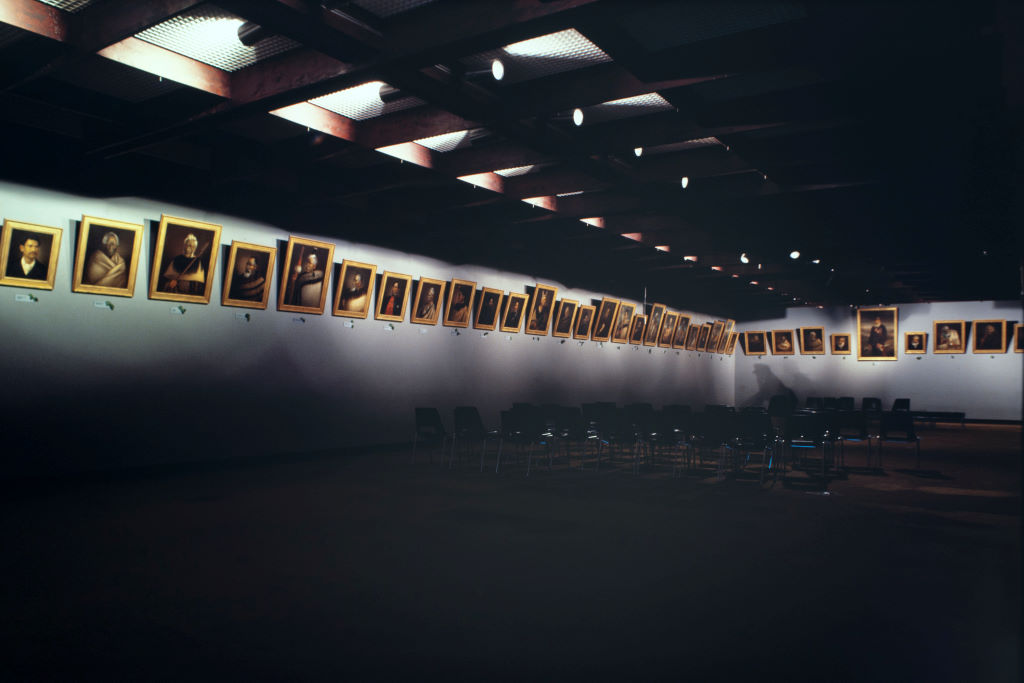
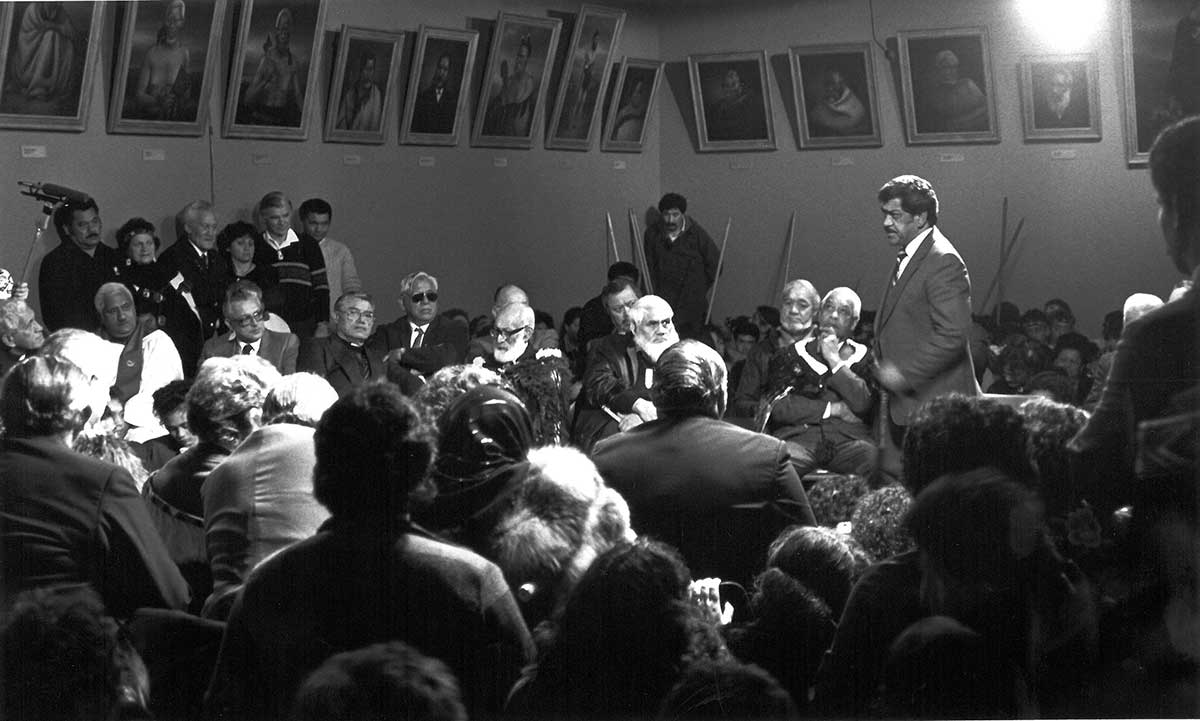
These combined activities not only reclaimed mana for Māori people, they also spurred growth and interest in New Zealand’s history, literature, music, performing arts, especially Māori art and artists. As part of the Māori Renaissance in late 20th-century Aotearoa, the museum sector gained profile through exhibition activities, the most successful being Te Maori: Maori Art from New Zealand Collections which returned to Aotearoa as Te Māori: Te Hokinga Mai The Return Home. During its display in the Auckland City Art Gallery, all of Lindauer’s Māori portraits were shown in the welcoming gallery to the exhibition. In this space, rituals of encounter and ceremonies were performed and exchanges took place between visiting iwi, hapū, whānau and descendants. Lindauer’s portraits were affirmed as cultural treasures for all of Aotearoa New Zealand’s people.
Indigenous knowledge: a way forward
Museums and galleries are important agents in the globalisation of art and culture. However, while it is one thing to satisfy an interest in and curiosity about the ways of life and material cultures of others through collecting, exhibiting and interpreting items of their material culture, it is another thing to recontextualise such objects for new audiences and to make them relevant in a constantly changing world. Perhaps the way to a deeper understanding of cultural meaning through art and objects is to recall their original functions. The museum field needs a new conception of Indigenous cultures and their material lives, and this is best achieved by developing relationships with Indigenous people and working with their knowledge passed down the generations.
Many of the cultures we encounter through art and objects in galleries and museums are not dead.11 They are alive, still expressing their concerns and working creatively. In museums, cultural objects are removed from their cultural contexts, and through this separation and new placement, they may cease to be activated by that culture. A way forward is to understand that collected cultures in museums represent moments in time. Yet they exist in a continuum because they are linked to – and belong to – living peoples still located and active in their places of origin.
Such knowledge and understanding is supported by contemporary copyright laws – that is, by assertions of legal and cultural ownership. An example is the 1990 Native American Graves Protection and Repatriation Act (NAGPRA), a United States federal law. The act requires federal agencies and institutions that receive federal funding to return Native American ‘cultural items’ to lineal descendants, to culturally affiliated tribal nations and Native Hawaiian organisations. Such cultural items include human remains, funerary and sacred objects, and objects of cultural patrimony.12
The traditional practitioners and descendant communities who take care of the knowledge linked to items such as those covered by NAGPRA hold the key to reactivating them. They are important in directing museums’ engagement and interpreting the treasures. If we follow Article 11 of the United Nations Declaration on the Rights of Indigenous Peoples, culture – inside and outside the museum sector – is seen as an expanded idea that encompasses all peoples. The experience of Auckland Art Gallery Toi o Tāmaki impressively proves the richness of close co-operation with descendants. Gottfried Lindauer’s paintings are out of European copyright, therefore the Gallery is by law entitled to reproduce, interpret and exhibit them under the terms it decides. However, the Gallery chooses to respectfully work with descendants, and not only as far as permissions are concerned: the Gallery also practises inclusivity regarding the artworks’ interpretation. An example is the 2013 Māori Television series Behind the Brush,13 made in collaboration with Awa Films.
Audiences in Aotearoa New Zealand, and people from descendant cultures in particular, confirm that the experience of art is relevant to their worldview, and they look for connectivity to the subject matter and to historical relevance of the paintings rather than to the artistic refinements. There is a demand from visitors for improved and authentic interpretation, and the expertise does not necessarily reside in the museum. Descendants have come to expect appropriate consultation and the opportunity to maintain, protect and develop the past, present and future manifestations of their cultures, which is also expressly recommended by the United Nations Declaration on the Rights of Indigenous Peoples. It is worth repeating that the world is now in a new era, and there is nothing to prohibit creative collaboration that brings new meanings to artworks.
Nau te rourou, nāku te rourou, ka ora manuhiri
Nau te rākau, nāku te rākau, ka mate te hoariri.14
By your food basket and mine, the guests will be satisfied with food;
by your weapon and mine, the enemy will be destroyed.
This phrase means in a contemporary interpretation that one should focus on what yields the best results and not be distracted by unimportant matters or people. Hirini Moko Mead and Neil Grove, Ngā Pepeha a ngā Tīpuna: The Sayings of the Ancestors, Victoria University Press, Wellington, 2001, p 400.
Māori contact with Europeans began in the 17th century, with Dutch explorer Abel Tasman, followed by English explorer James Cook in the 18th century.
Aotearoa is the original name for New Zealand, literally translating to ‘land of the long white cloud’.
Haerewa is the name given to a Māori board of artists, educators and scholars in the field of fine and heritage arts who have played a critical role in ad vising Auckland Art Gallery Toi o Tāmaki on Māori matters at local, national and international levels since 1994.
See Sidney M Mead, Maori Art on the World Scene, Ahua Design & Illustration Ltd/Matau Associates, Wellington, 1997. A number of Mead’s essays discuss historical and modern examples of proper stewardship and the consequences of improper stewardship.
For example, overprinting a portrait is not permitted, and where cropping is culturally appropriate, the full image must be reproduced elsewhere in the publication.
Article 11 of the United Nations Declaration on the Rights of Indigenous Peoples reads: ‘Indigenous peoples have the right to practice and revitalize their cultural traditions and customs. This includes the right to maintain, protect and develop the past, present and future manifestations of their cultures, such as archaeological and historical sites, artefacts, designs, ceremonies, technologies and visual and performing arts and literature.’ Available online at www.un.org/esa/socdev/unpfll/ documents/ DRIPS_en.pdf, accessed 30 June 2026.
The exhibition Te Maori: Maori Art from New Zealand Collections travelled to the Metropolitan Museum of Art in New York (September 1984), Saint Louis Art Museum (February–May 1985), the M H de Young Memorial Museum in San Francisco (July–September 1985), and the Field Museum in Chicago (March–June 1986). Te Māori: Te Hokinga Mai The Return Home, the New Zealand version of the exhibition, toured the country from 1986, starting at the National Museum, Wellington (August–October 1986), Otago Museum, Dunedin (November 1986–February 1987) and the Robert McDougall Art Gallery, Christchurch (March–May 1987) and finally to the Auckland Art Gallery (June–September 1987).
Gordon Brown and Hamish Keith, An Introduction to New Zealand Painting, 1839–1980, William Collins Publishers, Auckland 1982, p 70.
Rauru is the work of the celebrated Te Arawa carver Tene Waitere of Ngāti Tārawhai.
The Five Māori Painters exhibition (21 February–15 June 2014, Auckland Art Gallery Toi o Tāmaki) showcased Māori painting from pre-colonial rock art to contemporary practice.
For more information, see: Native American Graves Protection and Repatriation Act (NAGPRA), Association on American Indian Affairs, www.indian-affairs.org/nagpra.html, accessed 30 June 2026.
Behind the Brush was initiated by director Julian Arahanga in collaboration with Indigenous curator, Māori art, Ngahiraka Mason, on behalf of Auckland Art Gallery Toi o Tāmaki.
‘Co-operative energy succeeds where individual efforts are insufficient’ would be an adequate modern translation of this proverb. Its ancestral meaning is: ‘By your food basket and mine, the guests will be satisfied with food; by your weapon and mine, the enemy will be destroyed.’ Mead and Grove, Ngā Pepeha a ngā Tīpuna, p 319.