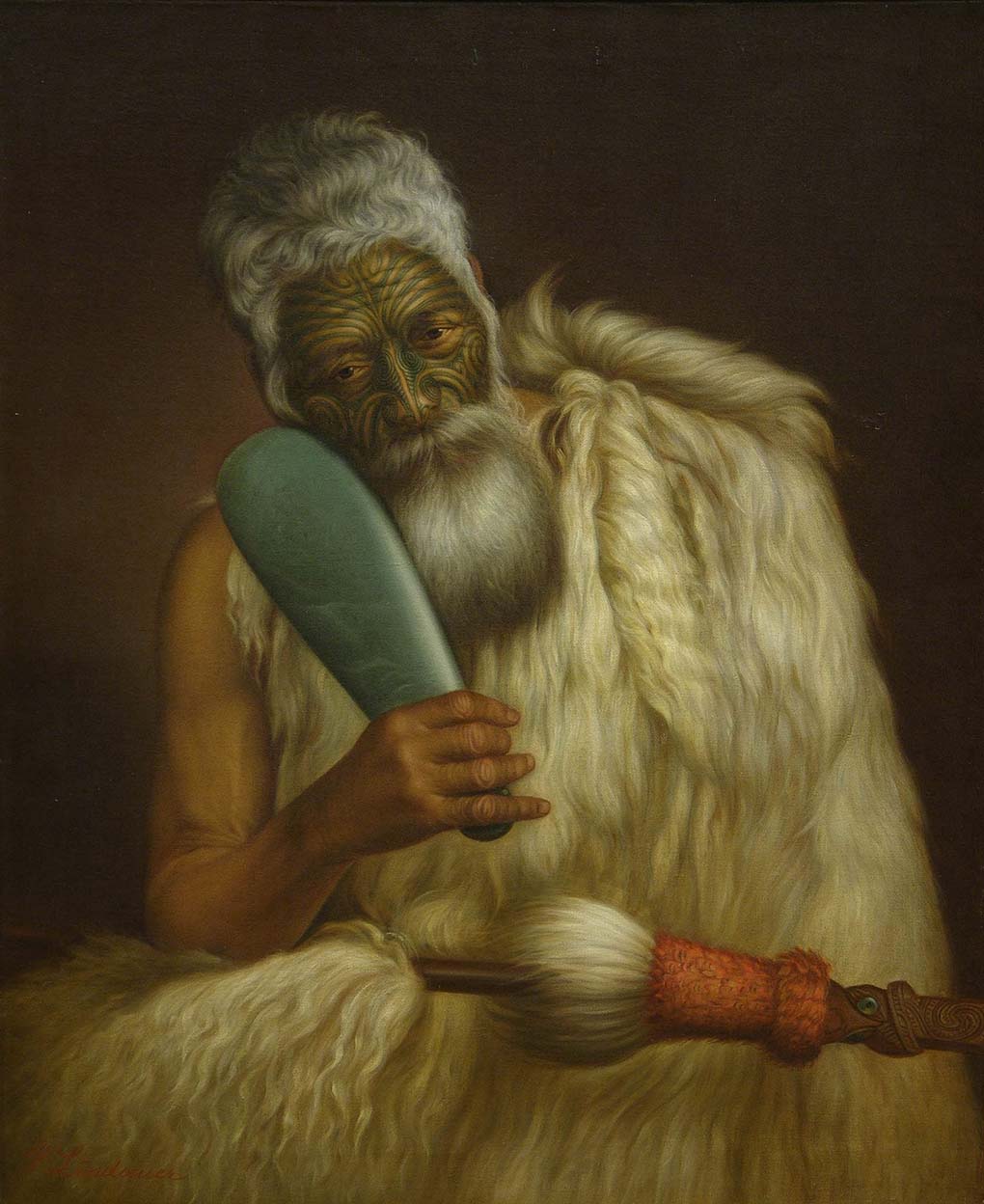
Wiremu Kīngi, also known as Paia-te-Rangi
? – 1868/70?Rongowhakaata
- Date
- 1901 or before
- Medium
- oil on canvas
- Measurements
- 839 x 688 mm
- Other titles
- Wiremu Kingi, [title, 2026]Wiremu Kingi, [1930 catalogue]Wiremu Kingi, [Deed of gift, 1915]Wi Kingi, [1901 catalogue]Oil Painting of the Maori Chief Wi Kingi, [copyright certificate, 1902]Chief Wi Kingi, P.B., [Lindauer's inscribed title]
- Inscriptions
- Front, LL: G. LindauerBack, LC: Chief Wi Kingi, P.B.
- Takiwā / region
- Te Tairāwhiti
- Credit line
- Auckland Art Gallery Toi o Tāmaki, gift of Mr H E Partridge, 1915
- Accession no.
- 1915/2/71
The identity of the rangatira in this painting is not fully resolved.
Wiremu Kīngi (William King) was a popular name among Māori in the early 19th century, referring to Britain’s King William IV, who reigned from 1830 to 1837. There were at least three notable people using this name in Te Ika-a-Māui the North Island during the 19th century.
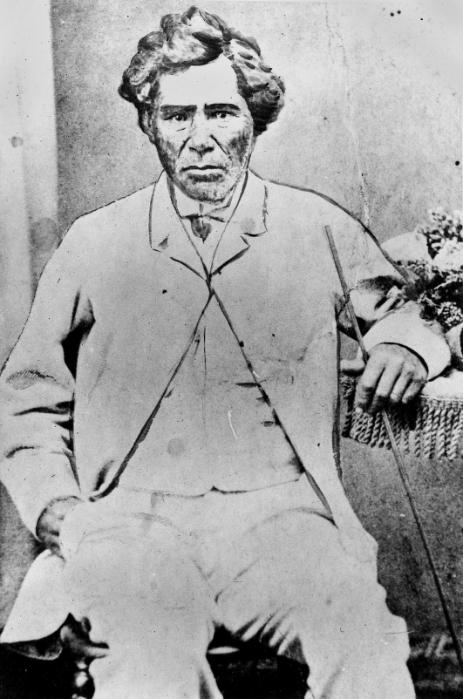
Two of these chiefs had connections to Taranaki: Wiremu Kīngi Te Rangitāke (?–1882) from Ngāti Kura at Manukoiri, Taranaki, and Wiremu Kīngi Moki Te Matakātea (?–1893) of Ngāti Haumiti from Te Namu.1 The Alexander Turnbull Library holds an early photograph identified as Te Rangitāke, dressed in a European three-piece suit, posed as a handsome ageing chief with a full head of wavy hair. This striking portrait was taken in a studio, possibly in Taranaki. Te Rangitāke is depicted seated, leaning on his left elbow and holding a thin riding cane in his left hand. A photograph of Te Maktakātea also exists, probably from the 1880s. He has white wispy hair and facial hair, wears a cloak with a tāniko border and holds a patu like the one in Lindauer’s painting. But neither of these men bear a resemblance to Lindauer’s ‘Wiremu Kīngi’.
An alternative tradition holds that the subject of the portrait is Wiremu Kīngi from the Te Aowera hapū of Ngāti Porou, as stated by historian James Cowan in his book Pictures of Old New Zealand, 1930. This Wiremu Kīngi lived at Tūranga Gisborne fighting with Te Kooti until caught by government troops in 1870 at Maraetahi. This identification is supported by Lindauer’s original inscription on the back of the painting, overlooked until recently, which points to a sitter from the East Coast as the their name is followed by the letters ‘P. B.’, short for Poverty Bay, the English name for Tūranganui-a-Kiwa.
Further on 3 June 1901, Mate Haere Koko visited the Lindauer Art Gallery in Tāmaki Makaurau Auckland and left the following comment in the Māori Visitors’ Book:
I have seen my ancestor Wi Kingi, chief of Turanganui.
Soon after, on 21 June, Paratene Tatae from Tūranganui visited the gallery, commenting it was good to see his father, ‘Wiremu Kingi Te Apaapa’. A year later, in April 1902, another descendant, Moana Paratene, viewed the portrait.
However, the Ngāti Porou hapū have confirmed in recent years that Lindauer’s painting is not Wiremu Kīngi from Te Aowera. The explanation for this may be that the man portrayed was more closely affiliated with Rongowhakaata, rather than Ngāti Porou.
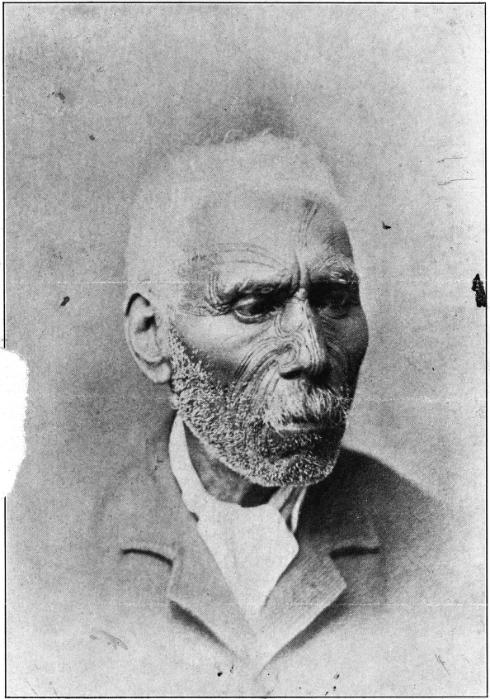
No photographic evidence had been uncovered to assist in identifying the subject, but a recent Rongowhakaata Iwi Trust Facebook post included a photograph of a white bearded kaumatua wearing an intricate mataora who closely resembles the portrait. The photograph is identified as Wiremu Kingī, also known as Paia-te-Rangi.2 An unattributed copy negative of the source photograph for this painting has also turned up in the Gallery’s Research Library’s artist files showing an elderly chief with long white beard, plentiful hair with the image retouched to indicate his mataora.3 A close comparison of these two photographs with the portrait – along with the rediscovered ‘P.B.’ inscription and descendant comments in the Lindauer Art Gallery Visitor’s Book – strongly supports the view that this portrait was at the very least intended by Lindauer, and Henry Partridge as commissioner, to be Wiremu Kingī Te Apaapa, also known as Paia-te-Rangi.
The Gallery is actively continuing to research this identification. If you are descended from Wiremu Kingī Te Apaapa or have any further information we welcome you to contact us at curator@aucklandartgallery.com.
Ann Parsonson. 'Te Rangitāke, Wiremu Kīngi', Dictionary of New Zealand Biography, first published in 1990. Te Ara - the Encyclopedia of New Zealand, https://teara.govt.nz/en/biographies/1t70/te-rangitake-wiremu-kingi (accessed 13 August 2026).
Ian Church. 'Te Matakātea, Wiremu Kīngi Moki', Dictionary of New Zealand Biography, first published in 1990. Te Ara - the Encyclopedia of New Zealand, https://teara.govt.nz/en/biographies/1t50/te-matakatea-wiremu-kingi-moki (accessed 13 August 2026).
Rongowhakaata Iwi Trust, ‘Introducing Wiremu Kingi’, 9 May 2019, https://www.facebook.com/rongowhakaata.iwi/posts/te-tiriti-part-5introducing-wiremu-kingi-paratene-t%C5%ABrangiwiremu-kingi-also-known/2145496228889134/, accessed 14 August 2026.
Unknown photographer, copy medium format transparency negative, digitally inverted, E H McCormick Research Library, Auckland Art Gallery Toi o Tāmaki, RC2015_5_7_1828_1.