Hāmiora Tū
1825 – 1880Ngāi Te Rangi
- Date
- c 1910
- Medium
- oil on canvas
- Measurements
- 982 x 524 mm
- Other titles
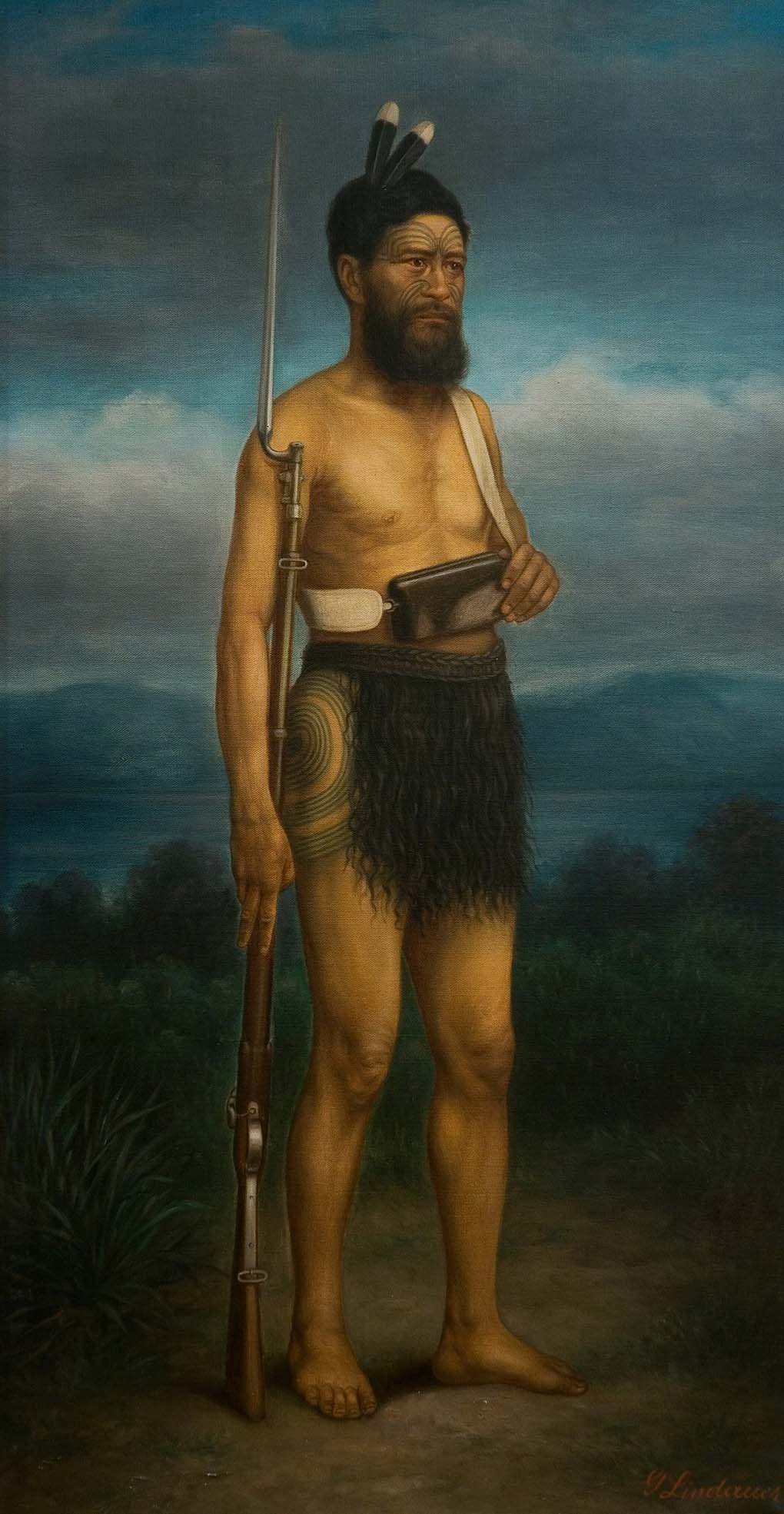
- Hamiora Tu, [title, 2026]Hamiora Tu, [1930 catalogue]Hamiora Tu, [Deed of gift, 1915]Painting Portrait of Chief Hamiora Tu, [copyright certificate, 1913]Chief Hamiora Tu, [Lindauer's inscribed title]
- Inscriptions
- Front, LR: G. LindauerBack, LC: Chief Hamiora Tu
- Takiwā / region
- Waiariki
- Credit line
- Auckland Art Gallery Toi o Tāmaki, gift of Mr H E Partridge, 1915
- Accession no.
- 1915/2/4
Hāmiora Tū was a Ngāi Te Rangi fighting chief who lived at Te Puna, Tauranga. He served as a guide to Crown forces during the battle of Pukehinahina or Gate Pā in 1864. Fighting under General Duncan Alexander Cameron with the Crown’s 68th Durham Regiment, Hāmiora played a pivotal role supporting the colonial forces. In recognition of his services, he was given substantial land holdings that he sold to Pākehā, and was awarded the Victoria Medal for gallant conduct.
Hāmiora quickly became part of the Pākehā gentry, enjoying a comfortable life and status with government officials, land agents, Church of England parishioners and businessmen. He was elected a member of the Tauranga Jockey Club to celebrate the anniversary of the colony on 29 January 1876,1 and was also a member of the organising committee for the Tauranga Annual Regatta.2 Despite this warm welcome into Pākehā circles, later in 1876 Hāmiora was challenged on his eligibility to vote at church meetings because he lived outside of the local Trinity Church parish and was Māori.3 In the end, he won the right to vote.
Hāmiora spent much of his life at Te Puna and his tangihanga in 1880 was held at Matapihi in Tauranga.
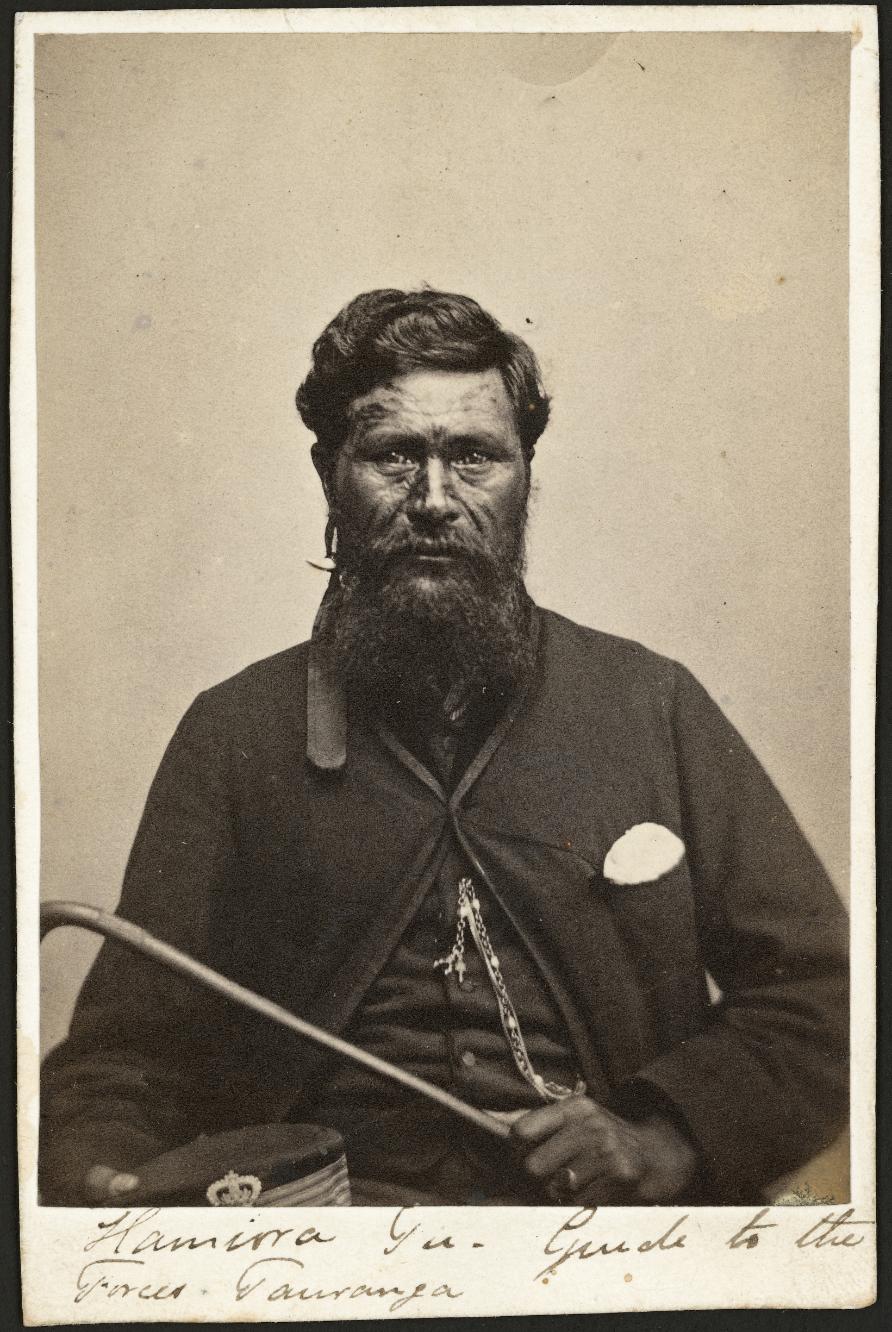
In his posthumous portrayal, Lindauer casts Hāmiora as a soldier, holding a musket complete with bayonet and leather ammunition pouch slung over his shoulder. The pose draws directly on a carte-de-visite portrait from the 1860s, but Lindauer has replaced the checked cloth around Hāmiora’s waist with a maro kopua (apron), which still allows his rape to be seen. The many feathers that adorn his hair in the photograph are reduced to two white-tipped huia feathers. Lindauer sets Hāmiora in a generalised landscape with brooding skies, while reminiscent of a photographer’s backdrop, this background was the painter’s invention.
- 'Tauranga Race Meeting', Bay Of Plenty Times, vol V, issue 438, 22 November 1876, p 3, Papers Past, accessed 28 January 2010.
- 'Page 2 Advertisements Column 2', Bay Of Plenty Times, vol IV, issue 367, 15 March 1876, p 2, Papers Past, accessed 28 January 2010.
- 'Church of England Meeting', Bay Of Plenty Times, vol IV, Issue 402, 19 July 1876, p 3, Papers Past, accessed 28 January 2010.