![Hōne Heke Ngāpua [MHR]](https://cdn.aucklandunlimited.com/lindauer/assets/media/hone-heke-image.jpg)
Hōne Heke Ngāpua [MHR]
1869 – 1909Ngāpuhi
- Date
- 1901 or before
- Medium
- oil on canvas
- Measurements
- 508 x 434 mm
- Other titles
- Hone Heke MHR, [title, 2026]Hone Heke, M.P., [1930 catalogue]Hone Heke, M.H.R, [Deed of gift, 1915]Hone Heke, M.H.R, [1901 catalogue]Oil Painting of Hone Heke M. H. R., [copyright certificate, 1902]Hoane Heke, M.H.R. / Chief of the Ngapuhi, [Lindauer's inscribed title]
- Inscriptions
- Front, LR: G. LindauerBack, LC: Hoane Heke, M.H.R. / Chief of the Ngapuhi
- Takiwā / region
- Te Tai Tokerau
- Credit line
- Auckland Art Gallery Toi o Tāmaki, gift of Mr H E Partridge, 1915
- Accession no.
- 1915/2/8
A political activist for Māori, Hōne Heke was a powerful and renowned orator, and a person held in high regard by both Māori and Pākehā during his short life.
Hōne Heke Ngāpua was born in 1869 at Kaikohe and traced his whakapapa to the Mātaatua waka. Descended from Rāhiri, who names the Ngāti Rāhiri branch of Ngāpuhi, his parents were Hōne Ngāpua and Niurangi Pūriri. He was named after his great uncle Hōne Heke Pōkai, famed Ngāpuhi chief of Te Tai Tokerau Northland.1
Heke’s early promise shown at local native schools saw him enrolled in an Anglican church school in Tāmaki Makaurau Auckland. After some time at home working in agriculture, Heke returned to Auckland where he worked as a law clerk.
Heke entered Parliament at the early age of 24, in 1893, as the Member of the House of Representatives (MHR) for Northern Māori. The following year he introduced the Native Rights Bill, which sought a separate parliament and constitution for Māori and protection of Māori rights under Te Tiriti o Waitangi.2 Although this bill did not become law, two Acts of 1900 pertaining to Māori land contained some of the principles of the earlier Bill. It has been said that ‘Maori representation in the House was invigorated and emboldened by [Heke’s] presence, and he gave new cause for his Maori colleagues to aim for’.3
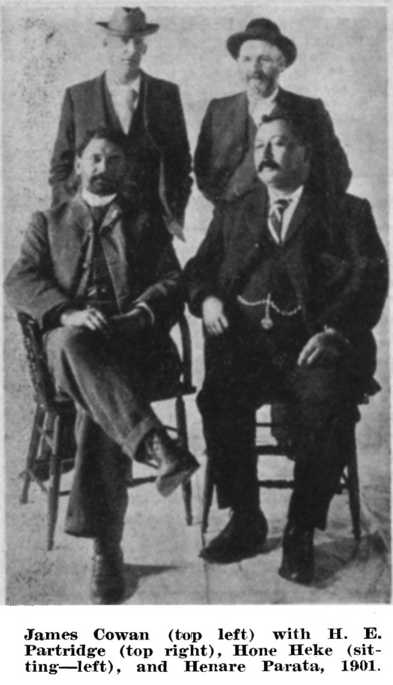
Comfortable in both Māori and Pākehā worlds, Heke once responded to Lindauer’s patron, Henry Partridge, on the meaning of the phrase ‘kia ora’ with a full explanation.4 Heke also signed the Māori Visitors’ Book at the Lindauer Art Gallery in Auckland, which he visited on 6 June 1901. He noted that his place of residence was the Bay of Islands but left no other comment.
Lindauer’s portrayal shows a youthful Heke sporting a moustache and dressed in a charcoal three-piece suit. His elegant white tie is in the same generous knot worn by many of his contemporaries. The choice of dress reflects not only the prevalence of European clothes among Māori but also Heke’s prominence in the Pākehā-dominated House of Representatives he served in.
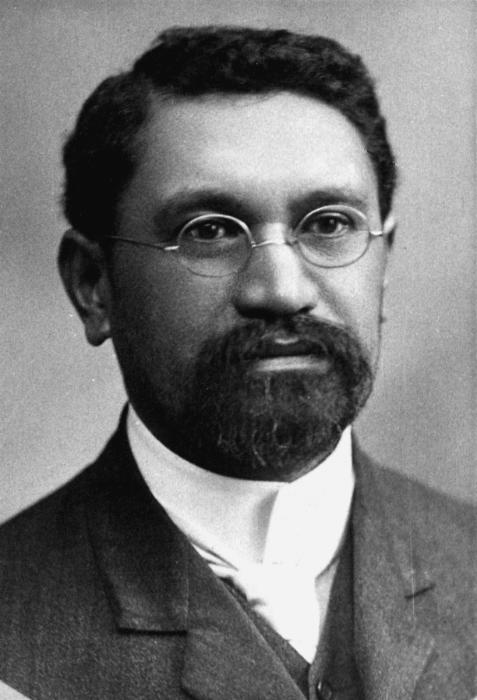
The painting is similar to an official government portrait of Heke taken during his political career. This was cut short by his untimely death from tuberculosis at the age of 39.
Freda Rankin Kawharu, ‘Heke Pōkai, Hōne Wiremu’, Dictionary of New Zealand Biography, first published in 1990, Te Ara – the Encyclopedia of New Zealand, https://teara.govt.nz/en/biographies/1h16/heke-pokai-hone-wiremu.
John Wilson, ‘Nation and government – The origins of nationhood’, Te Ara – the Encyclopedia of New Zealand, http://www.TeAra.govt.nz/en/nation-and-government/page-1, accessed 29 June 2023.
Paul Moon, Ngapua: The Political Life of Hone Heke Ngapua, MHR, David Ling Pub., Auckland, 2006, p 350.
Hōne Heke [Ngāpua] to H. E. Partridge, letter, 1 Jul 1901, Partridge Correspondence Archive, E H McCormick Research Library Collection, Auckland Art Gallery Toi o Tamaki, RC2009/2/73.