Hōri Ngākapa Te Whanaunga
? – 1904Ngāti Whanaunga, Ngāti Maru, Ngāti Pāoa
- Date
- 1878
- Medium
- oil on canvas
- Measurements
- 675 x 547 mm
- Other titles
- Hori Ngakapa Te Whanaunga, [title, 2026]Hori Ngakapa, [1930 catalogue]Hori Ngakapa, [Deed of gift, 1915]Hori Ngakapa, [1901 catalogue]Oil Painting. Portrait of Hori Ngakapa (Chief of the Ngati-Whanaunga tribe) Hauraki, [copyright certificate, 1898]Hori Ngakapa Whanaunga Paramount Chief of the Ngatiwhanaunga Tribe – one of the four dominant tribes of the Hauraki district New Zealand, [Lindauer's inscribed title]
- Inscriptions
- Front, LL: G. LindauerBack, LC: Hori Ngakapa Whanaunga / Paramount Chief of the Ngatiwhanaunga / Tribe – one of the four dominant tribes of the / Hauraki district New Zealand LR: G. Lindauer pinxit 1878
- Takiwā / region
- Waikato-Maniapoto
- Credit line
- Auckland Art Gallery Toi o Tāmaki, gift of Mr H E Partridge, 1915
- Accession no.
- 1915/2/13
Hōri Ngākapa Te Whanaunga was a tribal leader of the Ngāti Whanaunga iwi, with links also to Ngāti Maru and Ngāti Pāoa, who together controlled the Hauraki Plains and the Coromandel Peninsula, where Ngākapa was born.
In 1851, he was one of a number of rangatira who led a waka taua from the southern Hauraki Gulf to Tāmaki Makaurau Auckland. This was provoked by the assault and arrest of a Ngāti Pāoa rangatira by a policeman. Landing at Waipapa (present-day Mechanics Bay), the warriors were confronted by government forces and menaced from the rear by the guns of the Royal Navy vessel HMS Fly. Outnumbered and threatened with military action by Governor George Grey, the Hauraki Māori returned home.
During the Waikato War of 1863–64, between the Crown and the Kīngitanga, Ngākapa led his people to the defence of the Tainui iwi of Waikato. Ngākapa’s wife, Hera Puna, accompanied her husband and, during the siege at Ōrākau, threw herself between him and a soldier’s loaded gun, enabling Ngākapa to take shelter and reload his own weapon.
In 1864, he attended a gathering at Kauaeranga where those in attendance stated whether they were for peace or further war. Joining those who favoured peace, Ngākapa handed to government commissioner James Mackay a kahu kurī – a taonga that had been connected with Pōtatau Te Wherowhero, the first head of the Kīngitanga.
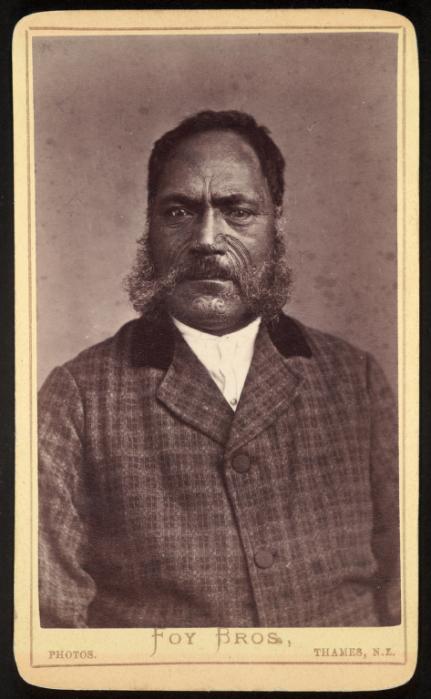
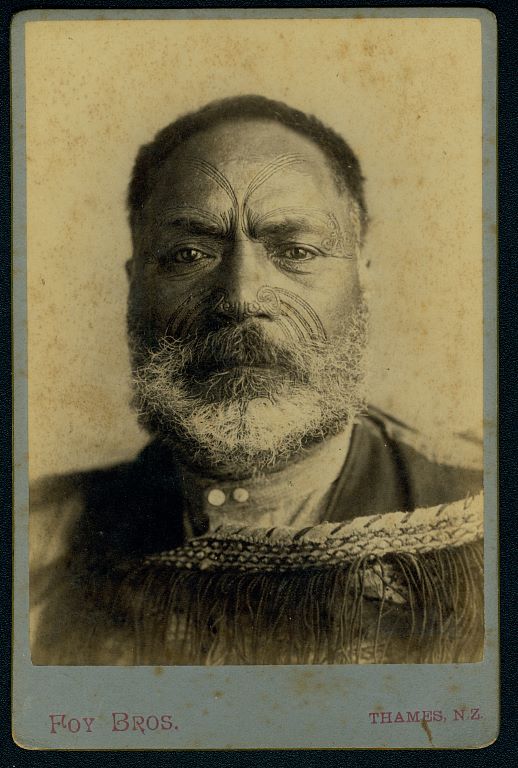
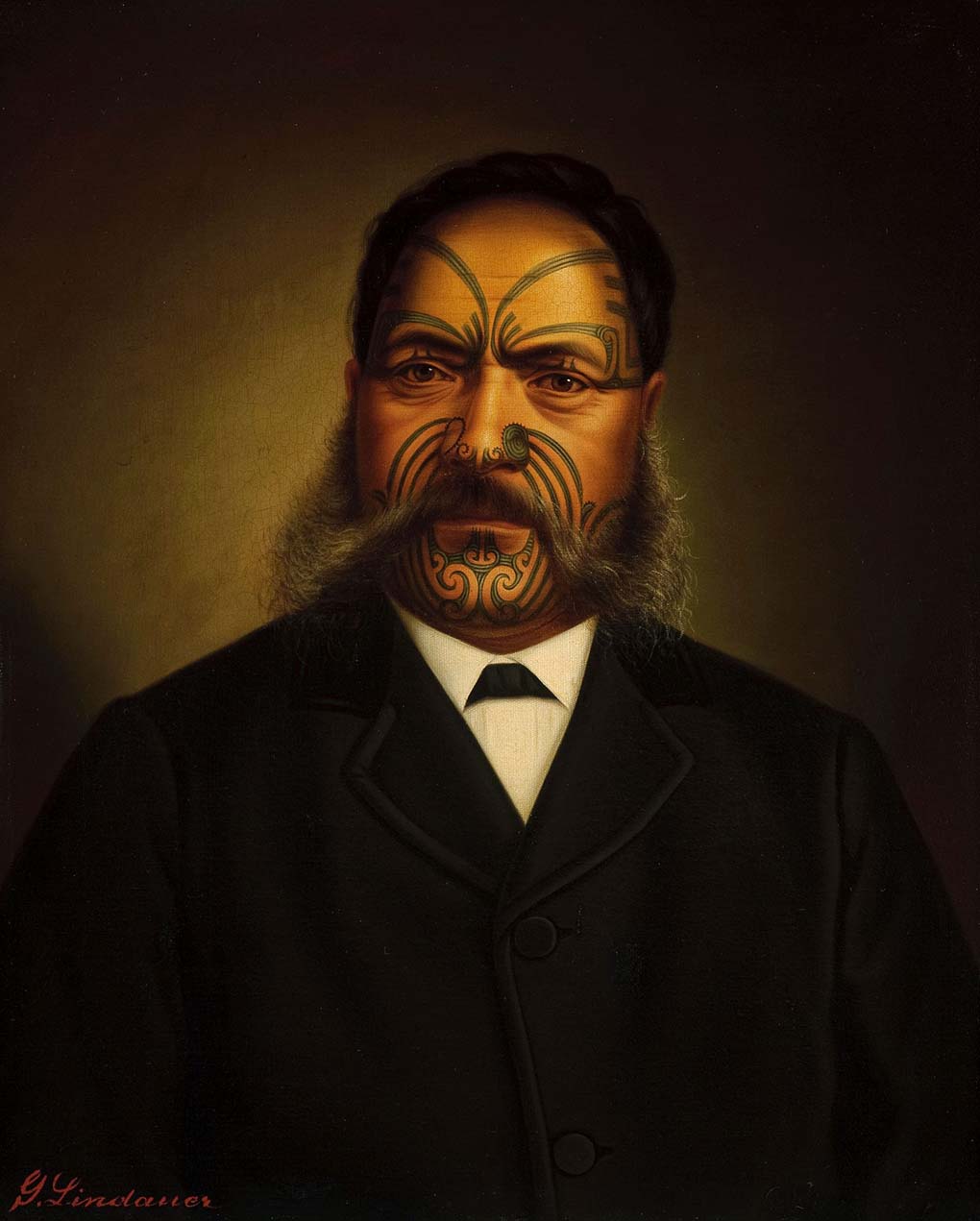
Lindauer’s painting of Ngākapa was based on a photographic portrait by the Foy Brothers, a studio based in Thames. The photograph captures some of the striking detail of Ngākapa’s mataora though Lindauer has placed greater emphasis on this in the painting. In the original photograph, Ngākapa is seen wearing a suit made of a patterned woollen fabric. While the velvet lapels of that suit appear in Lindauer’s painting, the pattern of the fabric has been replaced by a simple dark material. Lindauer has added a small, black bow-tie, largely obscured by the wings of Ngākapa’s shirt collar.
Lindauer displayed his finished portrait of Ngākapa in the window of the Foy’s studio. Reputedly on seeing it, Ngākapa purchased it for £25 and then hired a room in a local hotel to show it, charging the Māori and Pākehā visitors who clamoured to see it sixpence each. So pleased with the reception of his portrait, Ngākapa is said to have then shouted the entire audience drinks.1
John Grainger, The Amazing Thames: The Story of the Town and the Famous Goldfield from Which it Grew (Wellington: A H & A W Reed, 1951; republished Christchurch: Cadson Publications, 2005), p 113-4.