Hūria Ngārongoā Kātene Mātenga
1840/42 – 1909Ngāti Tama ki te Tauihu, Ngāti Toa, Te Atiawa
- Date
- 1874 (backdated), possibly 1896
- Medium
- oil on canvas
- Measurements
- 675 x 560 mm
- Other titles
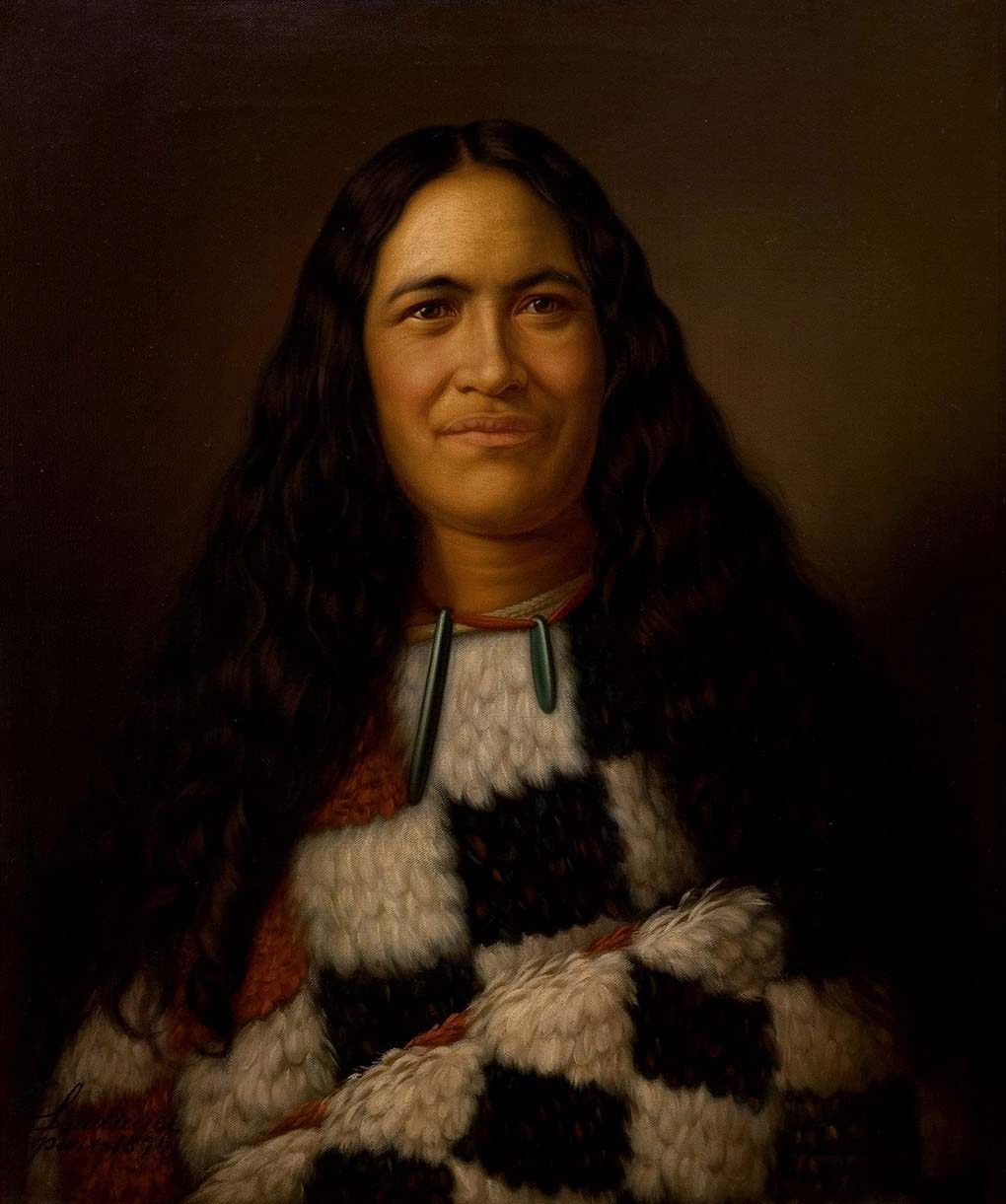
- Huria Matenga Ngarongoa (Julia Martin), [title, 2026]Julia Martin, [1930 catalogue]Huria Matenga (Julia Martin), [Deed of gift, 1915]Julia Martin, [1901 catalogue]Oil Painting. Portrait of Huria Matene. / (The Grace Darling or Heroine of Whakapuaka), [copyright certificate, 1898]Julia Martin in Whakapuaka pah (near Nelson) , [Lindauer's inscribed title]
- Inscriptions
- Front, LL: G. Lindauer pinx 1874Back, C: [US Customs sticker on canvas]Back, C: Julia Martin / in Whakapuaka pah / (near Nelson)Back, LR: G. Lindauer pinx 1874 [canvas coloured paint under 74]
- Takiwā / region
- Te Tai HauāuruTe Waipounamu
- Credit line
- Auckland Art Gallery Toi o Tāmaki, gift of Mr H E Partridge, 1915
- Accession no.
- 1915/2/15
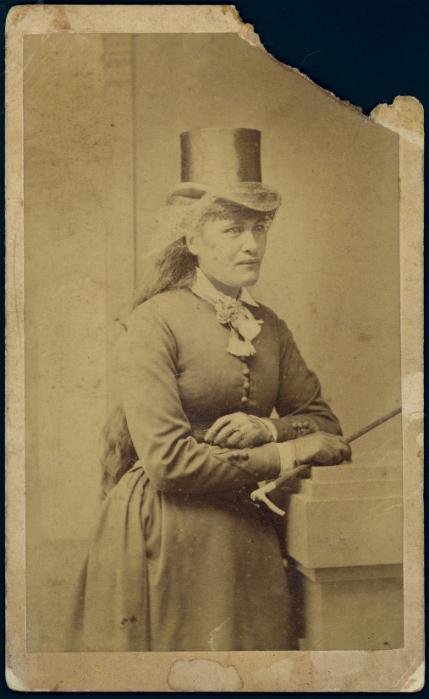
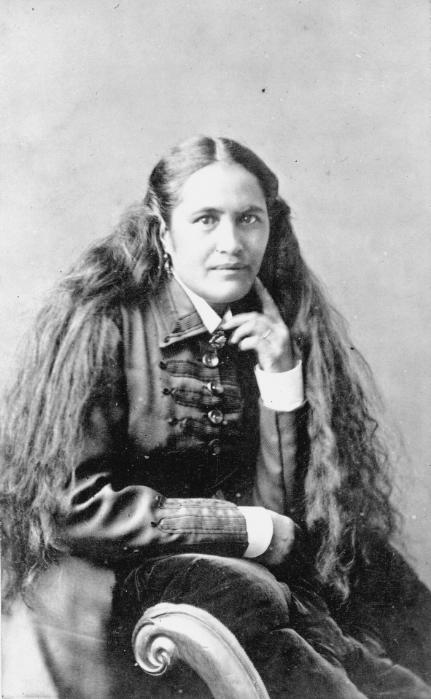
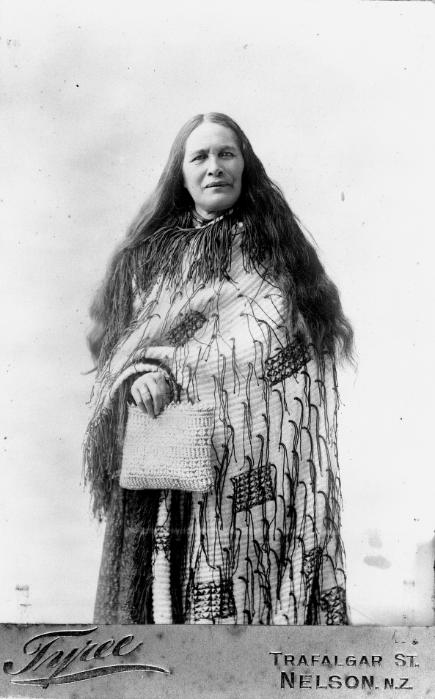
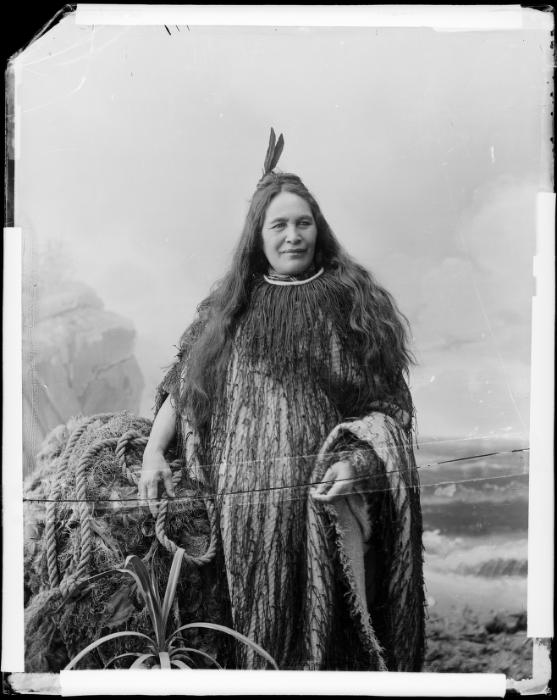
Hūria Mātenga (née Kātene) was born at Whakapuaka on the Nelson coast of the upper South Island. She was a woman of great mana and became well known throughout New Zealand for an act of bravery in her 20s.
Tracing her whakapapa back to the Tokomaru waka, Mātenga was from the northern Taranaki iwi of Ngāti Tama, Ngāti Toa and Te Atiawa. She was the daughter of the Ngāti Toa chief Wiremu Kātene Te Manu and Wikitōria Te Kehe of Te Atiawa. Her paternal grandfather was the Ngāti Tama leader Te Pūoho-o-te-rangi.
As a woman of high rank, Mātenga played an influential role in her community and, together with her family, owned large holdings of land in Nelson, Taranaki and Porirua. In 1858, she entered an arranged marriage with Hēmi Mātenga, a rangatira who owned much whenua in Waikanae, north of Wellington. They had one whāngai daughter named Mamae.
Mātenga gained national attention in 1863 when she and her husband, as part of a small group, were instrumental in the safe return to land of the crew of the foundering sailing ship Delaware. For her bravery, she received a gold watch and money from the local council, and became known as ‘New Zealand’s Grace Darling’.1
In this painting, dated just over a decade after her bravery at Whakapuaka (now known as Delaware Bay), Mātenga is depicted as a strong and formidable woman. She wears a richly ornamented kahu huruhuru adorned with orange feathers of the kākā, white feathers from the breast of the kererū and iridescent dark green feathers of the tūī. Such a garment would have been a symbol of great distinction, signalling the mana that Mātenga held among her people. Around her neck is a thick red cord featuring two valuable kuru pounamu.
Lindauer painted three portraits of Mātenga. He inscribed the reverse of the Partridge Collection work with ‘1874 Julia Martin in Whakapueka [Whakapuaka] Pa near Nelson’, and signed it in black, rather than the red he more commonly used. However, the painting appears to have been backdated by the artist, as Lindauer only arrived in New Zealand in August 1874, and he is first recorded in Nelson in February 1875. He did exhibit a portrait of Hūria Mātenga in Auckland in May 1876, but examination with ultraviolet light suggests the Partridge Collection portrait was possibly dated 1896 originally.2 This painting was one of 10 sent to the Louisiana Purchase Exposition in 1904, for which Partridge received a gold medal.3
James Cowan, ‘Maori Heroines’, Star, 12 December 1902, p 1.. ‘Grace Darling’ alludes to another heroine of the Victorian period so named, who was the daughter of a lighthouse keeper. With her father, Grace saved nine people in treacherous conditions from a shipwreck off the coast of Northumberland (northeast England) in 1838.
Analysis by conservator Ingrid Ford in discussion with Jane Davidson-Ladd, ‘Commissioning Gottfried Lindauer: Collector Henry Partridge as Collaborator’, unpublished paper, ‘A difficult and intricate history’ workshop, 25 June 2026, University of Auckland.
Gold Medal certificate awarded to H E Partridge, 1904, Auckland Libraries Heritage Collections, 5-1194A.