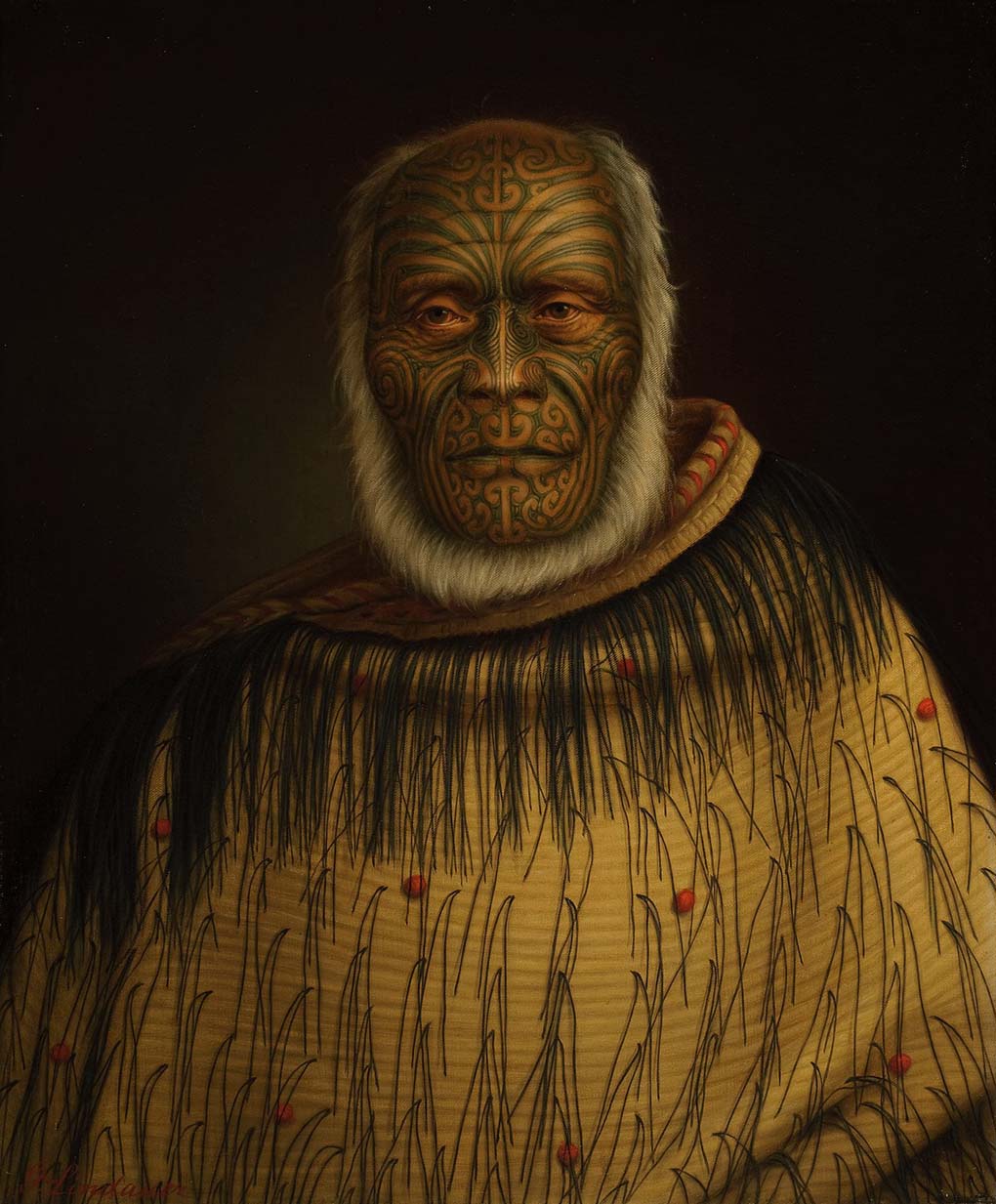
Īhaka Whaanga
? – 1875Ngāti Rakaipaaka, Ngāti Kahungunu
- Date
- 1901 or before
- Medium
- oil on canvas
- Measurements
- 685 x 572 mm
- Other titles
- Ihaka Whaanga, [title, 2026]Ihaka Whaanga, [1930 catalogue]Ihaka Whanga, [Deed of gift, 1915]Ihaka Whanga, [1901 catalogue]Oil Painting of the Maori Chief Ihaka Whanga, [copyright certificate, 1902]haka Whanga, Chief of the "Ngatikahungunu" H.B., [Lindauer's inscribed title]
- Inscriptions
- Front, LL: G. LindauerBack, LC: Ihaka Whanga, Chief of the / "Ngatikahungunu" / H.B.
- Takiwā / region
- Takitimu
- Credit line
- Auckland Art Gallery Toi o Tāmaki, gift of Mr H E Partridge, 1915
- Accession no.
- 1915/2/14
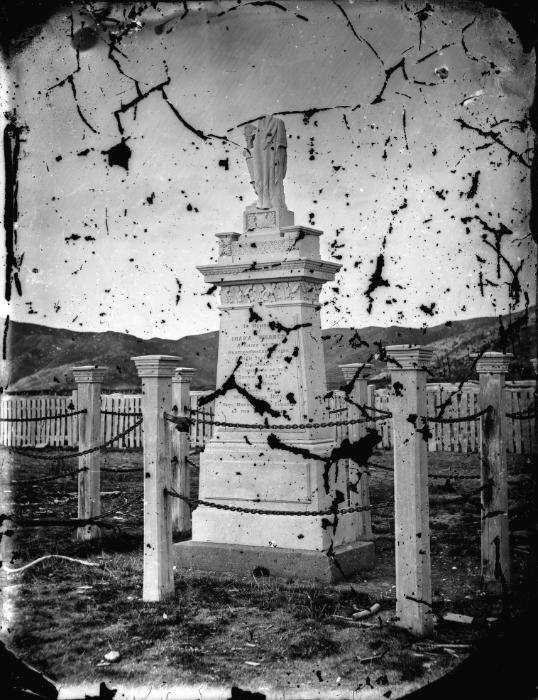
It is not known when Īhaka Whaanga was born, but he died on 14 December 1875 at Māhia and is buried at the southern tip of the Māhia Peninsula, marked by a memorial stone.
Whaanga was the youngest child of Te Rātāu and Kainga and the only survivor of a raid that claimed the lives of his parents and five brothers. He was married three times to Ngāti Kahungunu women from influential families.
Īhaka is a transliteration of Isaac. The name was presumably taken after Whaanga, at an unknown date, converted to the Mormon faith, as the Whaanga name is synonymous with the rise of Mormonism in Hawke’s Bay. By 1898, the church claimed to have 4000 members, most of whom were Māori.1
Whaanga had an open attitude to trading and the settlement of Pākehā amongst Ngāti Kahungunu, and often offered his support to the Crown. By 1837, Whaanga had gained control of a whaling station in the Māhia area, possibly in part funded by the fruits of early trading with Pākehā in the 1820s. It is recorded that by 1851 he had at least 420 whalers, both Māori and Pākehā, under his supervision.
In 1863, Whaanga took an appointment as an assessor under the Native Circuit Courts Act 1858 for a salary of £30 per annum, expected to enforce the law and carry out the duties of a local magistrate. Whaanga agreed to large land purchases by the government, perhaps to demonstrate support for the Crown, but this was not without protest from East Coast Māori leaders, such as Wī Pere and others of Rongowhakaata, who challenged Whaanga’s right to sell.2
Three years before he died, Whaanga was presented with a sword of honour by the Crown as a reward for Ngāti Kahungunu campaigns against the Hauhau forces and Te Kooti. In 1874, he was decorated with the New Zealand War Medal for his service to the Crown.3
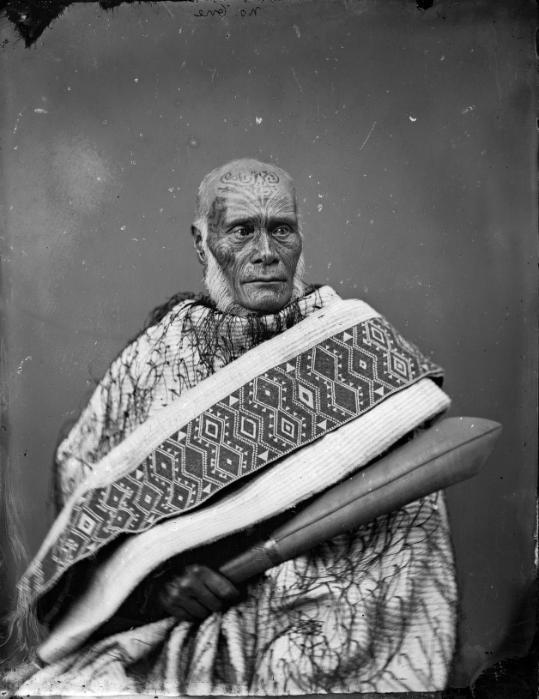
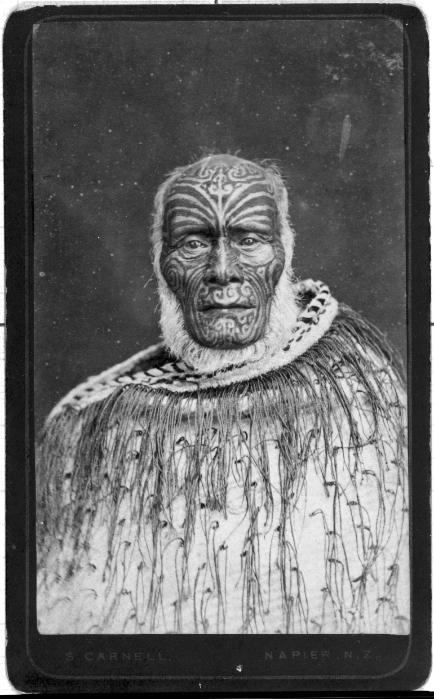
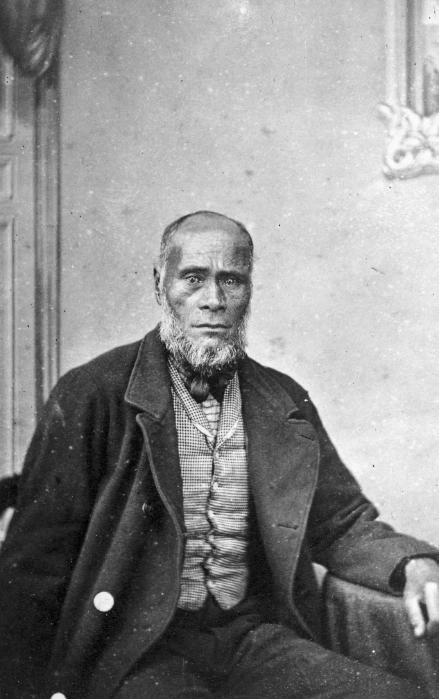
For this painting, Lindauer adapted a photographic portrait of Whaanga by Samuel Carnell of Napier from around 1870. While largely faithful to the source material – recording Whaanga’s beard without a moustache, a popular style of the colonial period known as a ‘Shenandoah’, and his mataora distinct in the warm light – Lindauer also made small changes such as adding the red ngore, absent on the korowai hukahuka in Carnell’s photograph.
‘The spread of Mormonism in New Zealand’, Bay of Plenty Times, 1 April 1898, p 2.
Angela Ballara, ‘Whaanga, Īhaka’, Dictionary of New Zealand Biography, first published in 1990, Te Ara – the Encyclopedia of New Zealand, https://teara.govt.nz/en/biographies/1w15/whaanga-ihaka, accessed 30 June 2023.
‘Local and General’, Star, 29 September 1874, p 2.