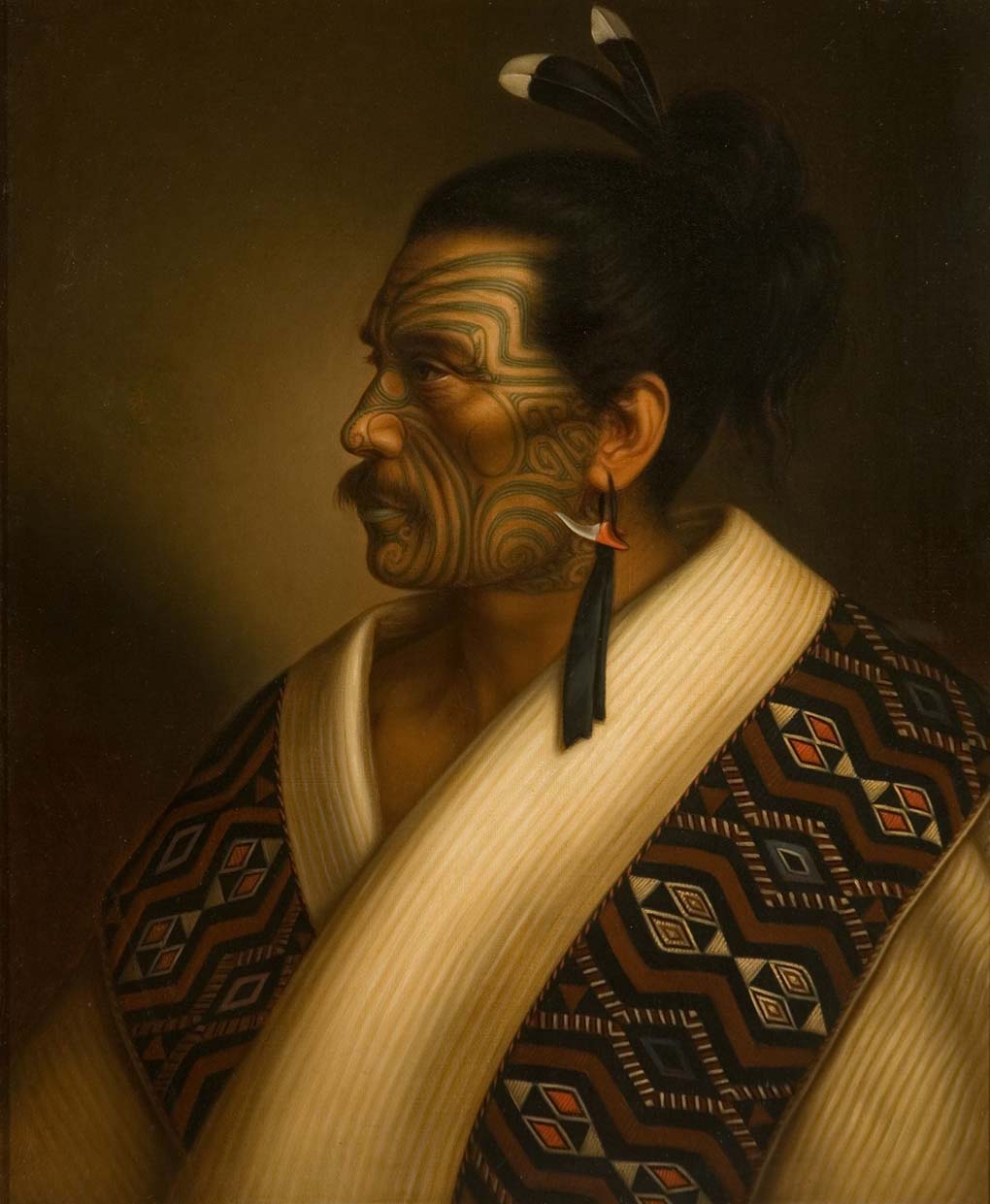
Kamariera Te Hautākiri Wharepapa
1823 – 1920Ngāpuhi
- Date
- 1895
- Medium
- oil on canvas
- Measurements
- 685 x 570 mm
- Other titles
- Kamariera Te Hau Takiri Wharepapa, [title, 2026]Te Hau-Takiri Wharepapa, [1930 catalogue]Te-Hau-takiri Wharepapa, [Deed of gift, 1915]Te Hau-takiri Wharepapa, [1901 catalogue]Oil Painting. Portrait of the Chief Wharepapa, [copyright certificate, 1898]Chief Wharepapa , [Lindauer's inscribed title]
- Inscriptions
- Front,Back, LR: Chief Wharepapa / G. Lindauer / 1895
- Takiwā / region
- Te Tai Tokerau
- Credit line
- Auckland Art Gallery Toi o Tāmaki, gift of Mr H E Partridge, 1915
- Accession no.
- 1915/2/43
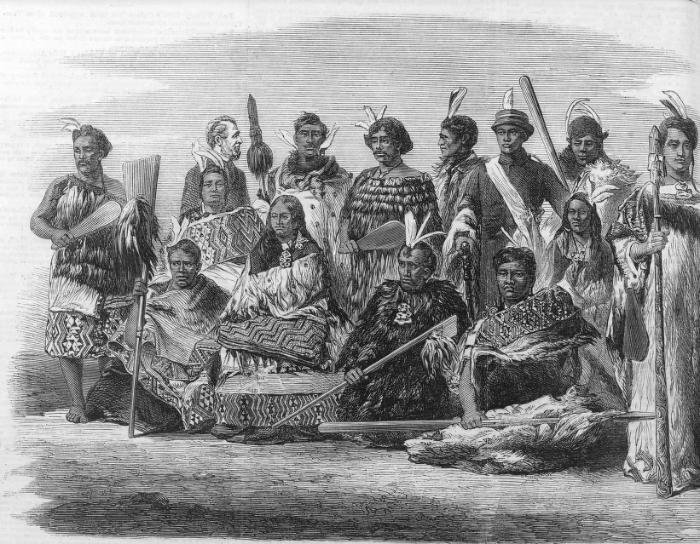
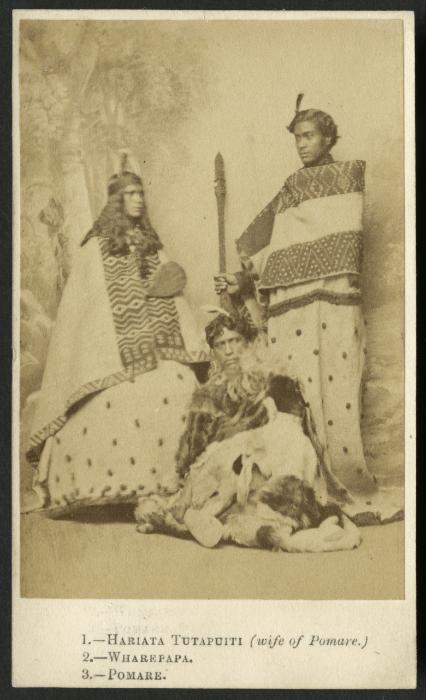
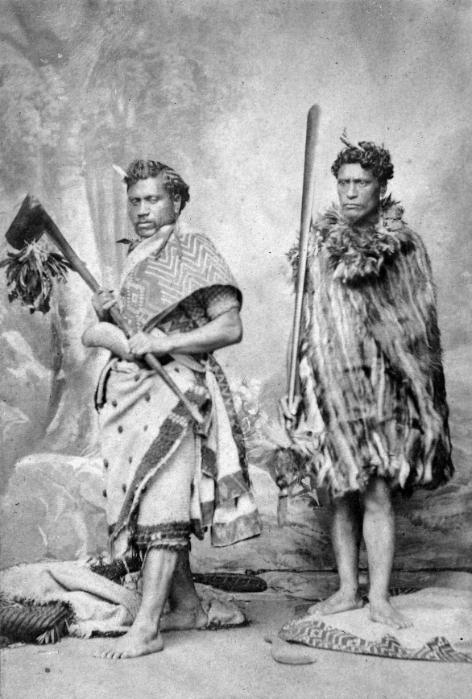
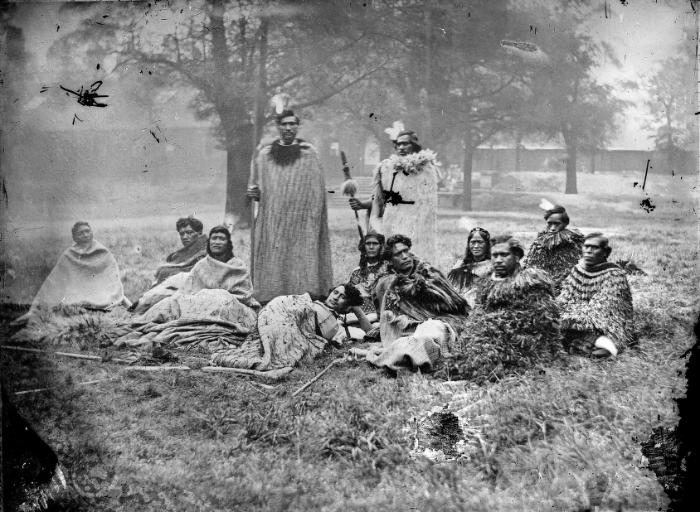
Kamariera Te Hautākiri Wharepapa was born at Mangakāhia, Te Tai Tokerau Northland. In 1863, he was one of 14 Māori who travelled to England aboard the ship Ida Ziegler under the sponsorship of Wesleyan missionary William Jenkins. Jenkins expected the party to wear their fine garments and ornaments at all times, and to carry their weapons and perform haka at the public lectures he gave. They were presented to the Prince and Princess of Wales, attended the opera at Her Majesty’s Theatre and met Queen Victoria at Osborne House, where they were treated as distinguished guests.
While in England, Wharepapa met Elizabeth Reid, an English housemaid. The couple was married in March 1864 at the parish church of St Anne in Limehouse, London, by Rev E Day.1 A report on the marriage was published in the English Mail with the headline ‘Amalgamation of the Races’.
The first of the couple’s five daughters was born on the return journey to New Zealand and the family settled in Mangakāhia in 1864, where Reid helped her husband lobby for a school, which was eventually built. The marriage eventually broke down, as Reid reportedly tired of life on a Māori kāinga. Wharepapa died at Mangakāhia in 1920.
Lindauer depicts a regal Wharepapa, with prominent cheekbones and a chiselled jaw. He wears a striking kaitaka aronui. His hair is drawn into a tikitiki that features two huia feathers, while from his ear hangs a mako. The full mataora Wharepapa wears signals his high rank.
Lindauer was not the only artist to capture Wharepapa – in later life he was also a favourite of Charles Frederick Goldie.
‘Local Intelligence’, Wellington Independent, 23 June 1864, p 2.