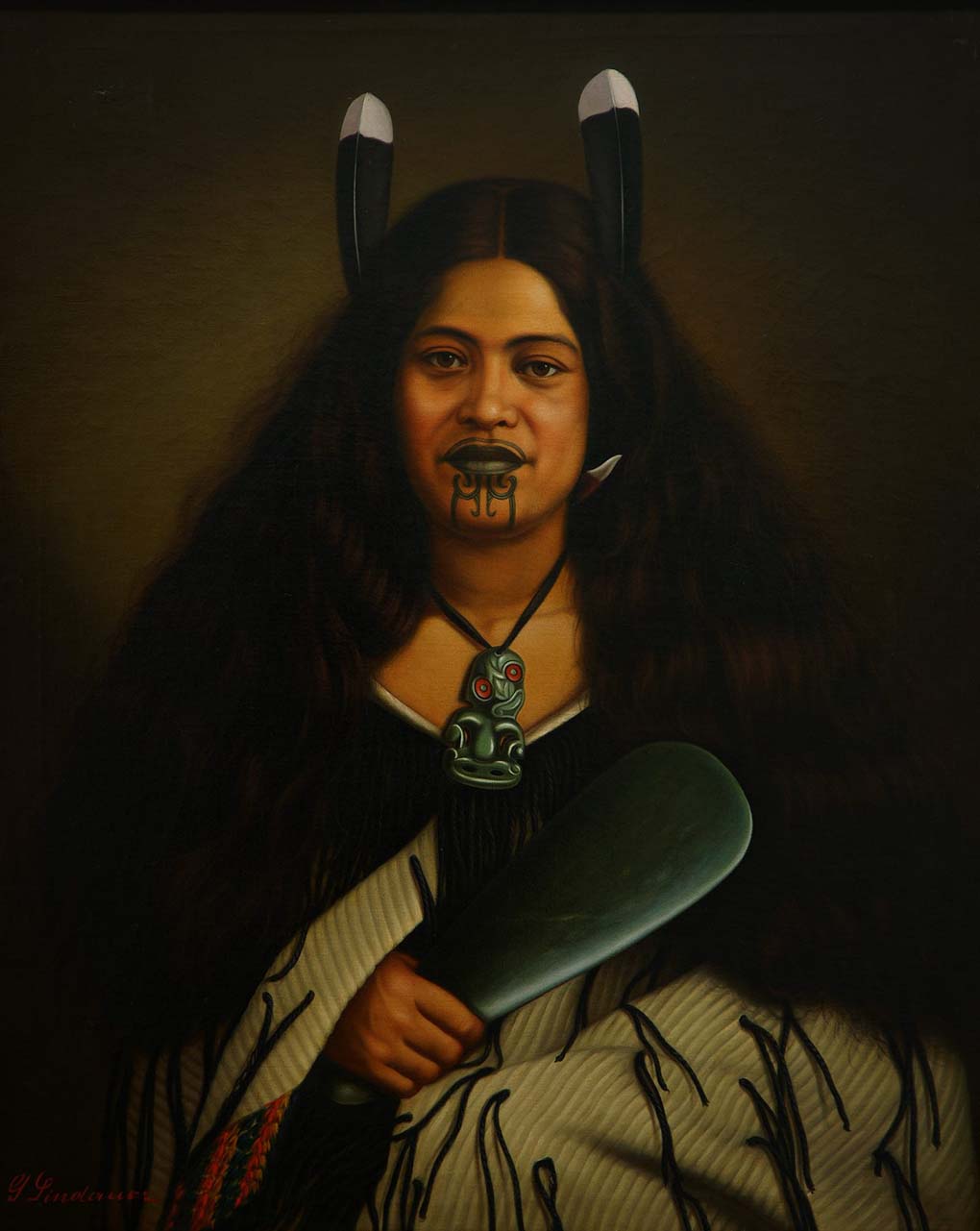
Pare Wātene
1858 – 1899Ngāti Maru
- Date
- 1878
- Medium
- oil on canvas
- Measurements
- 880 x 708 mm
- Other titles
- Pare Watene, [title, 2026]Pare Watene, [1930 catalogue]Pare Watene, [Deed of gift, 1915]Pare Watene, [1901 catalogue]Oil Painting. Portrait of Pare Watene Ngatimaru tribe / Thames, [copyright certificate, 1898]Mrs Pare Whakaaro-rangi, Thames Goldfield, New Zealand, [Lindauer's inscribed title]
- Inscriptions
- Front, LL: G. LindauerBack, LR: Mrs Pare Whakaaro-rangi / "Thames Goldfield, New Zealand"Back, LR: G. Lindauer, pinxit 1878
- Takiwā / region
- Waikato-Maniapoto
- Credit line
- Auckland Art Gallery Toi o Tāmaki, gift of Mr H E Partridge, 1915
- Accession no.
- 1915/2/22
Pare Wātene lived at Tararu, north of Thames. According to historian James Cowan, her father was Hēmi Watana (Wātene being a corruption of the original Watana) of Ngāti Maru, who had three daughters – Pare, the oldest, Mere and Ārani.
Wātene spent her formative years at Manaia, south of Coromandel, where her family owned large blocks of land. She died aged just 41 and is buried at Manaia.
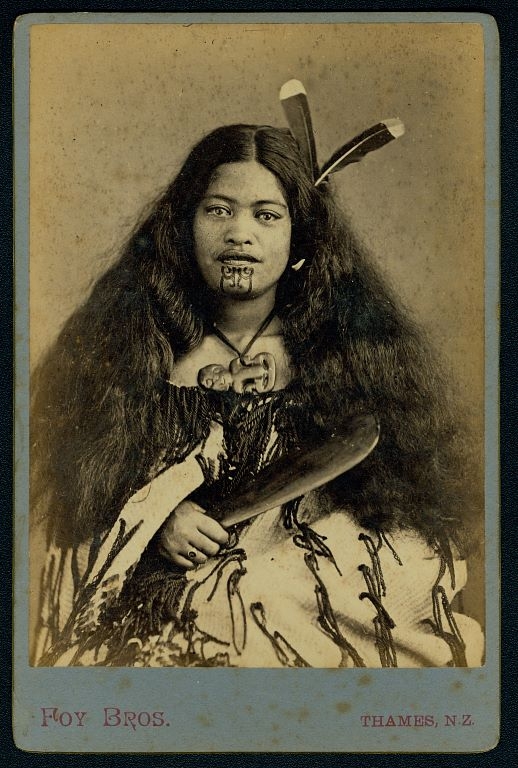
Wātene’s beauty was immortalised in a photograph taken sometime in the 1870s at the Foy Brothers studio in Thames. It was from this image that Lindauer composed his portrait in 1878. In it, Wātene is striking in her korowai with tāniko border just visible.
As with other portraits based on photographs, Lindauer indulged in some artistic licence. He changed the placement of the huia feathers in Wātene’s hair: originally on her left side, they were placed either side of her head in the painting. Rather than depict the heitiki pounamu she wore in the photograph Lindauer copied one illustrated on plate 39 in George French Angas’s The New Zealanders Illustrated, 1847. He likely did this because he could not see the level of detail needed in the cabinet card photograph he was working from, which was slightly smaller than an A6 greeting card. The mere pounamu that Wātene holds has also been subtly turned, making it seem larger, and a signet ring is missing from her hand.
The artist added other details – flyaway hairs create a halo effect around Wātene’s head, veins swell through the skin of her hand, and her moko kauae is more black than green.
Lindauer inscribed Wātene’s married name on the reverse of the canvas: ‘Mrs Pare Whakaaro-rangi.’
- A Pare Watana was registered as being born in Hauraki about 1858. This Pare Watana died in 1899. The entry lists her mother’s name as Haereiti and her father’s name as Watana. Her ‘spouse’ name was listed as Timo and they married in 1876. The record was submitted by a member of the Latter Day Saints Church: www.familysearch.org
- ‘Page 3 Advertisements Column 4’, Evening Post, vol XXXV, issue 67, 21 March 1888, p 3, Papers Past, accessed 26 February 2010.