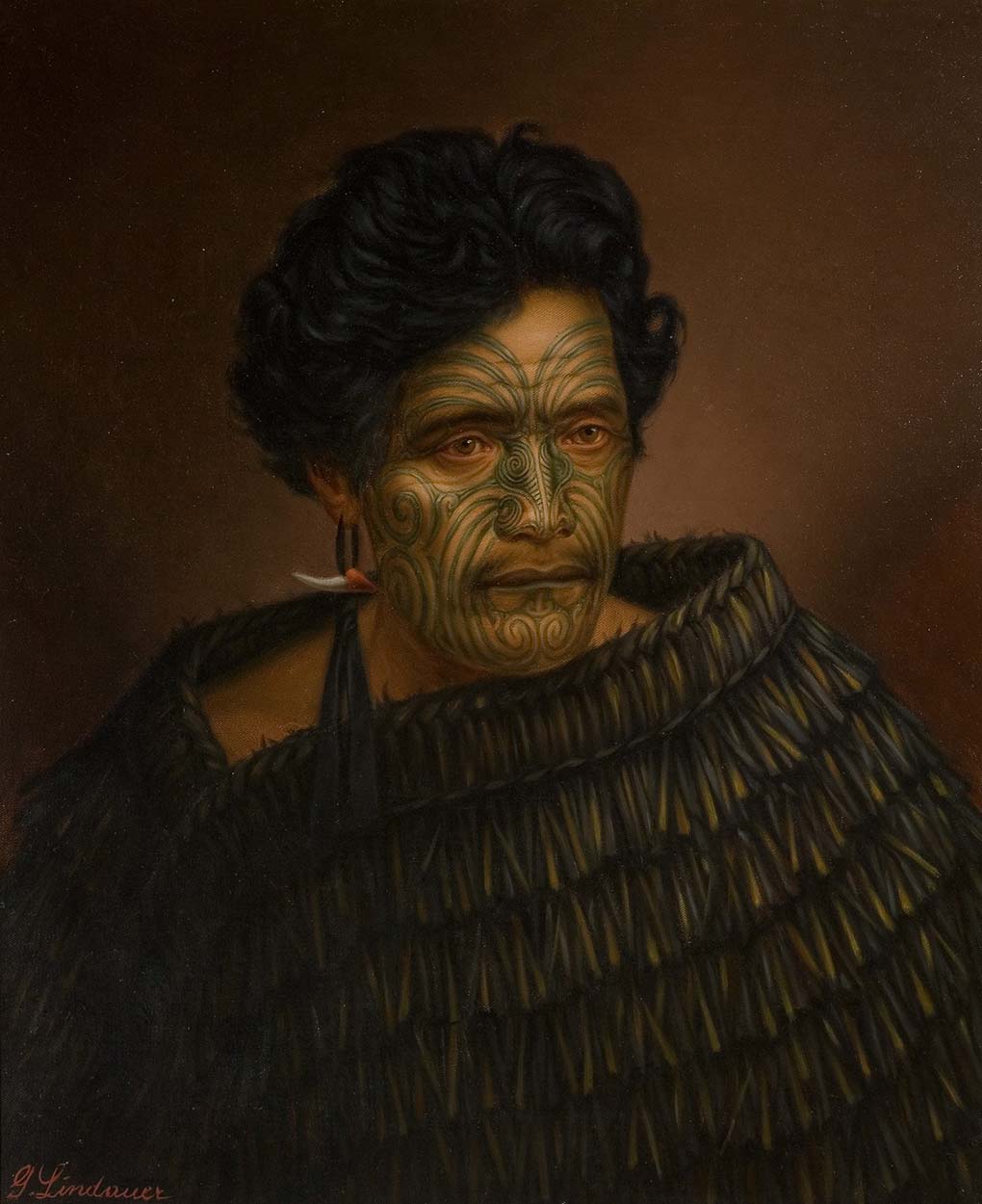
Takerei Te Rauangaanga
? – 1878Ngāti Mahuta
- Date
- c 1910
- Medium
- oil on canvas
- Measurements
- 625 x 522 mm
- Other titles
- Takerei Te Rauangaanga, [title, 2026]Takerei te Rau-Angaanga, [1930 catalogue]Takerei te Rau-angaanga, [Deed of gift, 1915]Painting Portrait of Chief Takerei Te Rauangaanga, [copyright certificate, 1913]Chief Takerei Te Rauanganga, [Lindauer's inscribed title]
- Inscriptions
- Front, LL: G. LindauerBack, LC: Chief Takerei Te Rauanganga
- Takiwā / region
- Waikato-Maniapoto
- Credit line
- Auckland Art Gallery Toi o Tāmaki, gift of Mr H E Partridge, 1915
- Accession no.
- 1915/2/35
Takerei Te Rauangaanga was a leading fighting chief of Ngāti Mahuta. He lived near Te Kōwhai, at a pā named Wakapaku.
Te Rauangaanga was a cousin of Pōtatau Te Wherowhero, the first Māori king, and the principal war chief of the Waikato Tribal Confederation, a union of hapū whose lineage traced back to the Tainui waka. Highly regarded as a military tactician, Te Rauangaanga continued to be an advisor for the next Māori king Tāwhiao, following Pōtatau Te Wherowhero’s death in 1860.
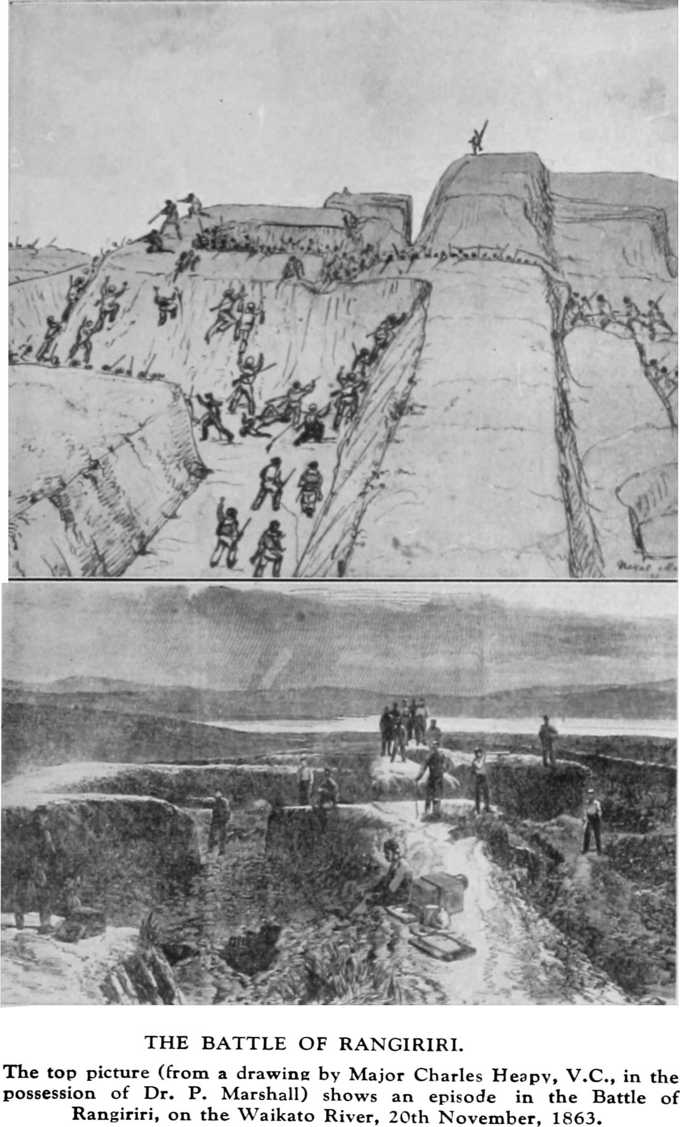
Te Rauangaanga fought to defend Rangiriri Pā when it was attacked by the British on 20 November 1863. He was taken prisoner there by government troops and was imprisoned, with others, in the hulk of the Marion in the Waitematā Harbour.
After the war, Te Rauangaanga witnessed the raupatu, when lands surrounding the Waikato River were seized from Waikato-Tainui. By 1865, the Crown had taken 1.2 million acres of Waikato land in all, stretching from the Pūniu River in Te Awamutu to Port Waikato. The confiscations were later deemed illegal and excessive.
Te Rauangaanga died aged 75 at Te Kōpua, near Raglan, where he is buried. He was survived by his granddaughter from his daughter, Te Paea Te Rau.1
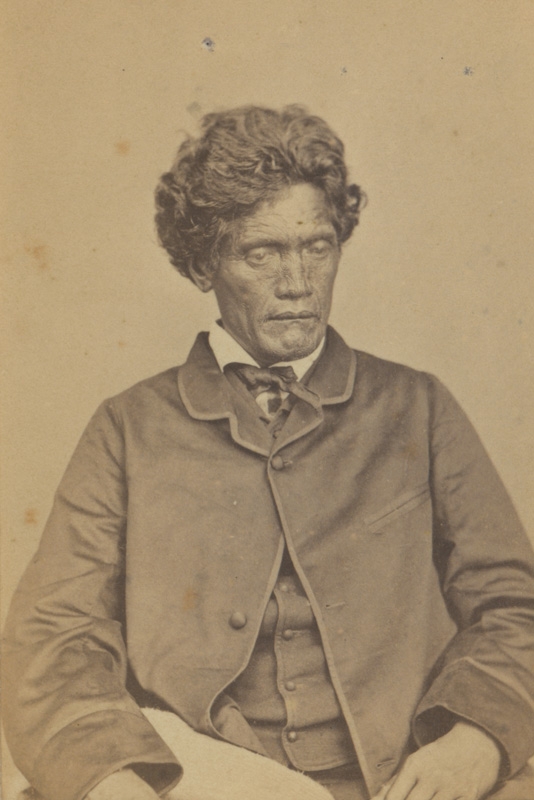
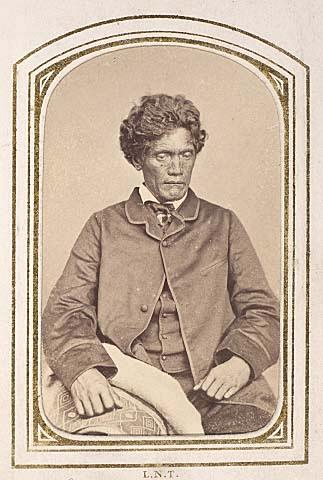
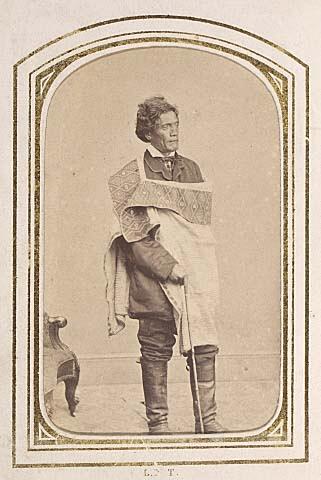
This painting was based on a photograph by Hartley Webster, though Lindauer has taken Te Rauangaanga out of the European clothing he wears in the original, placing him instead in a pākē made from harakeke. He shows Te Rauangaanga with his striking mataora and wearing a mako from one ear. The strong arcs of the tīwhana are mirrored in similar marks directed downwards around Te Rauangaanga’s mouth. These details are not clearly present in Webster’s photograph as early photographic technologies had great difficulty capturing tā moko. The wet plate, or collodion process, used up until the 1870s was not able to capture the blue-green lines of markings, leading to many photographers enhancing tā moko on the plate, print or even person, colouring the lines before photographing their subjects.
‘ALEXANDRA’, Waikato Times, 26 January 1878.