Te Horetā Te Taniwha
? – 1853Ngāti Whanaunga
- Date
- c 1910
- Medium
- oil on canvas
- Measurements
- 1025 x 764 mm
- Other titles
- Horeta Te Taniwha, [title, 2026]Te Horeta Taniwha, [1930 catalogue]Te-Horeta te Taniwha, [Deed of gift, 1915]Painting Portrait of Chief Te Horeta te Taniwha, [copyright certificate, 1913]Chief Horeta Taniwha, [Lindauer's inscribed title]
- Inscriptions
- Front, LR: G. LindauerBack, UC [in Colin McCahon's hand]: EntranceBack, LC: Chief Horeta Taniwha
- Takiwā / region
- Waikato-Maniapoto
- Credit line
- Auckland Art Gallery Toi o Tāmaki, gift of Mr H E Partridge, 1915
- Accession no.
- 1915/2/44
Te Horetā Te Taniwha was a leader of Ngāti Whanaunga, one of the Marutūāhu confederation of Hauraki Gulf and Coromandel Peninsula iwi. He is thought to have been born around 1757, his birthdate being presumed from his own anecdote of meeting Lieutenant James Cook at Mercury Bay in 1769, when he informed Cook that he was around the age of 12.
In later years, Te Taniwha recalled his wonder at encountering these new people. Once others of his people had returned safely from Cook’s ship Endeavour, he ventured on board with other children. He remembered Cook’s kindness to him and his peers.
His name, Te Taniwha, derives from a particular conflict between Ngāti Tamaterā and Ngāti Whanaunga. While a Ngāti Tamaterā war party was absconding with Ngāti Whanaunga waka, Te Horetā, as he was then known, dove into the stream where the waka were being boarded by the enemy and managed to swim beneath them, avoiding the spears of Ngāti Tamaterā warriors. He then leapt into a waka and drove the occupants into the water. His people watched this feat and named him Te Taniwha, believing he had performed this brave act as a sea god and not a human.1
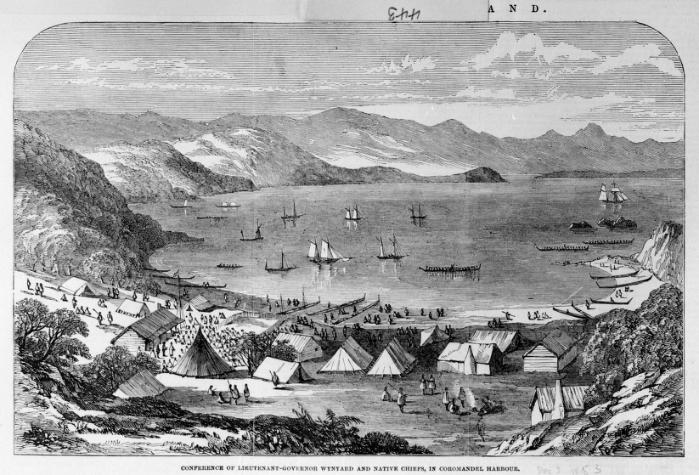
In 1840, Te Taniwha was one of the many chiefs to sign the Te Tiriti o Waitangi. It seems he was ambivalent about Pākehā settling in and using his lands, but when gold was discovered for the first time in Aotearoa New Zealand, in Te Taniwha’s Coromandel property, he eventually consented to its mining. He died in 1853, aged almost 100.
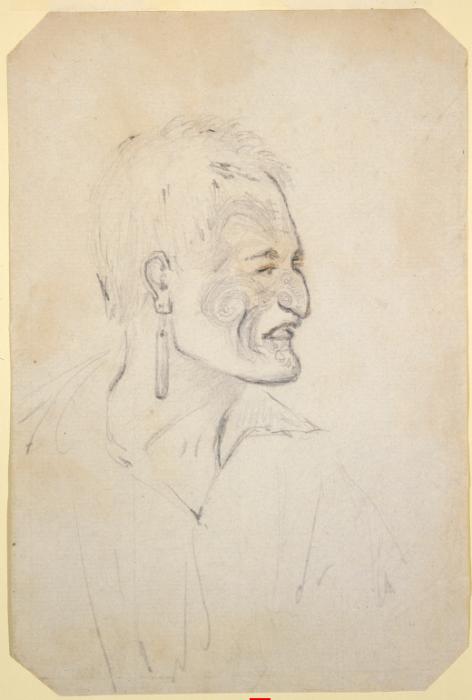
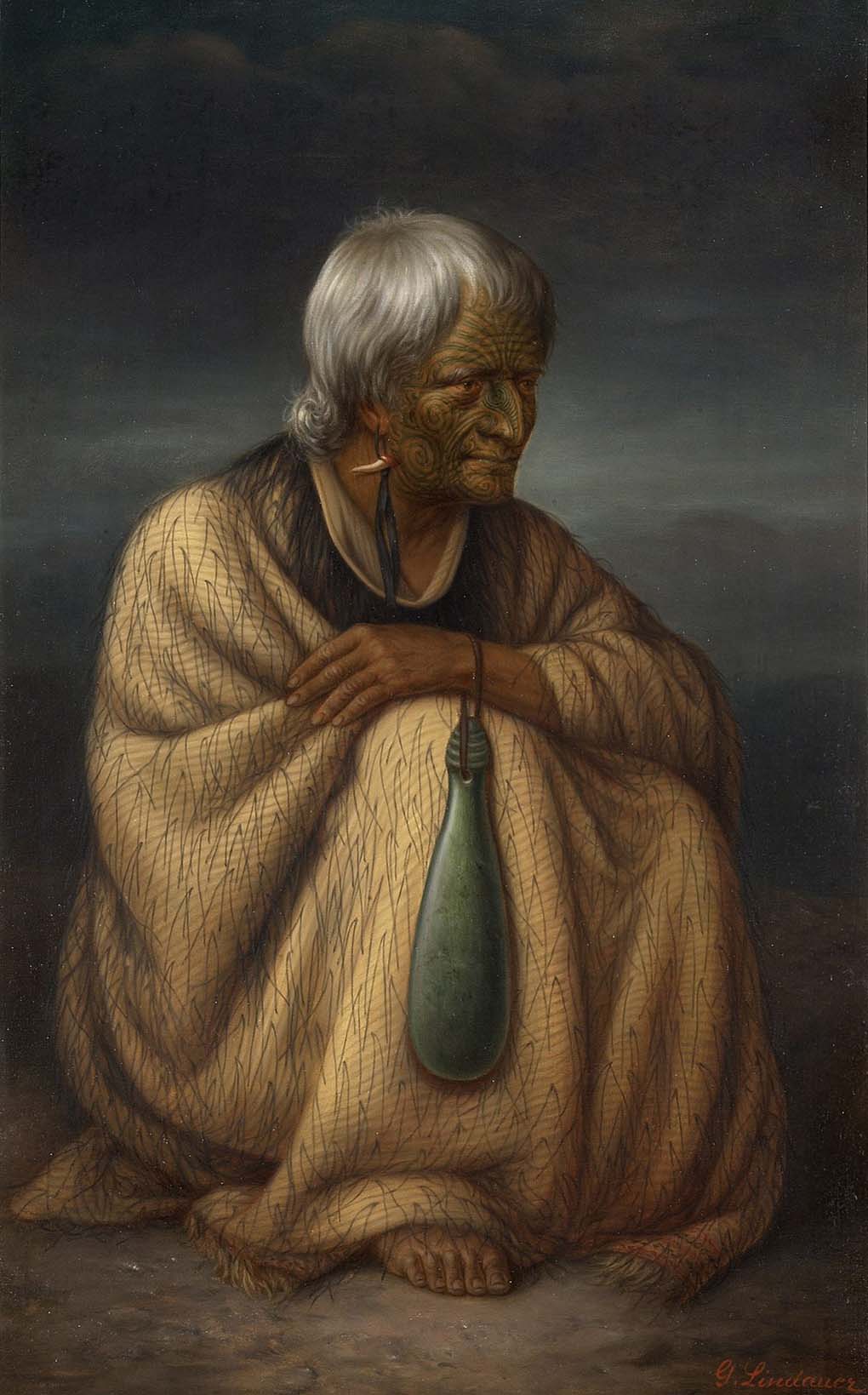
Lindauer’s portrait is one of few by the artist not based on a photograph. Rather Charles Heaphy drew a portrait of Te Taniwha from life, and this pencil sketch, or a more highly finished one in the British Library, likely informed a wood engraving of him that was published in the Illustrated London News in 1855. This illustration is certainly the source of Lindauer’s portrait as it copies Te Taniwha’s crouching form with a mere pounamu hanging from his wrist exactly – the image was however reversed when copied. The representation of Te Taniwha’s mataora is crude in the printed illustration, so it seems most likely Lindauer used his considerable knowledge of tā moko to offer an evocation of his tattoo mataora. However, his distinctive profile is precisely captured – as recorded in the caption for the illustration, Te Taniwha was nicknamed ‘Old hook-nose’ by many Coromandel Pākehā.
White highlights in Te Taniwha’s hair draw attention to the process of ageing, as do the deep-set wrinkles around the chin, cheeks and forehead. In this, Lindauer shows his aptitude at working through different textures and tonalities within a single image, creating a believable sense of likeness.
‘Death of the Celebrated Native Chief Hook-Nose. (Communicated.)’, Daily Southern Cross, 6 December 1853, p 3.