Te Paea Hinerangi
1830-1834 – 1911Ngāti Ruanui, Ngā Ruahinerangi
- Date
- 1896
- Medium
- oil on canvas
- Measurements
- 685 x 575 mm
- Other titles
- Te Paea Hinerangi (Guide Sophia), [title, 2026]Sophia the Guide, [1930 catalogue]Sophia (The Guide), [Deed of gift, 1915]Sophia the Guide, [1901 catalogue]Oil Painting. Portrait of Sophia. Hot Lakes Guide, [copyright certificate, 1898]Sofia the guide of Rotorua N.Z., [Lindauer's inscribed title]
- Inscriptions
- Front, LL: G. Lindauer Pinx 1896Back, C: Sofia the guide of Rotorua N.Z.Back, LR: G. Lindauer pinxit 1896
- Takiwā / region
- Te Tai Tokerau
- Credit line
- Auckland Art Gallery Toi o Tāmaki, gift of Mr H E Partridge, 1915
- Accession no.
- 1915/2/34
Te Paea (Sophia) Hinerangi was the daughter of Kōtiro Hinerangi of Ngā Ruahinerangi, who spent time living with Ngāpuhi, and Scotsman Alexander Grey (Gray). Born in Kororāreka Russell, she was the fourth of five children. She married twice: first, to Koroneho Tehakiroe (Ngāpuhi), with whom she is said to have had 14 children; and secondly, in about 1870, to Hōri Taiāwhio (Ngāti Tūhourangi), with whom she had a further three children.1
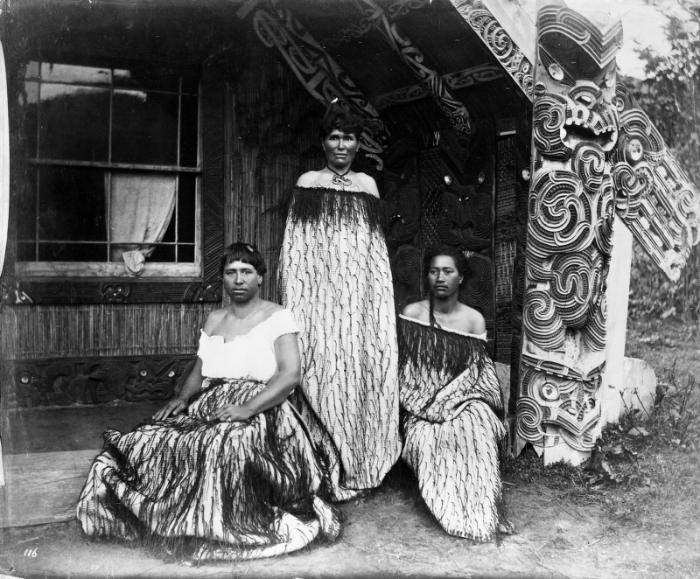
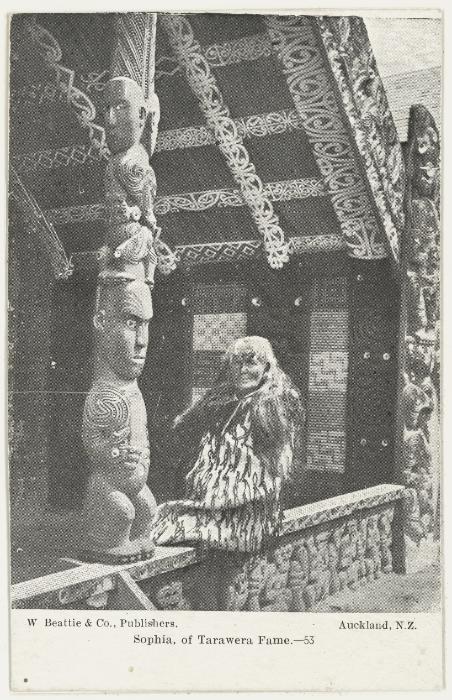
Te Paea relocated from the Bay of Islands with Taiāwhio to the village of Te Wairoa, on the shores of Lake Tarawera. Here, she became known as Guide Sophia.
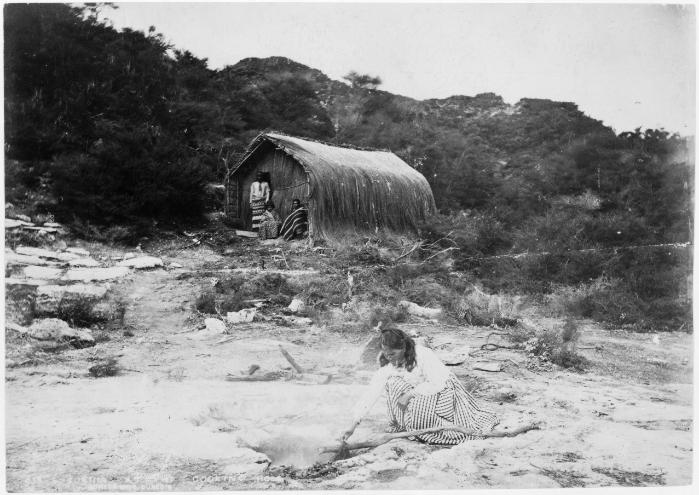
The proximity of Te Wairoa to the famous Pink and White Terraces (then regarded as the eighth natural wonder of the world) soon saw Te Paea take the role of a guide, leading groups of tourists in their visits to the area. Fluent in both Māori and English, Te Paea was known for her warmth, knowledge and organisational skills.
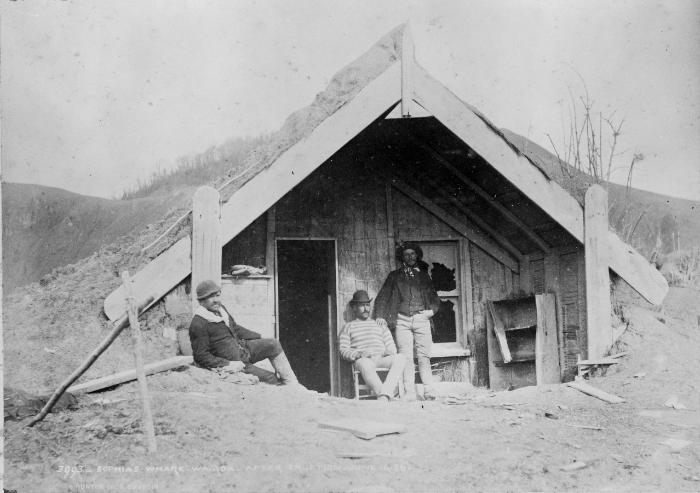
In mid-1886, Te Paea noticed that the lake’s water levels were rising. She also saw a ‘phantom waka’, which local Māori understood as a warning prophesising disaster. On 10 June 1886, Mt Tarawera erupted with tremendous force, destroying the silica terraces and burying the surrounding countryside. While others died under collapsed buildings, Te Paea sheltered 62 people in her own whare, which, though covered in ash, survived the widespread devastation.
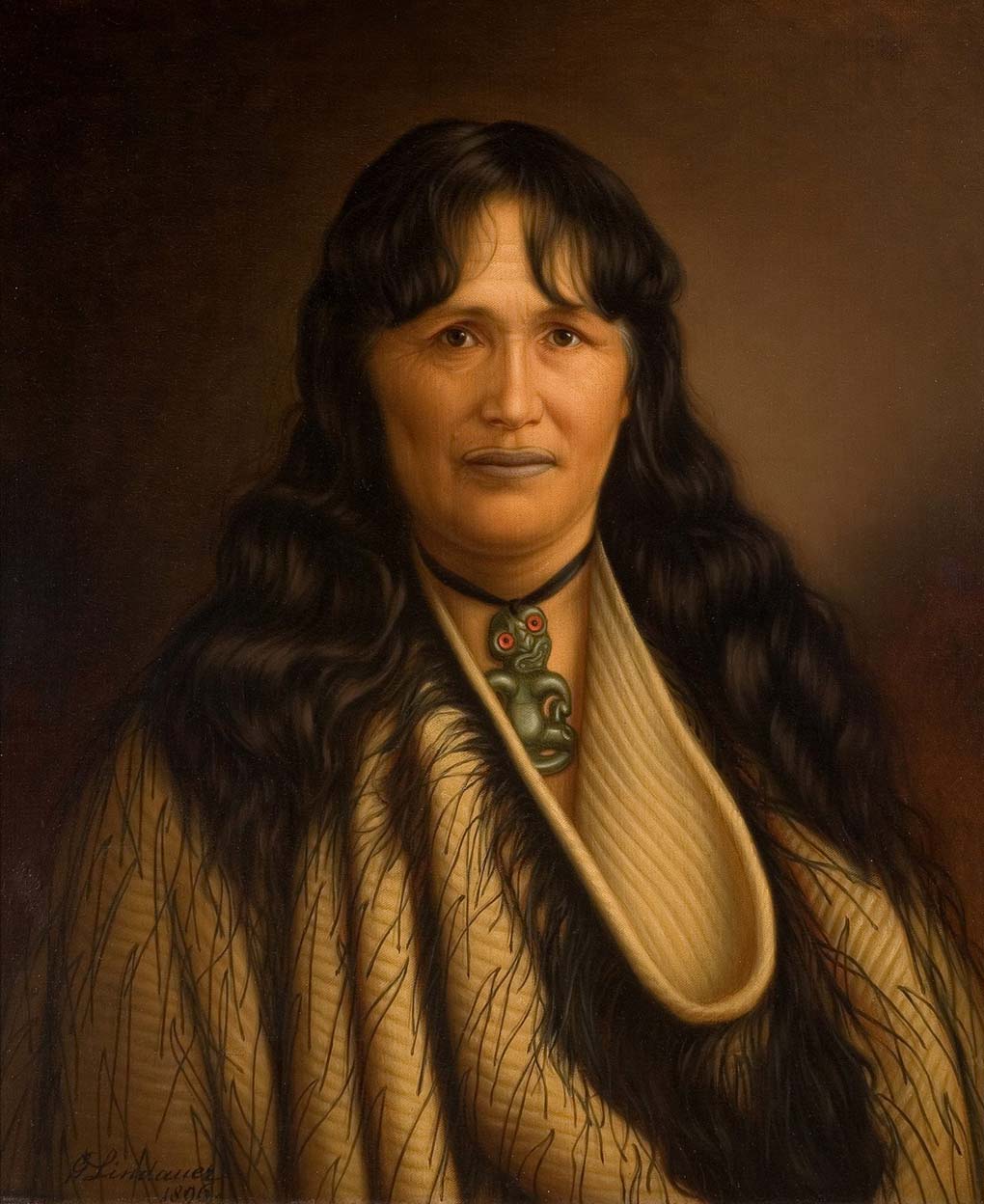
All the survivors of the eruption, including Te Paea and her family, relocated to Whakarewarewa, Rotorua’s main thermal attraction. In 1896, when her portrait was painted by Lindauer, she was appointed guide to the thermal reserve there.
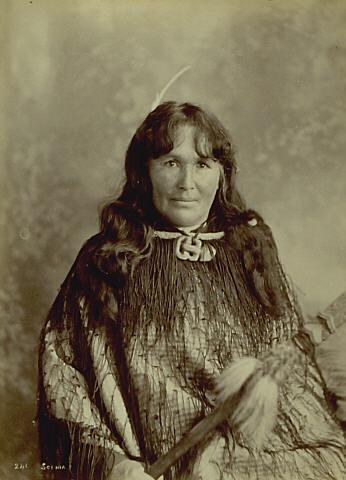
Lindauer’s portrait is based on a photograph by the Auckland photographer Josiah Martin. The original shows Te Paea wearing a korowai with a fringe of dark hukahuka. Around her neck she wears a heitiki on a short cord, and she holds in her right hand a taiaha.
Lindauer retained the heitiki and the korowai, but significantly altered both. Worn on its side in Martin’s photograph, the heitiki is different in design and hangs lengthwise in the painting. The korowai is now worn loose at the throat, hanging open to let the heitiki rest against Te Paea’s chest.
Jenifer Curnow, ‘Hinerangi, Sophia’, Dictionary of New Zealand Biography, first published in 1993, updated July 2015, Te Ara – the Encyclopedia of New Zealand, https://teara.govt.nz/en/biographies/2h37/hinerangi-sophia, accessed 21 July 2023.