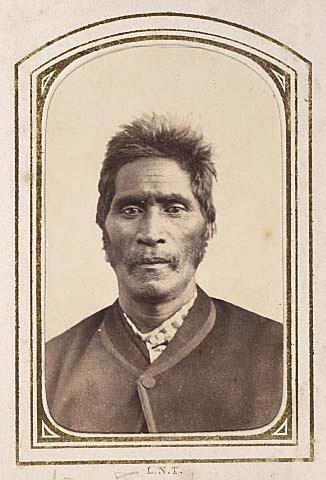
Wiremu Tāmihana Tarapīpipi Te Waharoa
? – 1866Ngāti Hauā
- Date
- c 1910
- Medium
- oil on canvas
- Measurements
- 630 x 522 mm
- Other titles
- Wiremu Tamihana, [title, 2026]Wiremu Tamehana, [1930 catalogue]Wiremu Tamahana te Waharoa (King Maker) , [Deed of gift, 1915]Oil Painting Portrait of Chief Wiremu Tamehana te Waharoa, [copyright certificate, 1913]Chief Wiremu Tamihana Waharoa (the King maker) , [Lindauer's inscribed title]
- Inscriptions
- Front, LR: G. LindauerBack, Chief Wiremu Tamihana Waharoa (the King maker)
- Takiwā / region
- Waikato-Maniapoto
- Credit line
- Auckland Art Gallery Toi o Tāmaki, gift of Mr H E Partridge, 1915
- Accession no.
- 1915/2/60
Born at Tamahere on the Horotiu plains, Wiremu Tāmihana Tarapīpipi Te Waharoa was the second son of Te Waharoa of Ngāti Hauā, whose territory took in a large tract of land in the northern Waikato. His mother was Rangi Te Wiwini. Tāmihana’s main kāinga was at Matamata in the northeast region of Tainui bordering the Kaimai Range.
Tāmihana married Ita, daughter of Pohepohe of Matamata. She died in May 1840 at Te Tāpiri. Tāmihana later married Paretekanawa (also called Wikitōria), another daughter of Pohepohe, and they had at least three sons and a daughter.
Tāmihana participated in the fighting expeditions with Ngāti Hauā through the 1820s into the 1830s.
In 1835, Tāmihana met the Reverend Alfred Brown of the Church Missionary Society and was later baptised by him at Tauranga. He was given the name Wiremu Tāmihana (William Thompson) and embarked on a life of teaching and preaching in the Tauranga and Matamata districts. He put the Christian teachings he had embraced into practice within a traditional Māori framework and guided his people to do likewise. He also learned to read and write in Māori within six months of being taught.1
In 1838, Tāmihana inherited the mantle of leadership from his father and used his tribal influence to advocate for the peaceful resolution of the ongoing conflict with Te Arawa. The establishment of a new settlement at Te Tāpiri, near Matamata, gave Tāmihana the opportunity to build a Christian community, a project he repeated at Pēria in 1846.
He was a leading advocate for the Kīngitanga and blessed the first Māori king, Pōtatau Te Wherowhero.2 For this reason, Tāmihana is often remembered as ‘the kingmaker’.
Despite his moderate and peaceable nature, Tāmihana was distrusted by settlers and the government. He died in 1866, a little more than two years after the wholesale confiscation of his lands by the Crown.
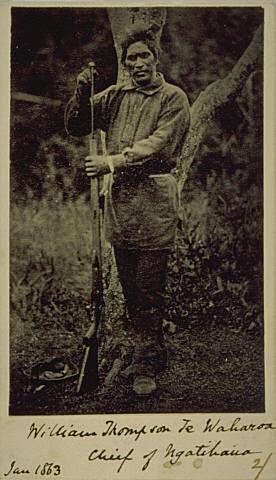
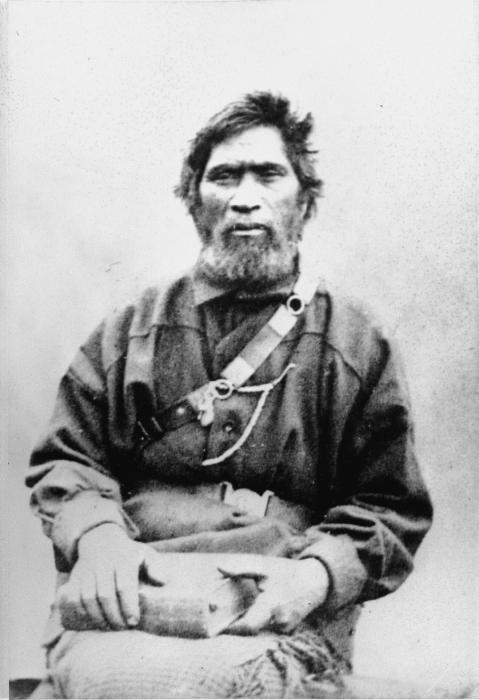
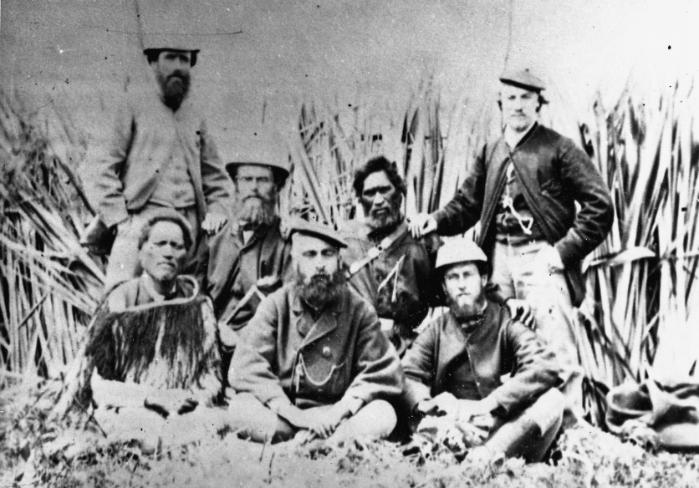
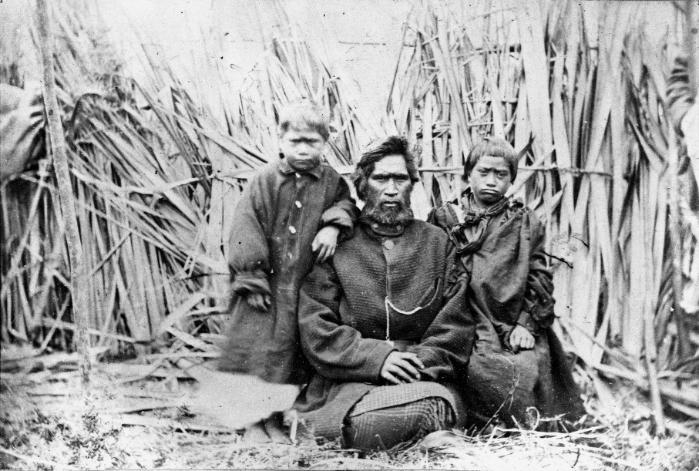
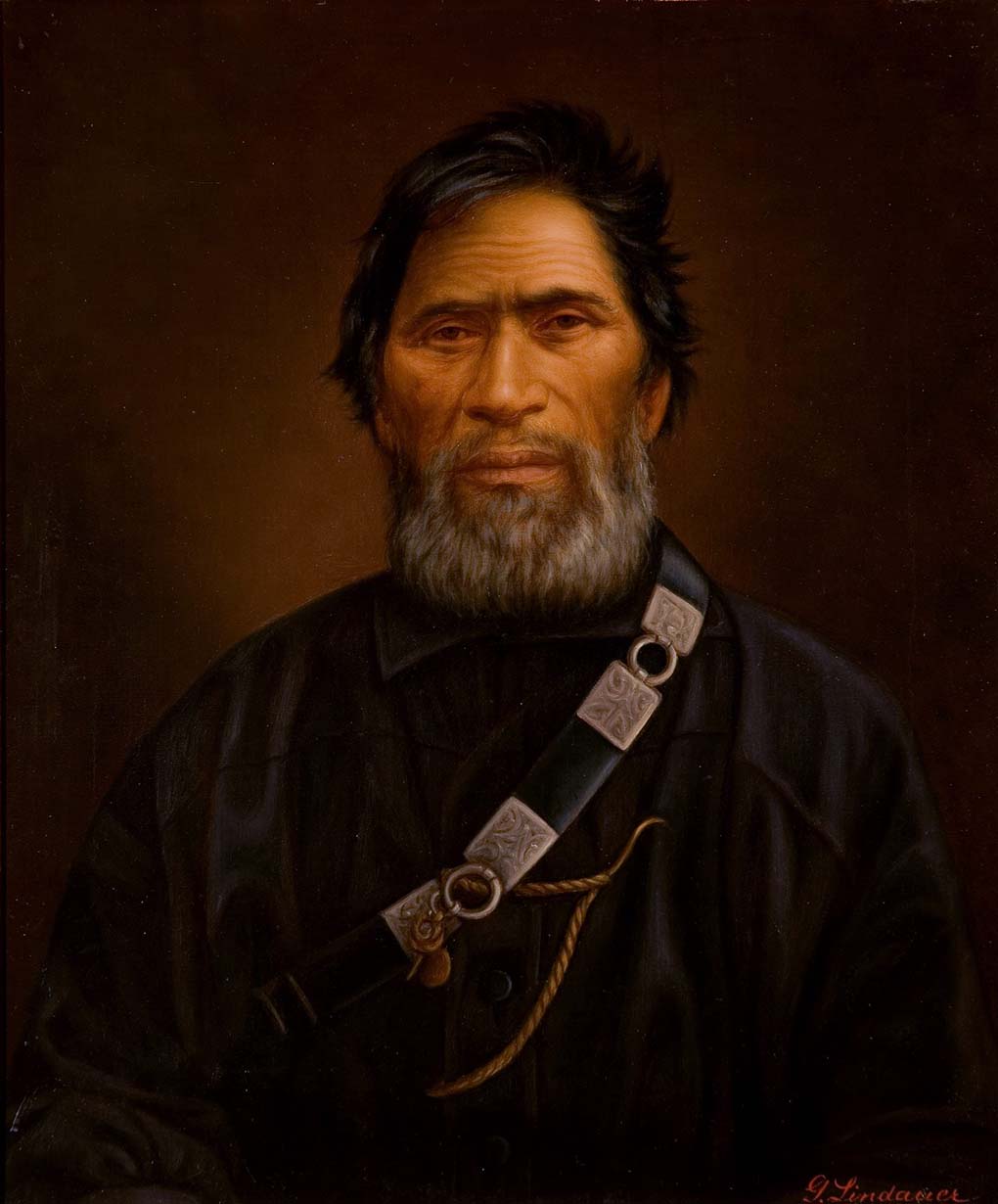
Lindauer’s portrait is based on a photograph by Charles Henry Monkton, taken in 1865, the year before Tāmihana died. He is seated, holding a Bible on his lap wearing a dark shirt, belted at the waist over a woven blanket. According to the Wellington Independent, it was one of three photographs Monkton took of the rangatira on the banks of the Waihou River. This one was intended to show ‘a more peaceable attitude’, in another ‘he is presented as a leader of his forces, with rifle and equipments’, and the third ‘surrounded by his friends, Messrs Firth, Graham, and Dr Sam, with a Pai Marire leader in the foreground.’3
Lindauer opted to present Tamihana in the ‘peaceable attitude’ but softens the squint captured in the photograph – though staring directly at the viewer, he still appears wary. Across his chest, Tāmihana wears a leather belt ornamented with silver panels joined by rings, worn military style like a bandolier – a symbol of a fighter.
Lindauer inscribed the back of this portrait with the title ‘Chief Wiremu Tamihana Waharoa The King Maker’.
Evelyn Stokes, ‘Te Waharoa, Wiremu Tāmihana Tarapīpipi’, Dictionary of New Zealand Biography, first published in 1990, updated February 2006, Te Ara – the Encyclopedia of New Zealand, https://teara.govt.nz/en/biographies/1t82/te-waharoa-wiremu-tamihana-tarapipipi, accessed 27 July 2023.
Rahui Papa and Paul Meredith, ‘Kīngitanga – the Māori King movement’, Te Ara – the Encyclopedia of New Zealand, first published June 2012, reviewed and revised March 2023, http://www.TeAra.govt.nz/en/kingitanga-the-maori-king-movement, accessed 27 July 2023.
‘Local and General News’, Wellington Independent, 26 December 1865, p 5. For the group photograph see Charles Henry Monkton, ‘Portrait of seven men, seated and standing on the banks of the Waiho (River Thames) with harakeke (flax) bush behind them. The men depicted are front row (L-R) William Louis Campbell Williams, Josiah Clifton Firth, Wiremu Tamihana Te Waharoa, Charles Henry Monkton. Front row (L-R) Purae [identified in an inscription as ‘Nera – Thompson’s great warrior’], Dr. Seth Sam and William Australia Graham’, Auckland Museum, PH-ALB-93-p40-1, https://www.aucklandmuseum.com/discover/collections/record/1033052, accessed 14 August 2026.