Wiremu Te Manewha
? – 1891Ngāti Raukawa, Ngāti Korokī
- Date
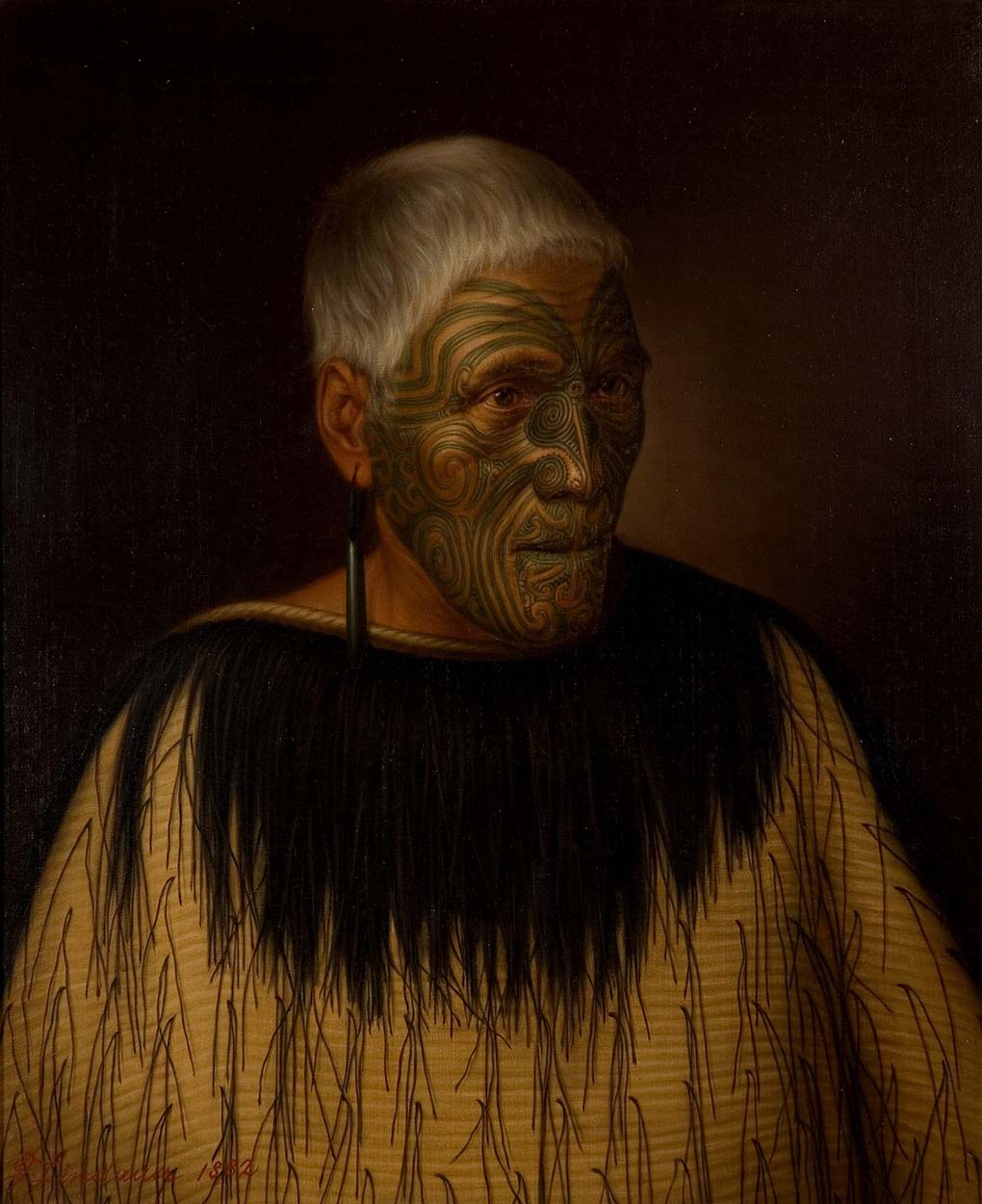
- 1882
- Medium
- oil on canvas
- Measurements
- 682 x 564 mm
- Other titles
- Wi Te Manewha, [title, 2026]Wi te Manewa, [1930 catalogue]Wi-te Manewha, [Deed of gift, 1915]Te Manewa, [1901 catalogue]Oil Painting of the Maori Chief Wi Te Manawa, [copyright certificate, 1902]Wi-te Manewa, chief of the Ngatiraukawa, [Lindauer's inscribed title]
- Inscriptions
- Front, LL: G. Lindauer 1882Back, LC: Wi-te Manewa, chief of the "Ngatiraukawa"
- Takiwā / region
- Waikato-Maniapoto
- Credit line
- Auckland Art Gallery Toi o Tāmaki, gift of Mr H E Partridge, 1915
- Accession no.
- 1915/2/61
Wiremu Te Manewha – also known as Wiremu Kīngi Te Manewha – was born at Maungatautari, south of present-day Cambridge. His mother was Hikitia of Ngāti Raukawa. He married Raita Te Wahanga of Ngāti Raukawa and they had a daughter, Enereta Te Whakarato.
Te Manewha moved to Ōtaki under the chief Te Whatanui in around 1834 to join Ngāti Toa rangatira Te Rauparaha in his efforts to control Te Whanganui-a-Tara Wellington and the coastline north of the district.
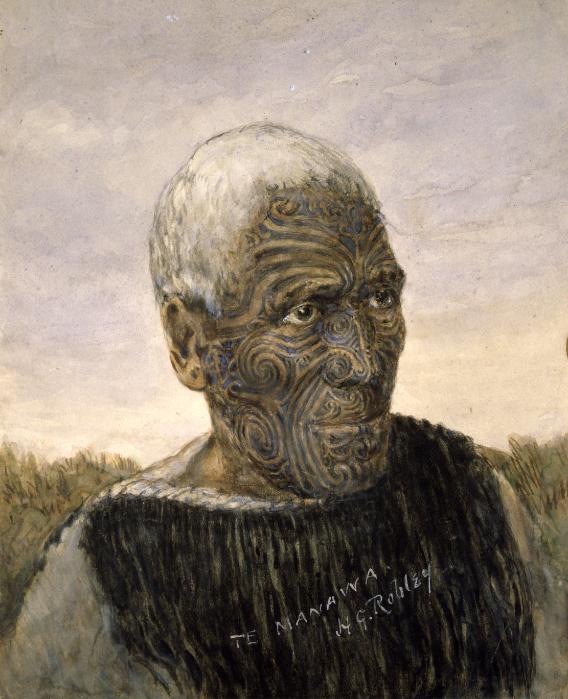
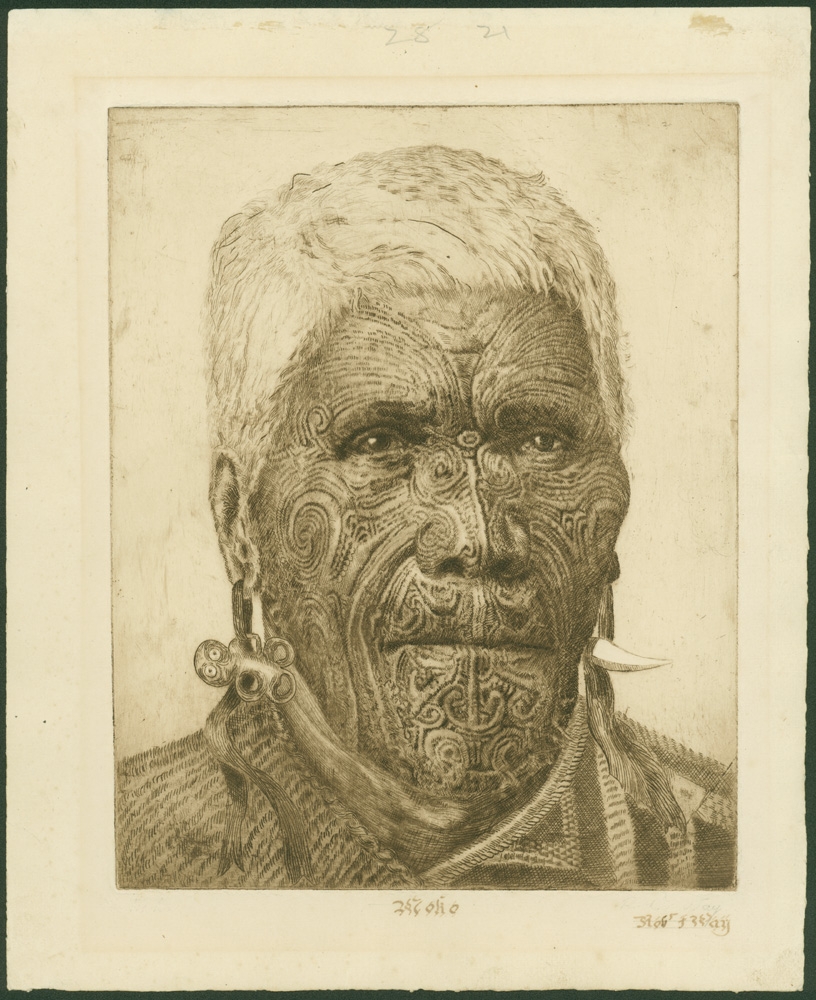
Late in life, Te Manewha agreed to Lindauer and Sir Walter Buller making a plaster cast of his face. Subsequently painted in lifelike colours, this remarkable three-dimensional record of Te Manewha’s heavily tattooed features details the extent to which a traditional moko (was carved into the face. The image would later appear on the cover of Pictures of Old New Zealand,1930 by historian James Cowan. The original cast is now preserved in the collection of the Museum of New Zealand Te Papa Tongarewa.
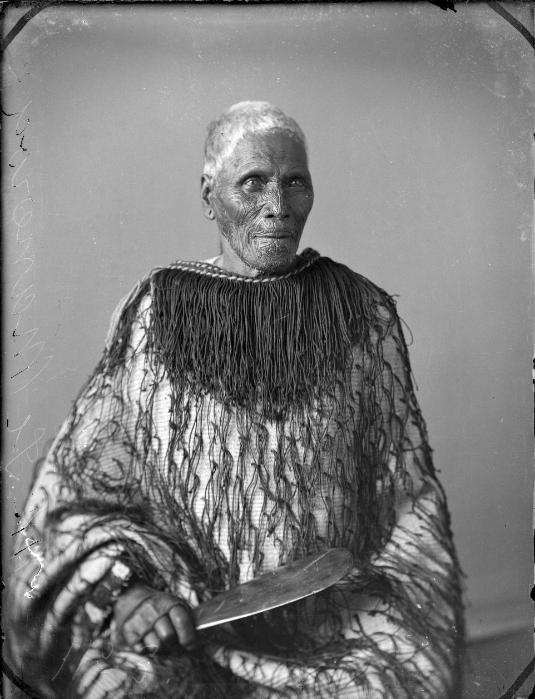
Lindauer’s painting of Te Manewha was based on a photograph, probably taken by the Napier-based studio photographer Samuel Carnell and dating to the 1880s. While capturing the detail of the design of Te Manewha’s remarkable moko, Lindauer’s painting only faintly suggests the extent of the incised dimensionality of the mataora. Lindauer’s smooth modelling is continued in the hukahuka of the korowai that Te Manewha is wearing, the texture of which is clearly legible in the photograph, but has been simplified in the painting. The artist added a long kuru pounamu – an attribute of chiefly dignity – but the portrait, being only bust length, does not include the mere pounamu Te Manewha held in the photograph.
- Nga Taumata: He Whakaahua o Ngati Kahungunu; A portrait of Ngati Kahungunu: 1870 – 1906 (Wellington, Huia Publishers: National Library of New Zealand: Ngati Kahungunu Iwi Inc., 2003).
- Ross Galbreath, 'Buller, Walter Lawry 1838 - 1906', Dictionary of New Zealand Biography, updated 22 June 2007, accessed 3 March 2010.
- ‘How the Glengarry was Abandoned’, Bay Of Plenty Times, 28 August 1893, p 3, Papers Past, accessed 3 March 2010.