Biographical sketch of Tāmati Ngāpora
- Author
- James Mackay
- Date
- 14 March 1901
- Document type
- Biographical Sketch
- Credit Line
- Partridge Correspondence, E H McCormick Research Library, Auckland Art Gallery Toi o Tāmaki
- Accession Number
- RC2009/2/1/7/10
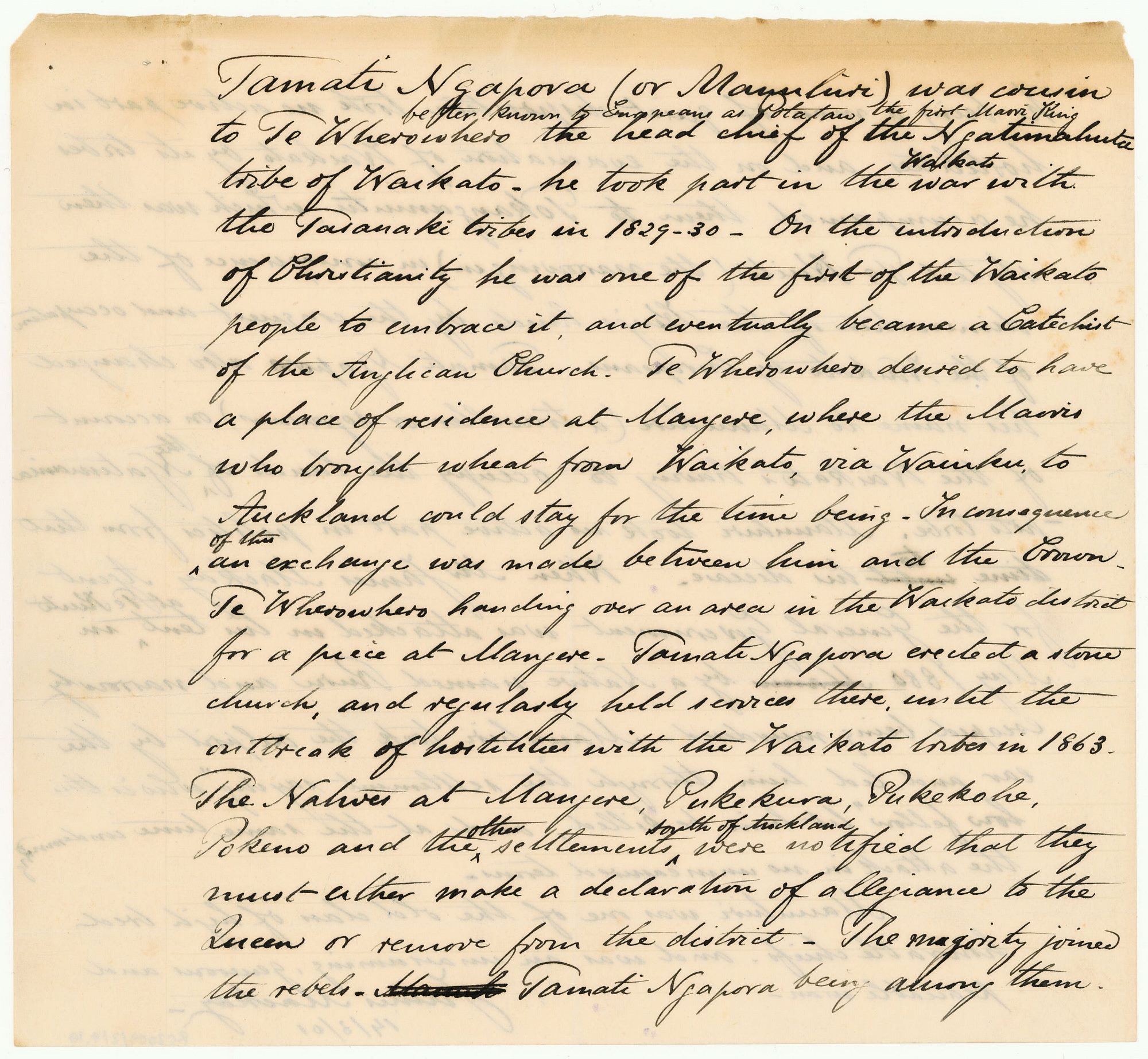
Tamati Ngapora (or Manuhuri) was cousin to Te Wherowhero, better known to Europeans as Potatau the first Maori King, the head chief of the Ngatimahuta tribe of Waikato. He took part in the Waikato war with the Taranaki tribes in 1829-30. On the introduction of Christianity he was one of the first of the Waikato people to embrace it, and eventually became a Catechist of the Anglican Church. Te Wherowhero desired to have a place of residence at Mangere, where the Maori who brought wheat from Waikato, via Waiuku, to Auckland could stay for the time being. In consequence of this an exchange was made between him and the Crown. Te Wherowhero handing over an area in the Waikato district for a piece at Mangere. Tamati Ngapora erected a stone church, and regularly held services there, until the outbreak of north tribes with the Waikato tribes in 1863. The Natives at Mangere, Pukekura, Pukekohe, Pokeno and the other settlements north of Auckland were notified that they must either make a declaration of allegiance to the Queen or remove from the district. The majority joined the rebels. Tamati Ngapora being among them.
(overleaf)
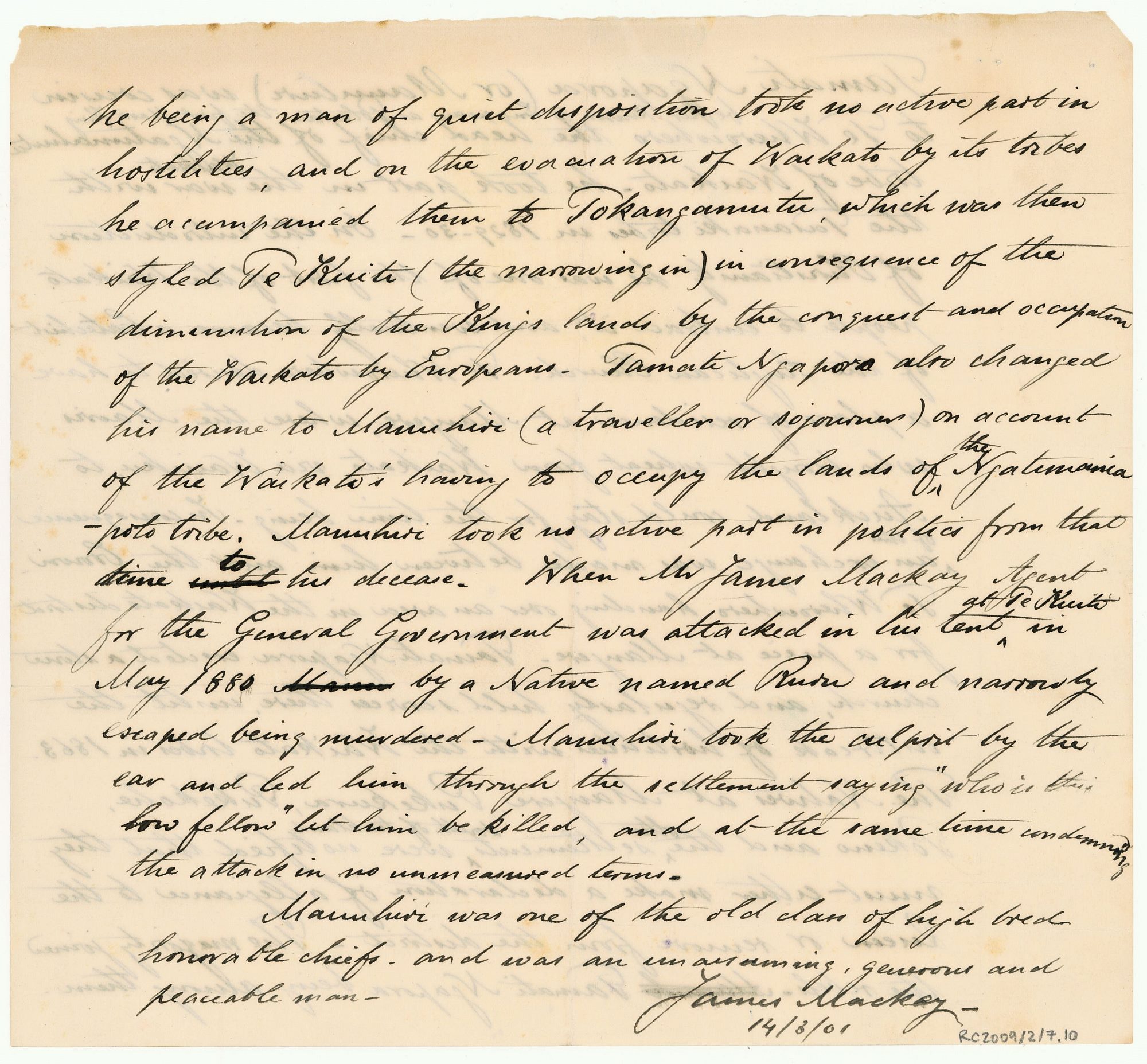
He being a man of quiet disposition took no active part in hostilities, and on the evacuation of Waikato by its tribes he accompanied them to Tokangamutu, which was then styled Te Kuiti (the narrowing in) in consequence of the dimension of the Kings lands by the conquest and occupation of the Waikato by Europeans. Tamati Ngapora also changed his name to Manuhiri (a traveller or sojourner) on account of the Waikato's having to occupy the lands of the Ngatimaniapoto tribe. Manuhiri took a active part in policies from that time to his decease. When Mr James Mackay Agent for the General Government was attacked in his tent at Te Kuiti in May 1880 by a Native named Ruru and narrowly escaped being murdered- Manuhiri took the culprit by the ear and led him through the settlement saying "who is this low fellow" let him be killed, and at the same time condemning the attack in no unmeasured terms.
Manuhiri was one of the old clan of high bred honourable chiefs and was an unassuming, generous and peaceable man. James Mackay -
14/3/01