Biographical sketch of Mere Kuru Te Kati
- Author
- James Mackay
- Date
- 24 August 1905
- Location [of sender]
- Auckland
- Document type
- Biographical Sketch
- Credit Line
- Partridge Correspondence, E H McCormick Research Library, Auckland Art Gallery Toi o Tāmaki
- Accession Number
- RC2009/2/1/7/11
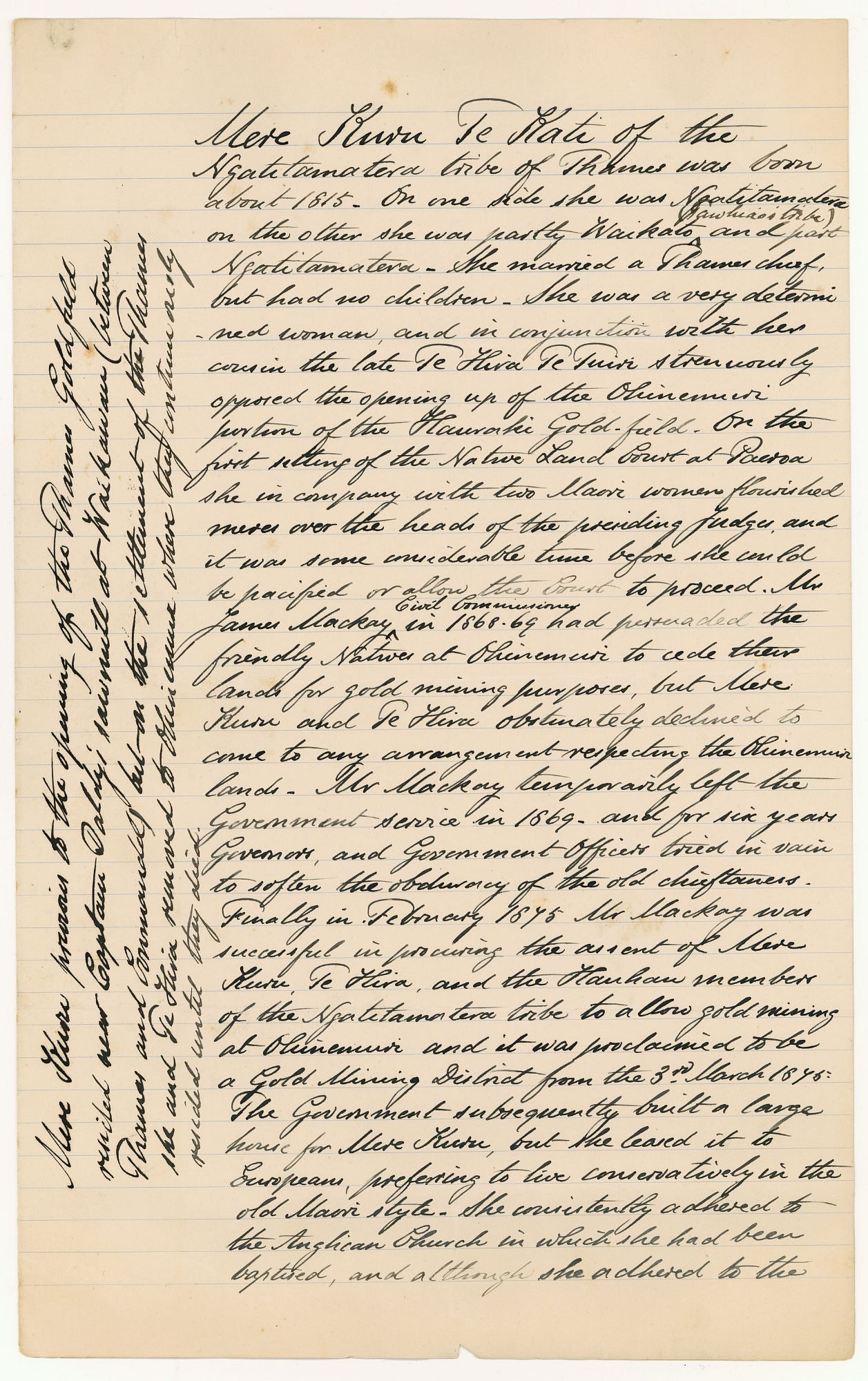
Mere Kuru Te Kati of the Ngatitamatera tribe of Thames was born about 1815. On one side she was Ngatitamatera on the other she was partly Waikato (Tawhiao's tribe) and part Ngatitamatera.. She married a Thames chief, but had no children. She was a very determined woman, and in conjunction with her cousin the late Te Hira Te Tuiri strenuously opposed the opening up of the Ohinemuri portion of the Hauraki Gold-field. On the first sitting of the Native Land Court at Paeroa she in company with two Maori women flourished meres over the heads of the presiding judges, and it was some considerable time before she could be pacified or allow the Court to proceed. Mr James Mackay Civil Commissioner in 1868-69 had persuaded the friendly Natives at Ohinemuri to cede their lands for gold mining purposes, but Mere Kuru and Te Hira obstinately declined to come to any arrangement respecting the Ohinemuri lands. Mr Mackay temporarily left the Government service in 1869 and for six years Governors, and Government Officers tried in vain to soften the obduracy of the old chieftaness. Finally in February 1875 Mr Mackay was successful in procuring the assent of Mere Kuru, Te Hira, and the Hauhau members of the Ngatitamatera tribe to allow gold mining at Ohinemuri and it was proclaimed to be a Gold Mining District from the 3rd March 1875. The Government subsequently built a large house for Mere Kuru, but she leased it to Europeans, preferring to live conservatively in the old Maori style. She consistently adhered to the Anglican Church in which she had been baptised, and although she adhered to the
(on margin of first page) Mere Kuru previous to the opening of the Thames Goldfield resided near Captain Daldy's sawmill at Waikawau (between Thames and Coromandel) but on the settlement of the Thames she and Te Hira removed to Ohinemuri where they continuously resided until they died.
(overleaf)
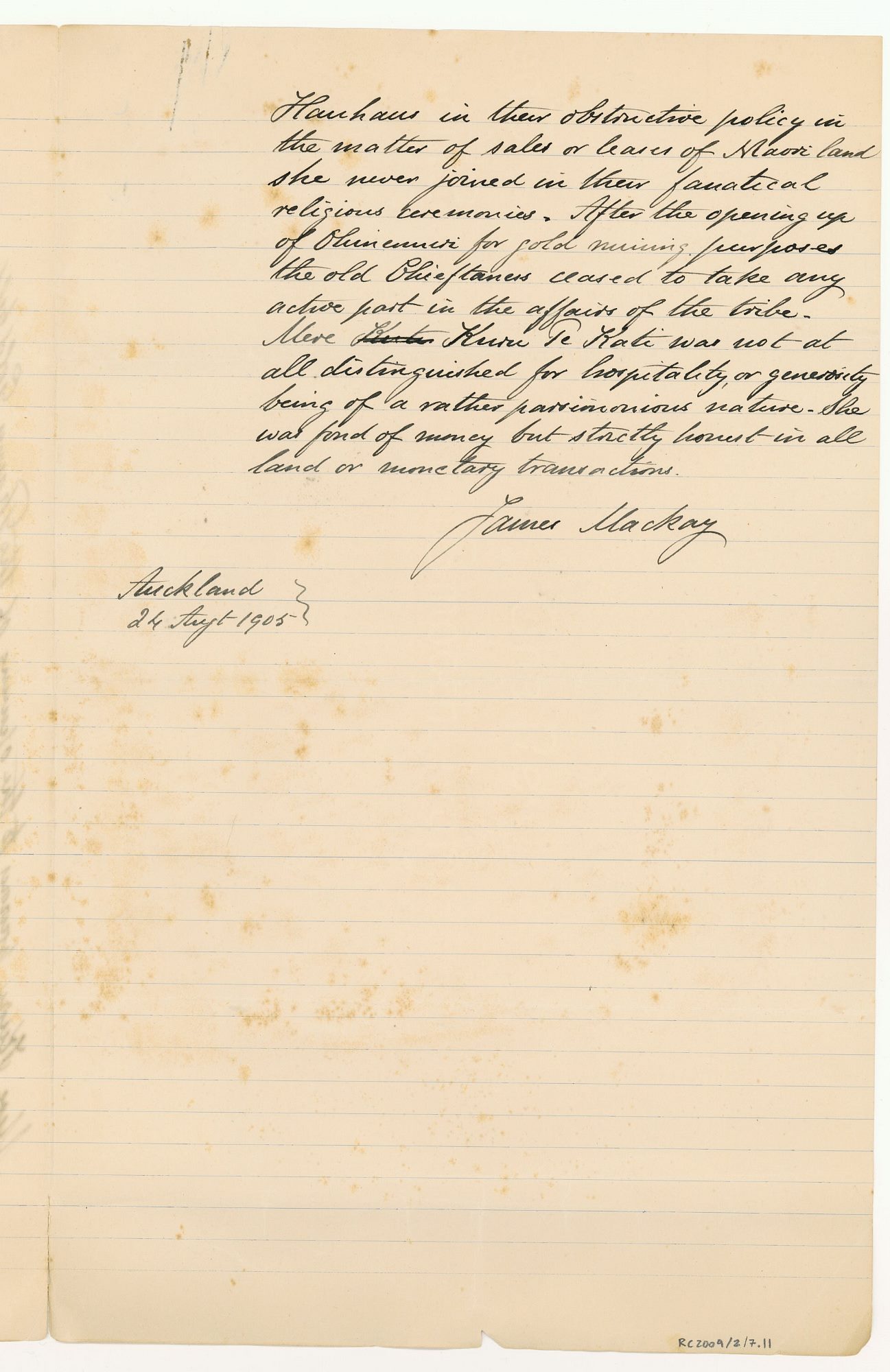
Hauhaus in their obstructive policy in the matter of sales or leases of Maori land she never joined in their fanatical religious ceremonies. After the opening up of Ohinemuri for gold mining purposes the old Chieftaness ceased to take any active part in the affairs of the tribe.
Mere Kuru Te Kati was not at all distinguished for hospitality, or generosity being of a rather parsimonious nature. She was fond of money but strictly honest in all land or monetary transactions.
James Mackay
Auckland
24 Augt 1905