Huria Matenga
184? – 1909Ngāti Toa, Ngāti Tama, Te Ati Awa
- Date
- 1909
- Medium
- oil on canvas
- Takiwā / region
- Te Tai HauāuruTe Waipounamu
- Credit line
- The Suter Art Gallery Te Aratoi o Whakatu, Purchased by public subscription in 1910
- Accession no.
- 94
Hūria Mātenga (née Kātene) was born at Whakapuaka on the Nelson coast of the upper South Island. She was a woman of great mana and became well known throughout New Zealand for an act of bravery in her 20s.
Tracing her whakapapa back to the Tokomaru waka, Mātenga was from the Northern Taranaki iwi of Ngāti Tama, Ngāti Toa and Te Atiawa. She was the daughter of the Ngāti Toa chief Wiremu Kātene Te Manu and Wikitōria Te Kehe of Te Atiawa. Her paternal grandfather was the Ngāti Tama leader Te Pūoho-o-te-rangi.
As a woman of high rank, Mātenga played an influential role in her community and, together with her family, owned large holdings of land in Nelson, Taranaki and Porirua. In 1858, she entered an arranged marriage with Hēmi Mātenga, a rangatira with substantial land holding in Waikanae, north of Wellington. They had one whāngai daughter named Mamae.
Mātenga gained national attention in 1863 when she and her husband were part of a small group which was instrumental in the safe return to land of the crew of the foundering sailing ship Delaware. For her bravery, she received a gold watch and money from the local council, and became known as ‘New Zealand’s Grace Darling’.1
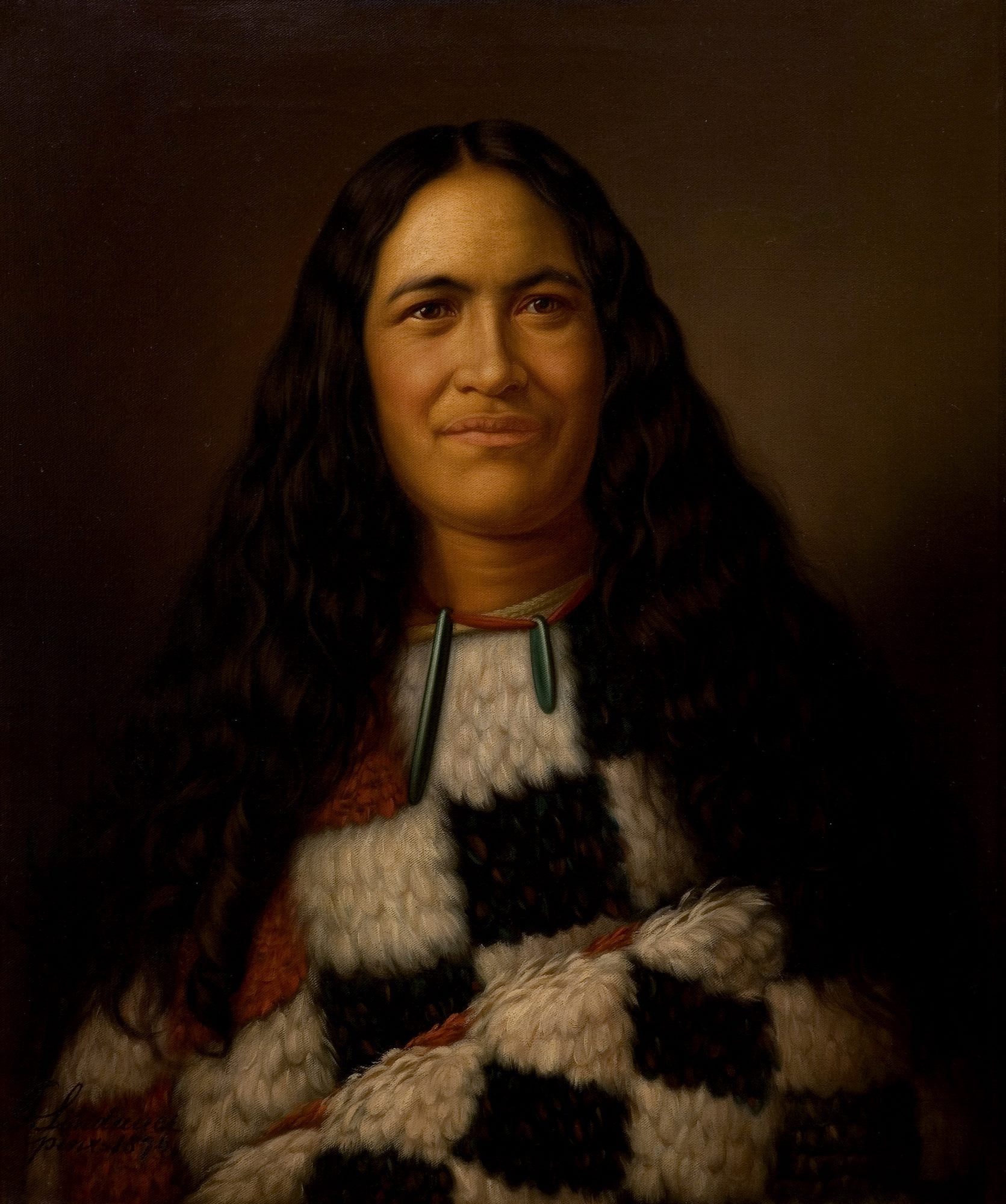
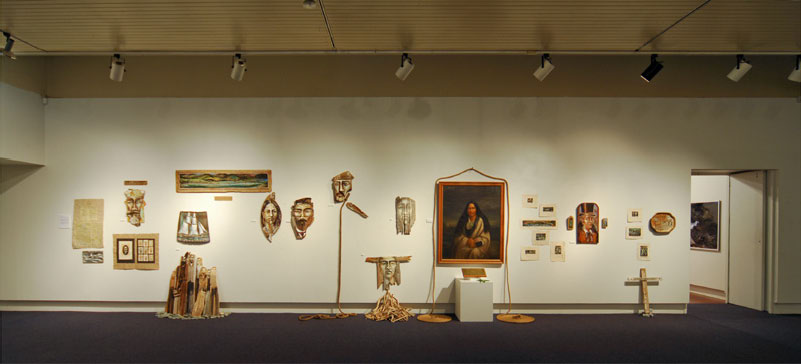
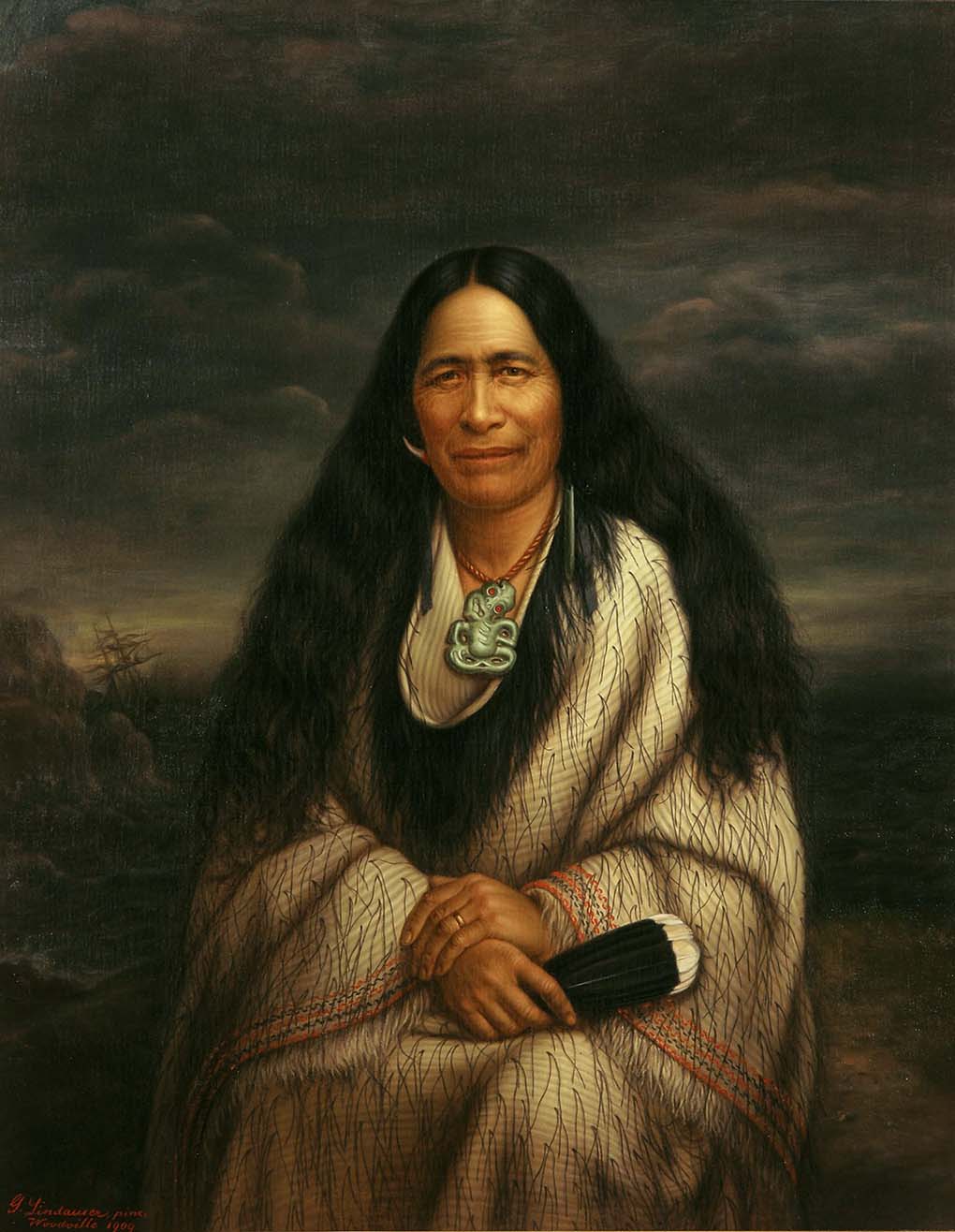
This imposing portrait was commissioned by the public of Nelson in 1909 to mark Mātenga’s recent death. Wearing a fine korowai and displaying the precious tail feathers of an entire huia in her right hand, Mātenga sits before a stormy landscape in which we glimpse a ship foundering on the rocks.
Unveiled by the governor, Lord Plunket, on 21 February 1910, the painting bore the following label:
In public recognition of the brave deed of Huria Matenga, chieftainess of the Ngatiawa, Ngatitama and Ngatitoa tribes, who, in company with her husband Hemi Matenga, at risk of life, swam with a rope through stormy sea, thereby saving the lives of the crew of the Delaware, wrecked at Whakapuaka, September 3rd, 1863.
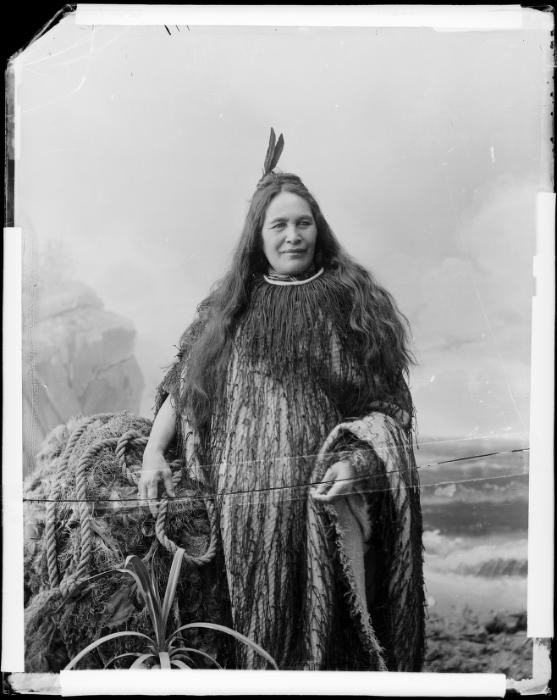
Lindauer’s portrait of a much younger Mātenga was acquired by Auckland businessman Henry Partridge for his collection of notable Māori.
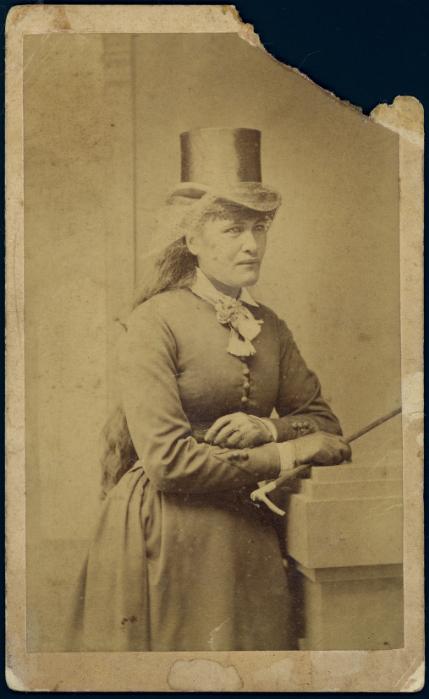
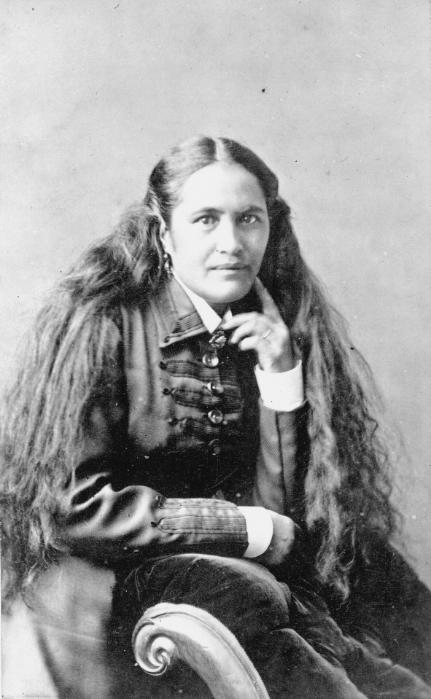
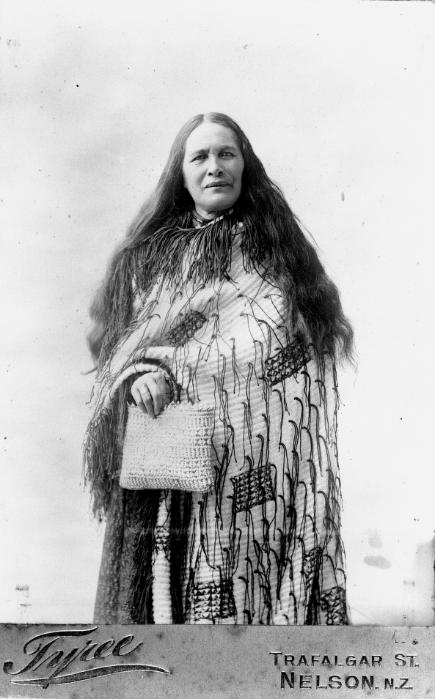
Lindauer’s later depiction of Mātenga was painted in his specially constructed studio on the outskirts of Woodville, north Wairarapa. It was in this sun-filled room, illuminated by natural light, that he painted so many of his exceptionally dark portraits. Like this posthumous portrait of Mātenga, these paintings were all based on photographs.
James Cowan, ‘Maori Heroines’, Star, issue 7580, 12 December 1902, p 1. ‘Grace Darling’ alludes to another heroine of the Victorian period so named, who was the daughter of a lighthouse keeper. With her father, Grace saved nine people in treacherous conditions from a shipwreck off the coast of Northumberland (Northeast England) in 1838.