Pōmare II, known as Whiria, later Whētoi Pōmare II
? – 1850Ngāpuhi
- Date
- 1896
- Medium
- oil on canvas
- Measurements
- 670 x 555 mm
- Other titles
- Whetoi Pomare 1896, [title, 2026]Pomare, [1930 catalogue]Pomare, [Deed of gift, 1915]Oil Painting. Portrait of the Ngapuhi Chief Pomare, [copyright certificate, 1898]Chief Pomare, [Lindauer's inscribed title]
- Inscriptions
- Front, LL: G. Lindauer pinx 1896Back, C: Chief PomareBack, G. Lindauer pinx 1896
- Takiwā / region
- Te Tai Tokerau
- Credit line
- Auckland Art Gallery Toi o Tāmaki, gift of Mr H E Partridge, 1915
- Accession no.
- 1915/2/27
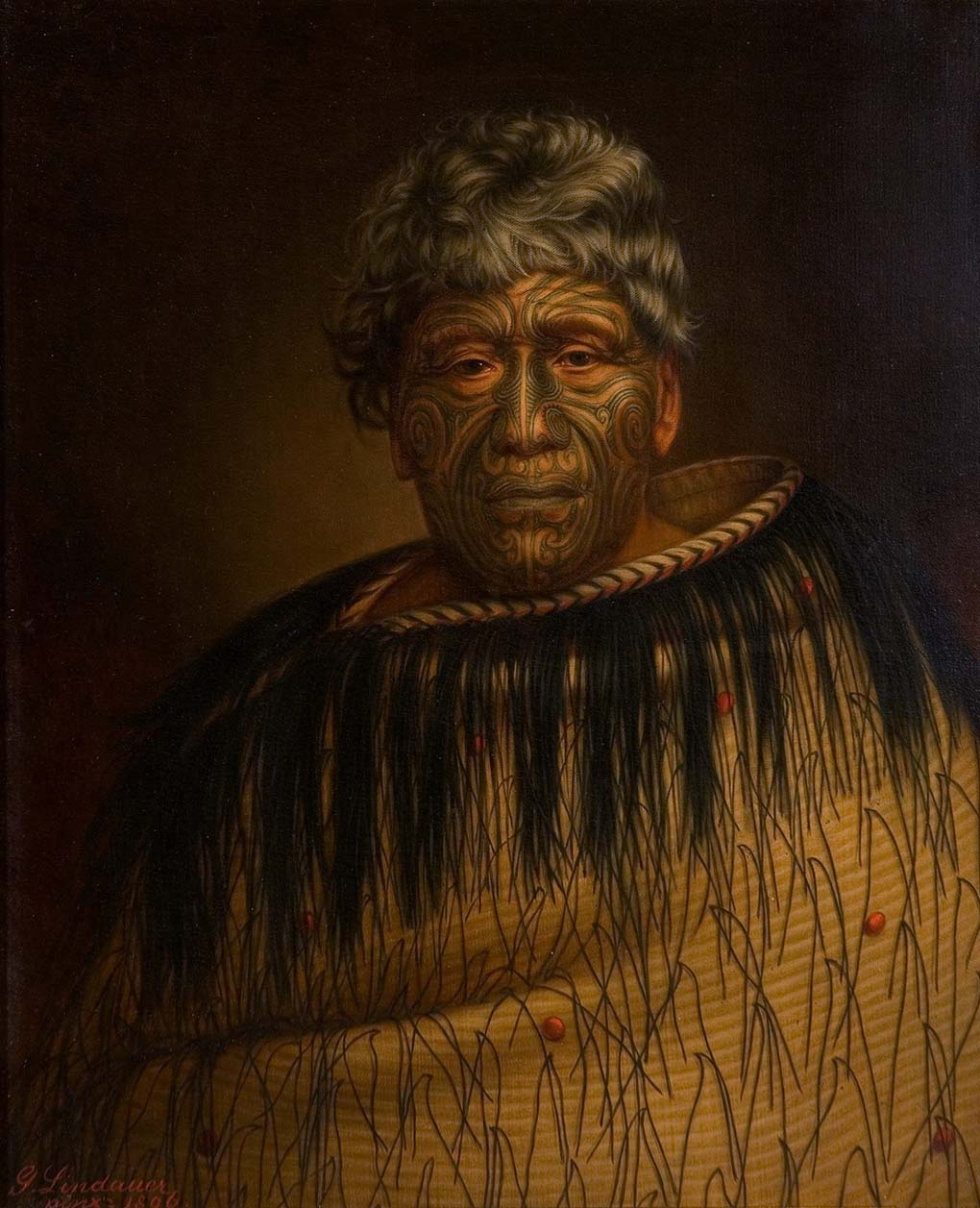
Ngāti Manu, Te Uri Karaka chief Whētoi Pōmare lived in Kawakawa, Te Tai Tokerau Northland. His father was Te Tautoro and his mother was Haki, sister of Pōmarenui. His given name was Whiria – when his uncle Whētoi Pōmare passed away, the mantle of leadership transferred to him and he assumed the name Whētoi Pōmare II. He married Rangingangana of Ngāti Raukawa, only daughter of the chief Whatanui.
Pōmare signed Te Tiriti o Waitangi and his mark is the third on the historic document.1
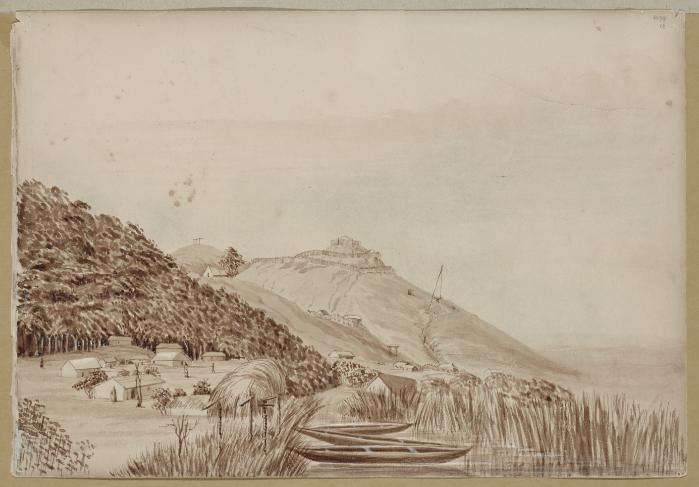
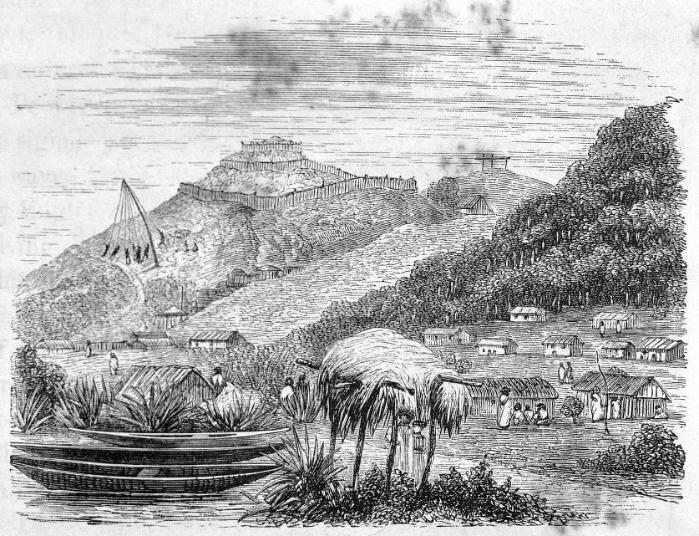
Pōmare had business dealings with magistrate and United States consul James Reddy Clendon, trading goods with the American ships that came into the Bay of Islands – initially a fruitful endeavour for Ngāti Manu. But such trading did not always go well for Māori. Five years after signing the Te Tiriti, Pōmare’s confidence in it was much eroded and he became increasingly unsettled by underhanded dealings that involved the Crown. He opposed all government and missionary presence in his district and was arrested at Ōtūihu Pā, a Ngāti Manu stronghold, and sent to jail. This was followed by the confiscation of his estates and possessions by the Crown.
While this painting was commissioned from Lindauer in 1896 as a portrait of Pōmare, the identification of the subject is uncertain. Pōmare died in 1850, but the painting was based on a photograph by George Pulman who only opened his studio in 1867. Further, at the time Pōmare died in 1850, the only form of photography practised in New Zealand was daguerreotype which were one-off images printed on silver-coated copper plates. While it is possible to photograph these, the clarity of the image and the fact there are at least two photographs from the sitting with Pulman suggests that these were taken by him using the wet plate or collodion process and represent another person who shared the name Pōmare.2 Henry Partridge, the commissioner of the portrait, did contact early settler John Webster seeking to confirm the identity of the person in the photograph. Webster’s reply did not provide complete certainty however, recalling a meeting in 1845, when he ‘saw the old Chief, then in his prime … I shook hands with him and never saw him again. From what I remember the photo is a faithful likeness but more than half a century has passed since those days and old memories are now like dreams.’3
John Wilson, ‘Nation and government – The origins of nationhood’, Te Ara – the Encyclopedia of New Zealand, http://www.teara.govt.nz/en/nation-and-government/page-1, accessed 26 July 2023.
Keith Giles, ‘The Problematic Portraits of Pomare II’, NZ Legacy 26, no 1, 2014, 20-21.
John Webster to Henry Partridge, August 1898, E H McCormick Research Library, Auckland Art Gallery Toi o Tāmaki, RC2009/2/20.