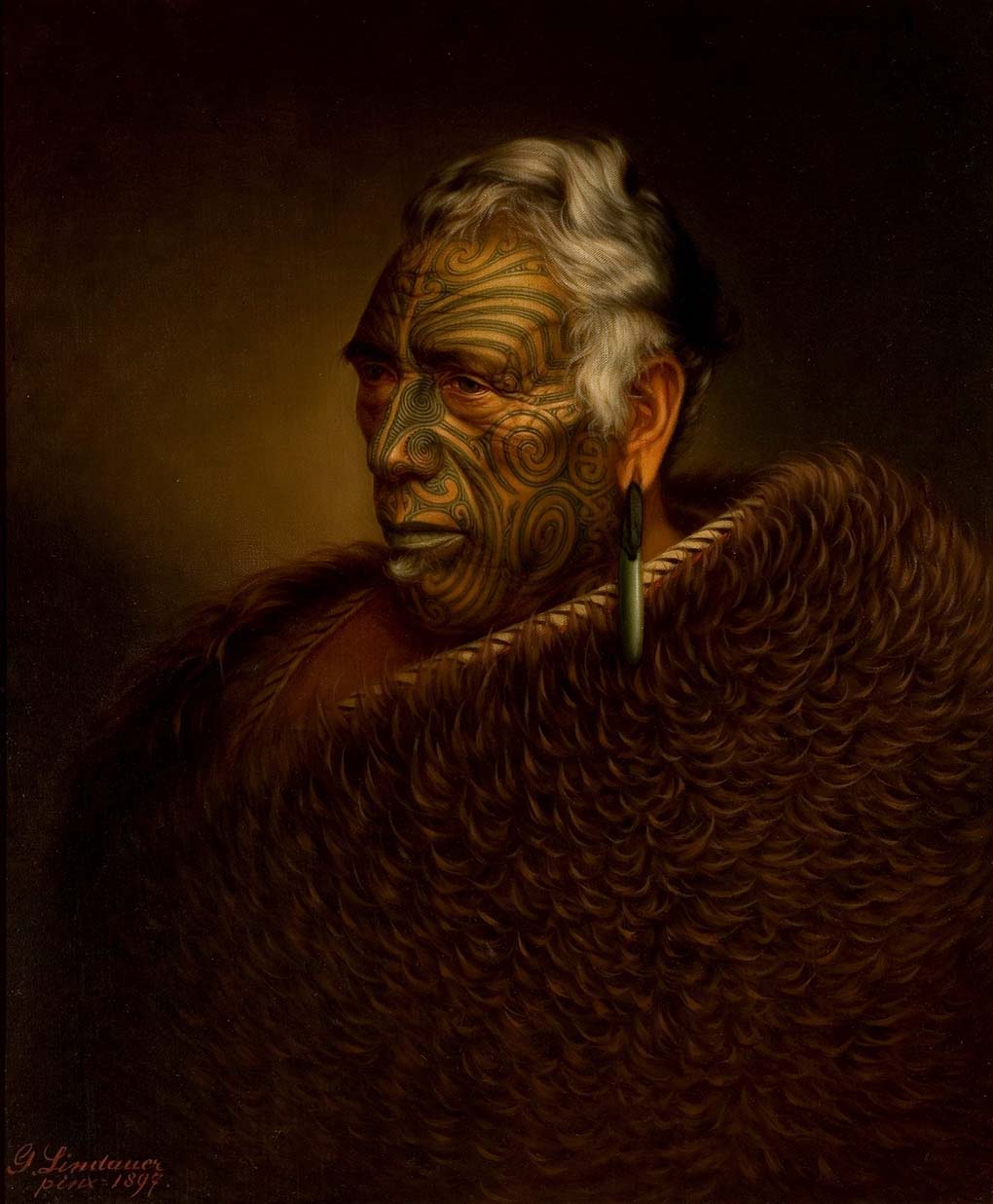
Ratene Hihitawa
Ngāti Pukenga, Te Tāwera, Ngāti Maru
- Date
- 1897
- Medium
- oil on canvas
- Measurements
- 670 x 554 mm
- Other titles
- Ratene Hihitawa, [title, 2026]Ratene , [1930 catalogue]Ratene, [Deed of gift, 1915]Ratene, [1901 catalogue]Oil Painting. Portrait of the Chief Ratene Tauranga, [copyright certificate, 1898]Chief Ratene , [Lindauer's inscribed title]
- Inscriptions
- Front, LL: G. Lindauer 1897Back, LC: Chief RateneBack, LR: G. Lindauer Pinx 1897
- Takiwā / region
- Waiariki
- Credit line
- Auckland Art Gallery Toi o Tāmaki, gift of Mr H E Partridge, 1915
- Accession no.
- 1915/2/29
Ratene Hihitawa was a Ngāti Pūkenga and Te Tāwera fighting chief, with Ngāti Maru connections, descended through paramount chief Te Kou-o-Rehua who established Ngāti Pūkenga at Manaia on the Coromandel.
Hihitawa fought in the 1864 battle at Pukehinahina, known as Gate Pā, a conflict instigated by British Forces seeking to deter Tauranga tribes from supporting Kīngitanga fighters in the Waikato. The Crown also invaded Te Ranga, another Tauranga stronghold – in response to iwi fighting for their whenua, the land was forcefully taken as retribution, or raupatu.
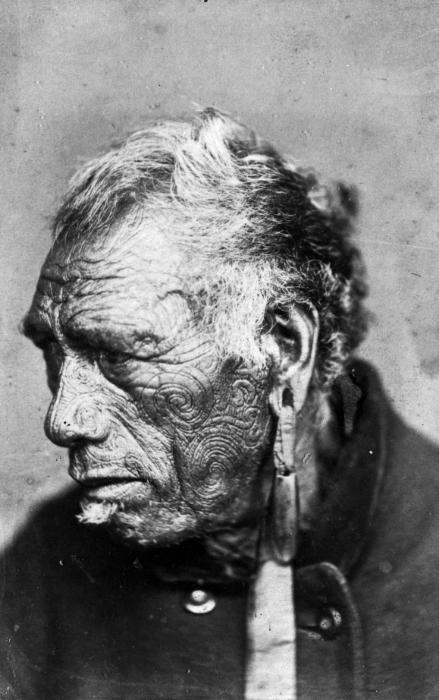
In Lindauer’s portrait, Hihitawa’s aged features bear a mataora with an intricate design, following the contours of his face, from his neck to his hairline, and including ngutu pūrua.
Befitting a rangatira, Hihitawa is shown wearing an exquisite kahu kiwi – in this example, the feathers have been arranged pointing upwards in the whakaaraara style, which embellishes the surface of the garment. These cloaks are taonga and identify the wearer as a person of mana.
Through the piercing in his left ear, Hihitawa wears a pounamu kuru, suspended from a length of black ribbon. Highly prized among Māori, pounamu taonga were symbols of status, exchanged as gifts and inherited down the generations.