![Rāpata Wahawaha [Major, NZC]](https://cdn.aucklandunlimited.com/lindauer/assets/media/rapata-wahawaha-image.jpg)
Rāpata Wahawaha [Major, NZC]
circa 1820 – 1897Ngāti Porou
- Date
- 1890
- Medium
- oil on canvas
- Measurements
- 1474 x 1006 mm
- Other titles
- Major Ropata Wahawaha NZC, [title, 2026]Major Ropata Wahawaha, [1930 catalogue]Major Ropata Wahawaha, [Deed of gift, 1915]Major Ropata Wahawaha, [1901 catalogue]Oil Painting. Portrait of Major Ropata Wahawaha N.Z.C. M.L.C. Chief of the Ngati Porou Tribe. Poverty Bay., [copyright certificate, 1898]
- Inscriptions
- Front, LL: G. Lindauer pinx 1890
- Takiwā / region
- Te Tairāwhiti
- Credit line
- Auckland Art Gallery Toi o Tāmaki, gift of Mr H E Partridge, 1915
- Accession no.
- 1915/2/20
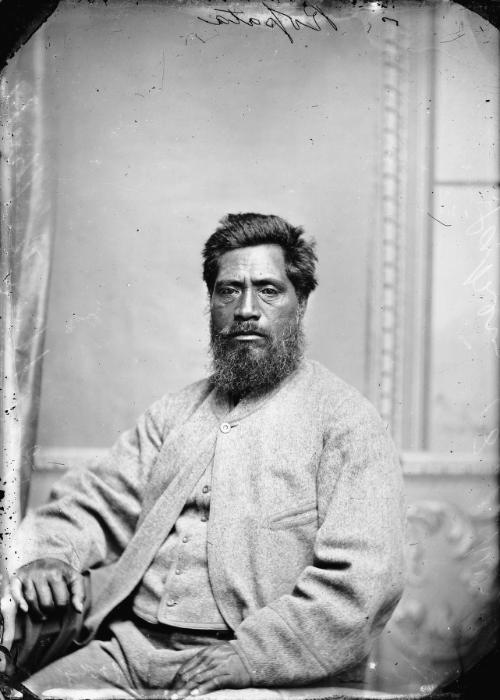
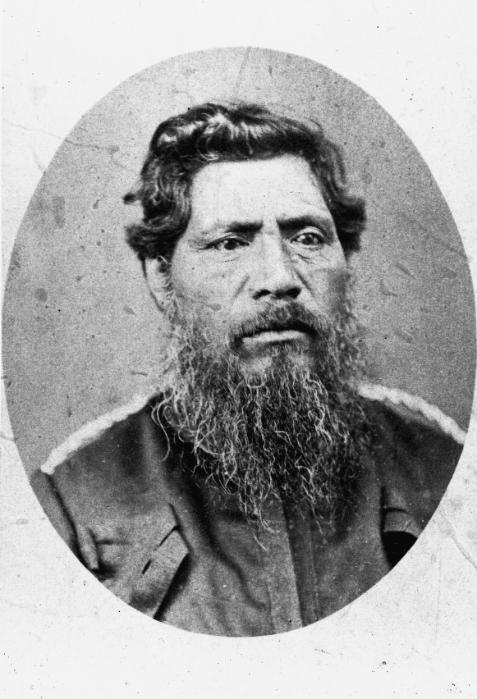
The son of Hipora Koroua and Te Hapamana Te Whao, Rāpata Wahawaha was still a child when captured in 1828 by Rāpata Whakapuhia of Rongowhakaata, from whom he got his first name. Returned to his Ngāti Porou people in the late 1830s, Wahawaha married Hārata Te Ihi at Tūranga Gisborne in 1849, and later went on to become a leading figure in the New Zealand Wars that devastated the East Coast of the North Island during the 1860s.
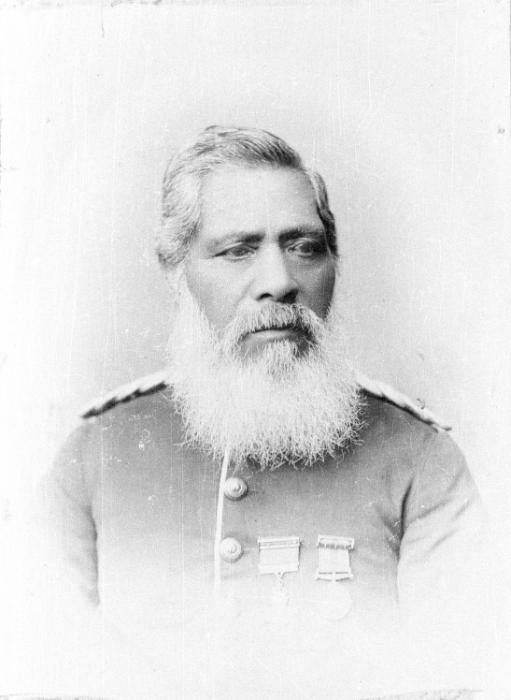
A notable military figure across the East Coast, Wairoa and into Te Urewera, Wahawaha allied with iwi and colonial forces in an effort to capture the prophet and guerrilla fighter Te Kooti.30 This campaign would become notorious – despite four attempts, Wahawaha never captured him. However, Wahawaha was awarded the New Zealand Cross for gallantry in the actions and raised to the rank of major. In 1878, he was awarded a sword of honour by Queen Victoria for his services and, in 1887, was appointed to the Legislative Council.1
Wahawaha had a wharenui built at Waiomatatini and named it Porourangi. The meeting house was carved by Tāmati Ngākaho, and it was completed and dedicated in 1888. Later, it was re-sited on higher ground as a protection against floods. The house still stands and some of the original carving has survived.2
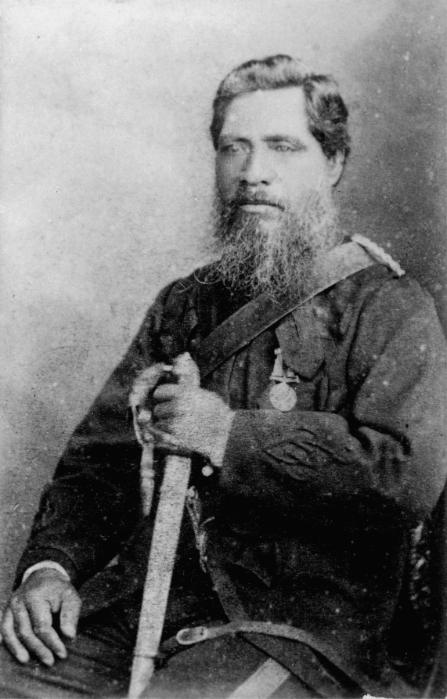
Lindauer’s portrait is based on a studio photograph of Wahawaha wearing his military patrol jacket and a leather-peaked forage cap, as well as both his New Zealand War Medal and New Zealand Cross. His sword of honour is inscribed ‘Given by Queen Victoria To Ropata Wahawaha For His Unfailing Loyalty and Valour’.
In June 1901, several comments were left in the Māori Visitors’ Book at the Lindauer Art Gallery. These included Wiremu Parata of Nūhaka stating that he visited Wahawaha and Ihaka Whaanga. Te Hata Pokiha and Tame Hapata acknowledged Wahawaha, Whaanga and Rēnata Kawepō, and Tuta Nihoniho of Waipiro Bay left a comment praising the portrait of Wahawaha. In September the same year, Mere Arihi Tinotahi of Whareponga, Waipiro Bay, wrote that the portrait looked just as Wahawaha did in real life. In October, Rameka Poi of Waiapu credited Wahawaha as:
- te tangata nana i ora ai tona hapu a Ngati Porou i te takiwa ote pakanga
- The person responsible for the survival of Ngāti Porou during the period of the wars.
Steven Oliver, ‘Wahawaha, Rāpata’, Dictionary of New Zealand Biography, first published in 1990, updated September 2013, Te Ara – the Encyclopedia of New Zealand, https://teara.govt.nz/en/biographies/1w1/wahawaha-rapata, accessed 6 June 2023.
Steven Oliver, ‘Wahawaha, Rāpata’, Dictionary of New Zealand Biography, first published in 1990, updated September 2013, Te Ara – the Encyclopedia of New Zealand, https://teara.govt.nz/en/biographies/1w1/wahawaha-rapata, accessed 6 June 2023.