Tāmati Pirimona Marino
? – 1877Ngāti Rārua, Ngāti Tama ki te Tauihu, Te Atiawa, Ngāti Toa
- Date
- c 1910
- Medium
- oil on canvas
- Measurements
- 630 x 525 mm
- Other titles
- Tamati Pirimona Marino, [title, 2026]Tamati Pirimona Marino, [1930 catalogue]Tamati Pirimona Marino, [Deed of gift, 1915]Painting Portrait of Chief Tamati Pirimona Marino, [copyright certificate, 1913]Chief Tamati Pirimona Marino, [Lindauer's inscribed title]
- Inscriptions
- Front, LL: G. LindauerBack, Chief Tamati Pirimona Marino
- Takiwā / region
- Te Tai HauāuruTe Waipounamu
- Credit line
- Auckland Art Gallery Toi o Tāmaki, gift of Mr H E Partridge, 1915
- Accession no.
- 1915/2/37
A rangatira from the territory of Aorere (present-day Collingwood), at the top of the South Island, Tāmati Pirimona Marino was affiliated to Ngāti Rārua, Ngāti Tama, Te Stiawa and Ngāti Toa. He is known to have gone by several names, including Thomas Freeman, which transliterates to Tāmati Pirimona.
In 1845, Marino, an enterprising individual, acquired a schooner, the Erena (named after his wife), which plied the waters between Whakatū Nelson and the west coast of the lower North Island. The boat transported goods between provincial centres until it was wrecked by its drunken Pākehā mate in 1850. Seeking compensation for both the destruction of his asset and the mate’s embezzlement of funds, Marino wrote to his acquaintance Donald McLean, asking for a prosecution.
Despite this episode, Marino maintained cordial relations with Pākehā and was known for his warm hospitality, even hosting a lavish Christmas dinner in 1861 for miners from the inland goldfields. Marino also helped Pākehā who wanted to explore the mountainous country between Nelson and Māwhera Greymouth, travelling with a small party led by colonial administrator James Mackay in 1861.
Marino died at Nelson in December 1887. According to the Nelson Evening Mail, he was aged around 80 years.1
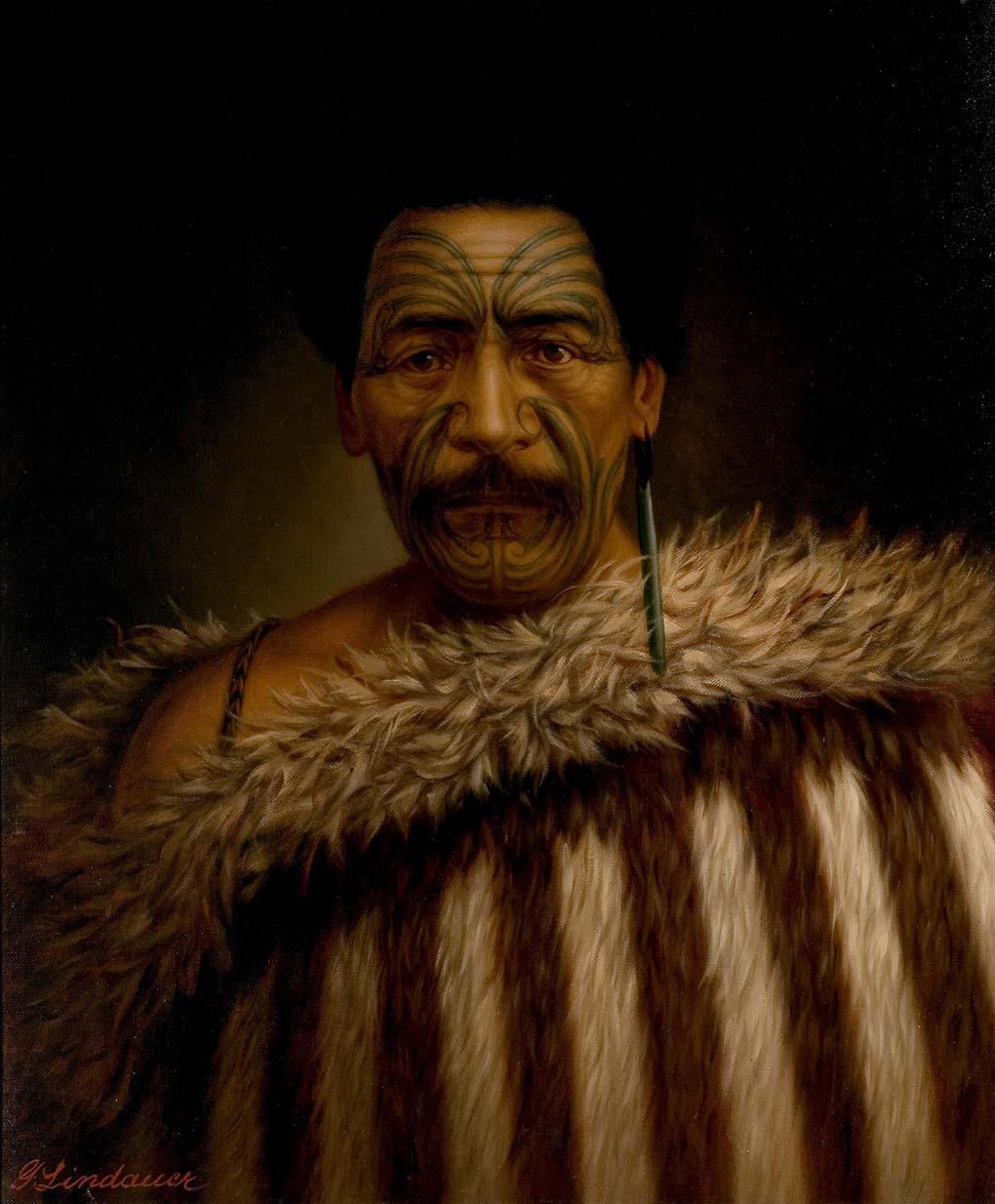
Befitting his status as a rangatira, Marino is shown in Lindauer’s portrait wearing a valuable kahu kurī made on a base of woven muka. Beneath the cloak’s tufted fringe, lengths of dog skin have been arranged in a pattern of alternating brown and white stripes. The mataora, with its powerful tīwhana, and the large kuru pounamu further signal Marino’s high rank.
‘Death’, Nelson Evening Mail, 2 January 1877, p 2.