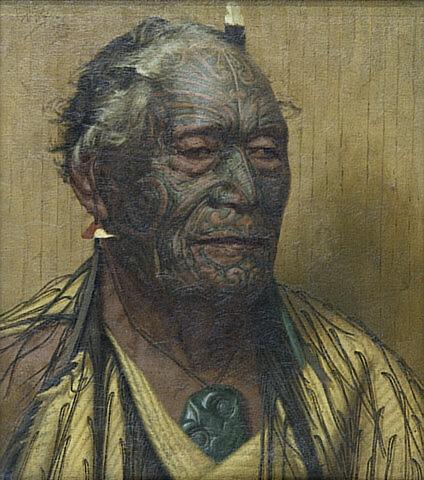
Tāmati Wāka Nene
? – 1871Ngāpuhi
- Date
- 1890
- Medium
- oil on canvas
- Measurements
- 880 x 700 mm
- Other titles
- Tamati Waka Nene, [title, 2026]Tamati Waka Nene, [1930 catalogue]Tamati Waka Nene, [Deed of gift, 1915]Tamati Waka Nene, [1901 catalogue]Oil Painting. Portrait of Ngapuhi Chief Tamati Waka Nene, [copyright certificate, 1898]Tamati Waka Nene, Chief of Hokianga, [Lindauer's inscribed title]
- Inscriptions
- Front, LL: G. Lindauer pinx 1890Back, LR: Tamati Waka Nene, Chief of Hokianga
- Takiwā / region
- Te Tai Tokerau
- Credit line
- Auckland Art Gallery Toi o Tāmaki, gift of Mr H E Partridge, 1915
- Accession no.
- 1915/2/38
A noted warrior and leader, Nene, later Tāmati Wāka Nene, was probably born in the 1780s. He was the fourth son of Tapua, leader and tohunga of Ngāti Hao of Hokianga, and the younger brother of Eruera Maihi Patuone. His mother was Te Kawehau.
Nene distinguished himself in warfare involving Te Roroa, Ngāti Hao and Ngāpuhi. He participated in Ngāpuhi war parties led by chief Hongi Hika into the Hauraki Marutūāhu region. They spread into the eastern, western and southern districts, taking prisoners as they moved down the North Island.
Nene lived in the Hokianga when it was a thriving trading society and saw the advantages of having Pākehā shipping traders in the area, helping settlers as well as Wesleyan missionaries establish themselves there in 1827.
When his brother Patuone settled in the Hauraki Gulf during the 1830s, Nene became the ranking chief among his people. Like his brother, Nene signed the 1835 He Whakaputanga o te Rangatiratanga o Nu Tireni. Promoted by the British resident James Busby following French interest in the country, He Whakaputanga asserted the sovereign power and authority over the land of the rangatira who signed. Five years later, in February 1840, Nene played a key role in convincing the rangatira gathered at Waitangi of the goodwill of the British Crown, leading many to add their support to Te Tiriti o Waitangi.
By the mid-1830s, Nene had converted to the Wesleyan faith and was baptised in 1839, taking the name Tāmati Wāka, after Thomas Walker, an English merchant patron of the Church Missionary Society.1
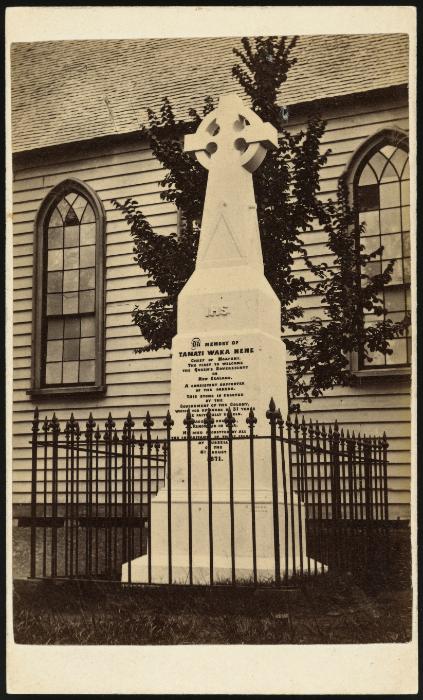
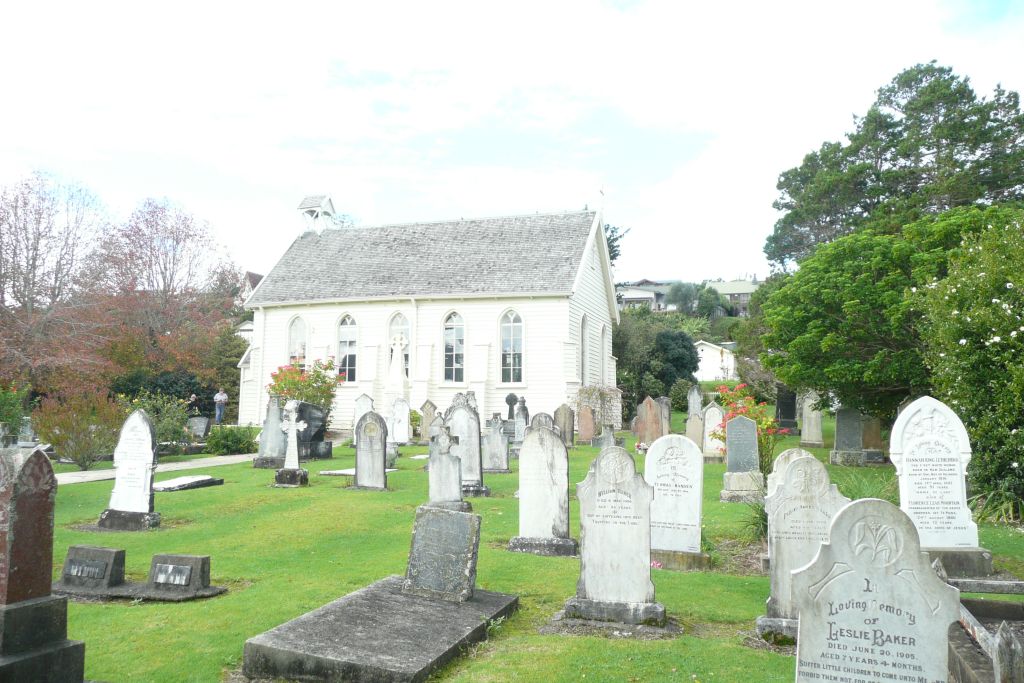
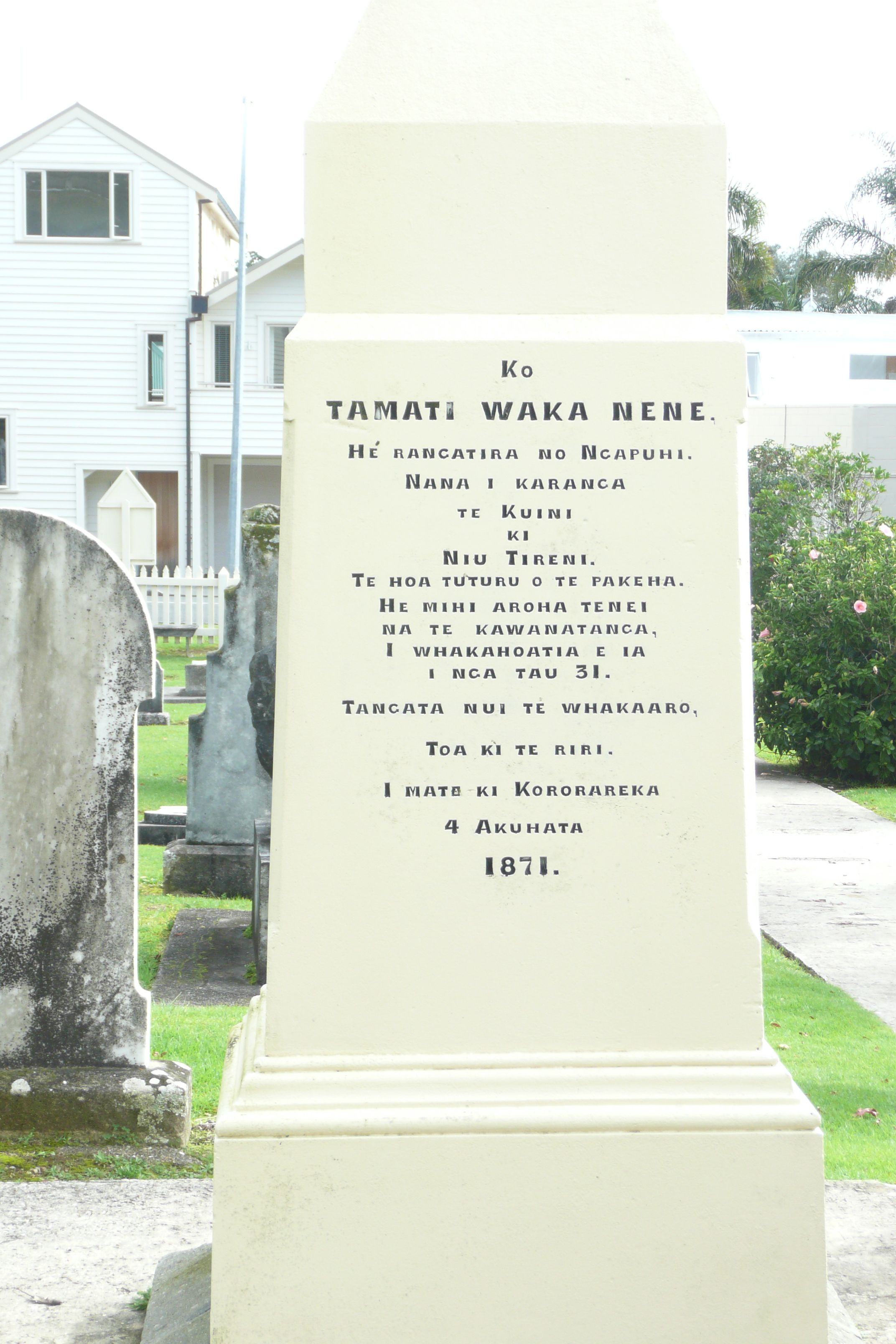
Nene died on 4 August 1871 and was buried, at his own request, in a churchyard in the Bay of Islands. In 1873, Lord Bowen unveiled a memorial stone to him carved from Ōamaru stone and featuring a Greek Cross.
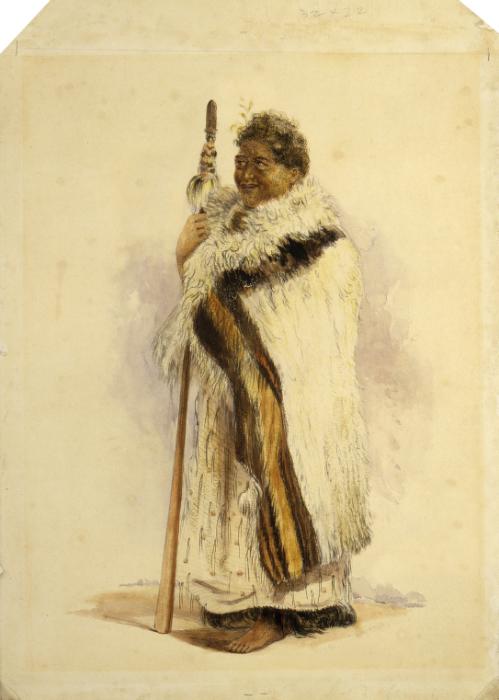
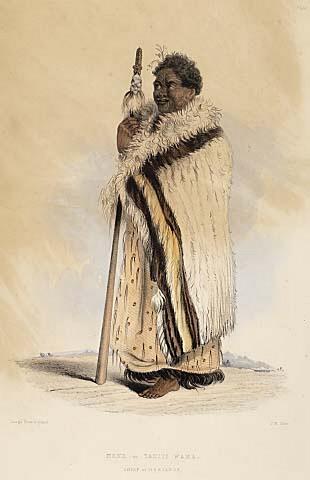
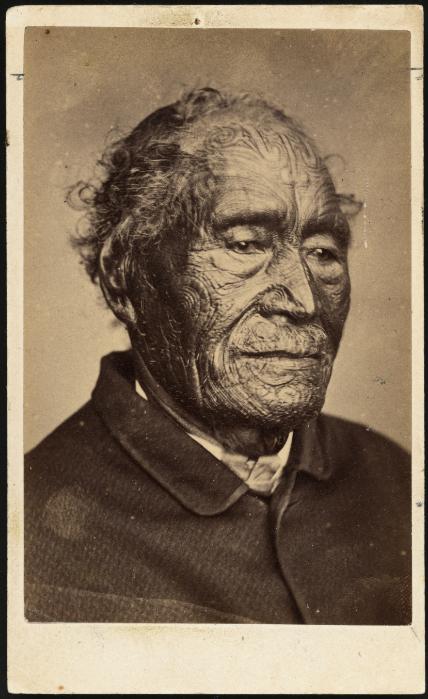
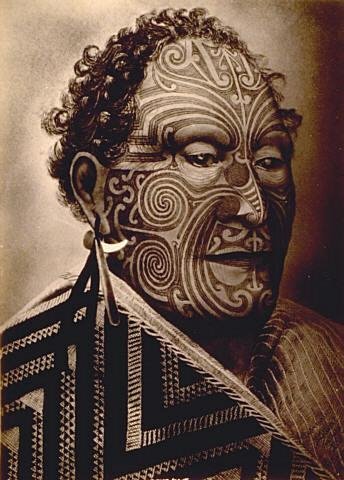
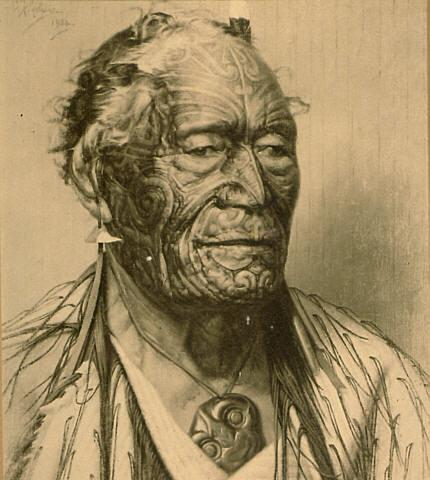
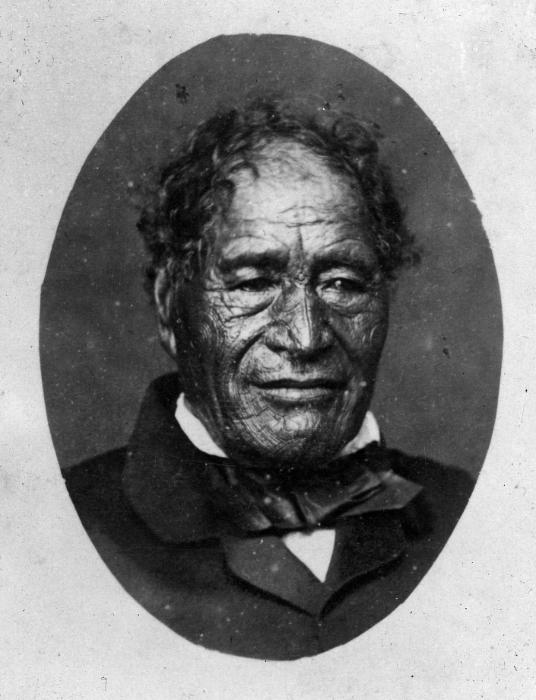
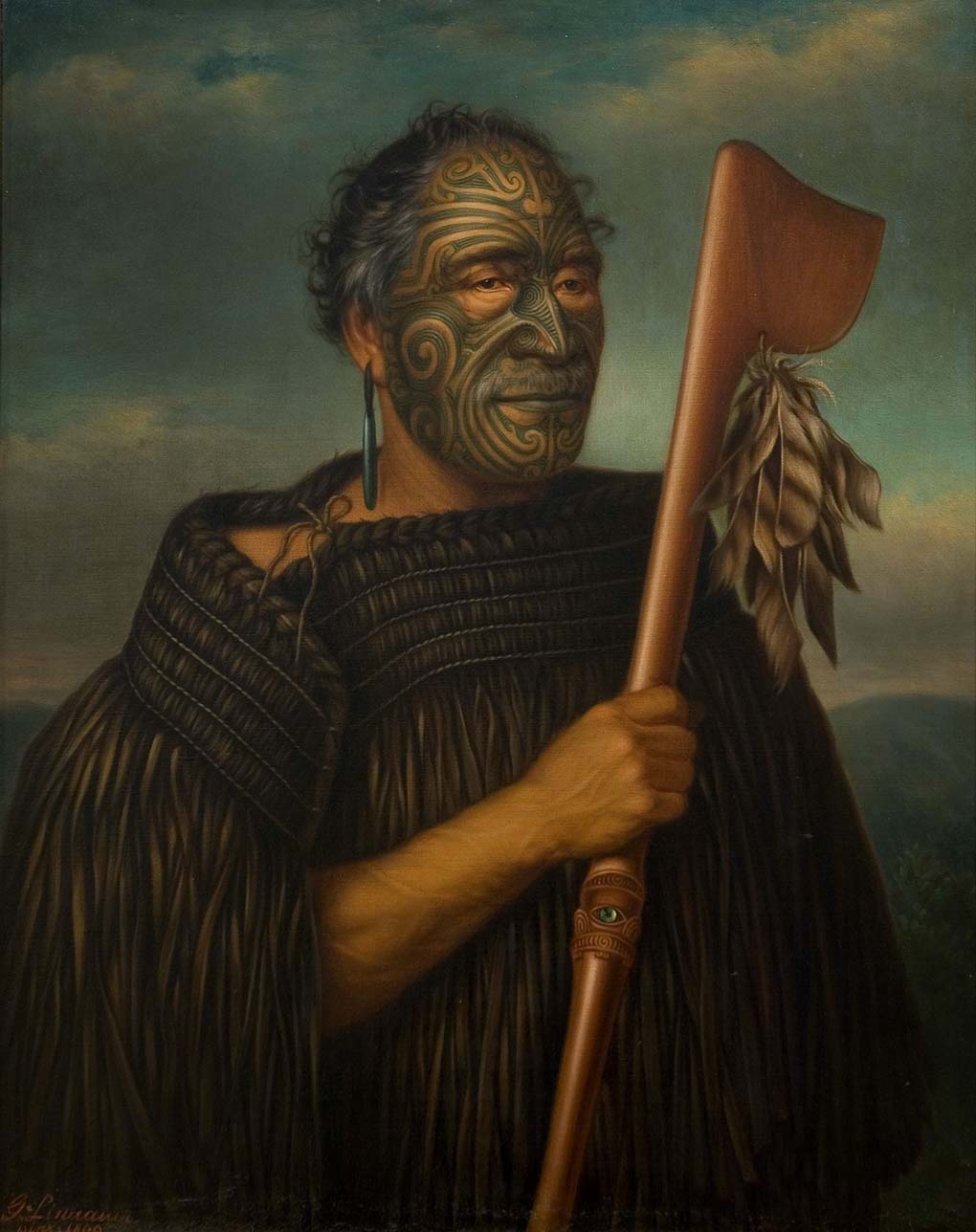
This posthumous portrait is based on a photograph taken by Elizabeth Pulman. Painted in 1890, Lindauer replaced Nene’s European clothing with a traditional pākē. In his right hand, Nene holds a tewhatewha, adorned with feathers and set with a small round of pāua halfway up the handle. A pounamu ear ornament hangs from his right ear, in the form of a kuru. This taonga, like the detailed mataora, would have marked Nene as a man of great standing.
In Lindauer’s notebook, this portrait is numbered 6 and inscribed ‘for Mr Partridge’.
Angela Ballara, ‘Nene, Tāmati Wāka’, Dictionary of New Zealand Biography, first published in 1990, updated November 2001, Te Ara – the Encyclopedia of New Zealand, https://teara.govt.nz/en/biographies/1n2/nene-tamati-waka, accessed 20 July 2023.