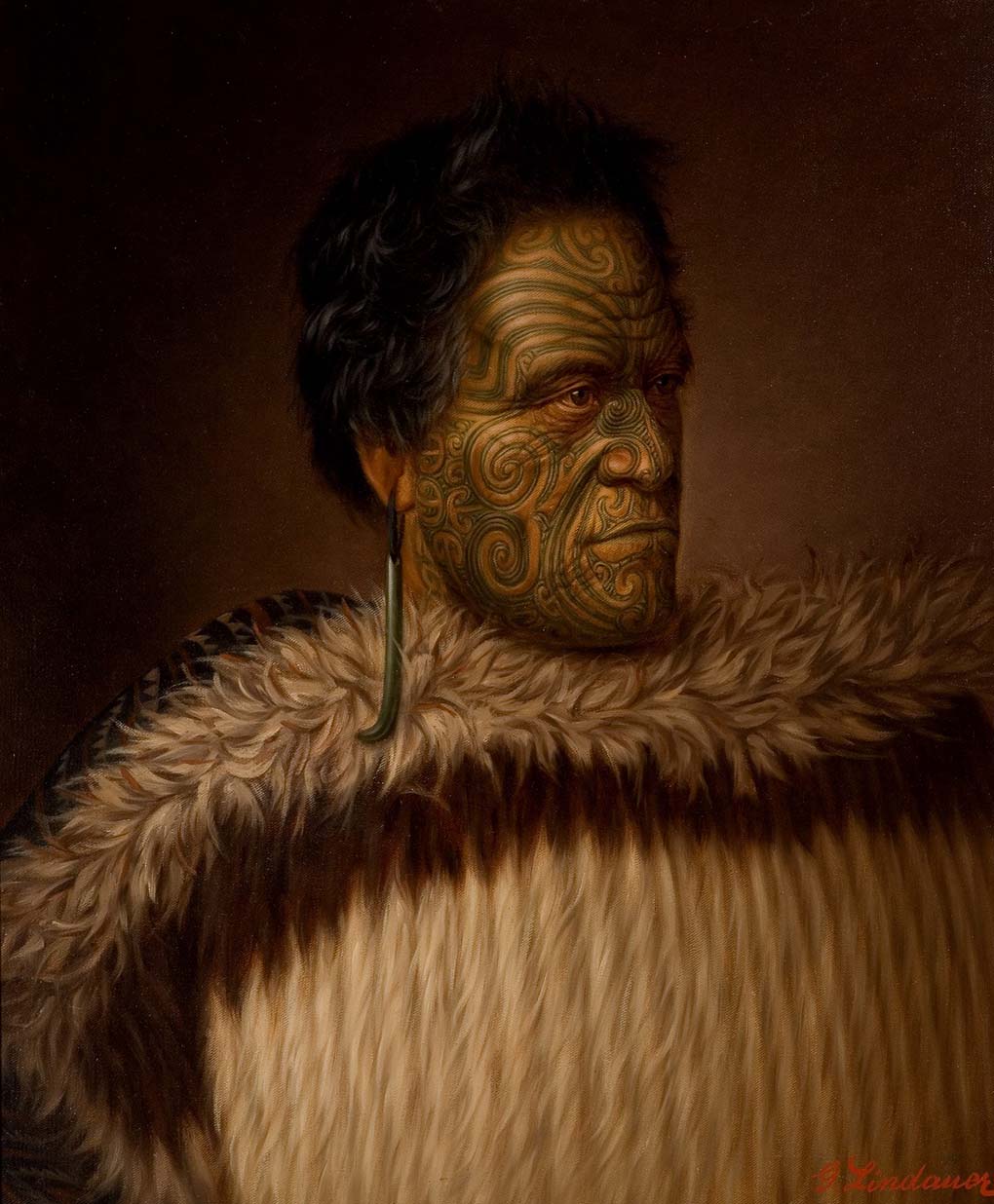
Tomika Te Mutu
? – 1867Ngāi Te Rangi
- Date
- c 1910
- Medium
- oil on canvas
- Measurements
- 615 x 514 mm
- Other titles
- Tomika Te Mutu, [title, 2026]Tomika te Mutu, [1930 catalogue]Tomika Te Mutu, [Deed of gift, 1915]Painting Portrait of Chief "Tomika te Mutu", [copyright certificate, 1913]Chief Tomika Te Mutu, [Lindauer's inscribed title]
- Inscriptions
- Front, LR: G. LindauerBack, LC: Chief Tomika Te Mutu
- Takiwā / region
- Waiariki
- Credit line
- Auckland Art Gallery Toi o Tāmaki, gift of Mr H E Partridge, 1915
- Accession no.
- 1915/2/52
Ngāti Tuwhiwhia and Ngāi Te Rangi rangatira Tomika Te Mutu was the paramount chief of Tauranga. His tribal areas extended out from Tauranga to include the islands of Matakana and Motuhoa (where he lived), around Mauao Mt Maunganui, and Katikati Athenree.1
During Tomika’s time as leader, Ngāi Te Rangi’s homelands were frequently invaded by musket-bearing Ngāpuhi from the Bay of Islands and, thereafter, Ngāti Maru raiders of Hauraki Marutūāhu into the 1830s. He and his people endured the further conflict that came to the Bay of Plenty in the 1860s, resulting in the loss of land for many of the local iwi.
As a response to the perceived threat of the Kīngitanga (Māori king movement), in 1860 Governor George Bowen invited many rangatira to Kohimārama in Tāmaki Makaurau Auckland for a conference. Tomika accepted the governor’s invitation – and it was at the conference that the earliest known images of Tomika were made, taken by photographer John Crombie and later displayed at the International Exhibition, London, in 1862. At the conference, Tomika became a signatory to the resolutions that affirmed Queen Victoria’s sovereignty and ultimately dismissed the Kīngitanga as ‘a cause of division and strife, and [which] is fraught with troubles to the country’. So committed, Tomika sided with the Crown during the subsequent fighting in the Bay of Plenty. Unlike the dissenting tribes, Tomika and other allies of the Crown were compensated for the land they lost in the 20,250-hectare allotment that the Crown acquired in the peace settlement.
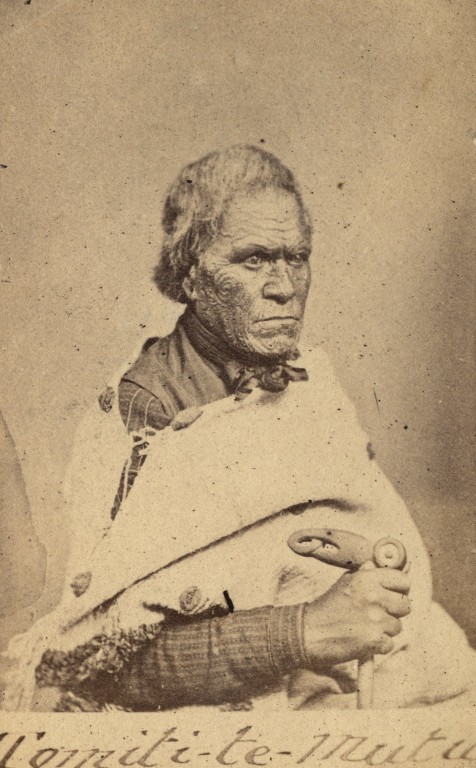
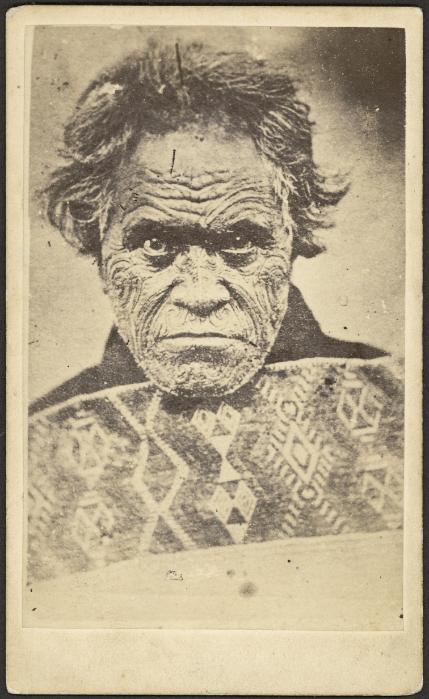
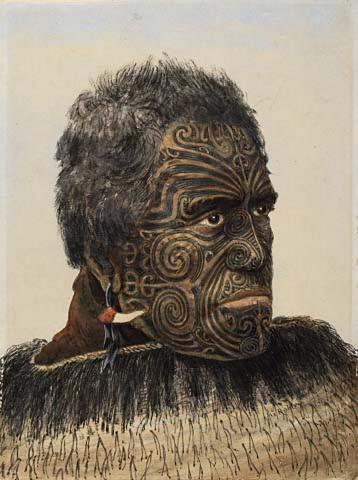
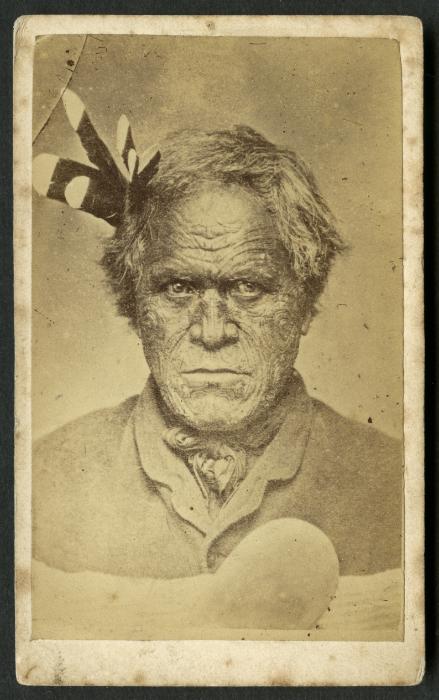
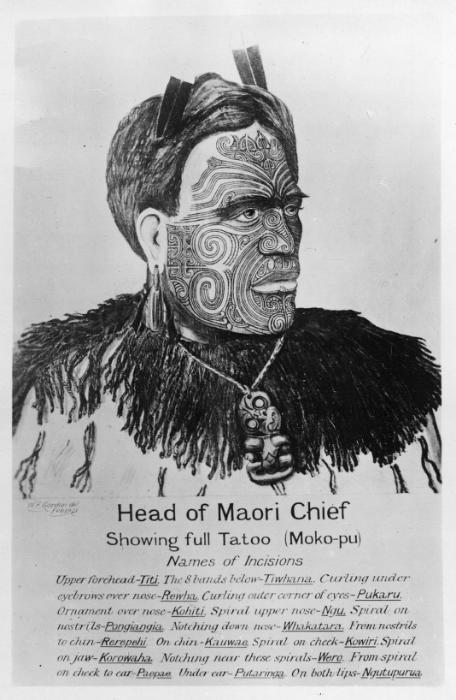
Crombie appears to have taken at least two photographs of Tomika at the 1860 sitting: one front on and another in near profile, which is the source of this portrait, Lindauer’s other version in the National Library of Australia’s collection, as well as H G Robley’s watercolours of Tomika. The photograph shows Tomika wearing a kaitaka upside-down to better display the finely woven tāniko border. Lindauer instead chose to depict Tomika wearing a fine kahu kurī, a garment that was generally reserved for dignitaries and closely associated with battle. Made of strips of dog skin sewn on to a body made of woven muka, Tomika’s cloak includes a ruffled kurupatu. Hanging from his ear is an elegant kapeu pounamu. Lindauer was especially successful in capturing the three-dimensional quality of Tomika’s mataora; applied with an uhi, this method left deep ridges in the skin.
Te Raupatu o Tauranga Moana: Report on the Tauranga Confiscation Claims, Waitangi Tribunal, Wellington, 2004, https://forms.justice.govt.nz/search/Documents/WT/wt_DOC_68361657/Te%20Raupatu%20o%20Tauranga%20Moana.pdf, accessed 28 August 2026.