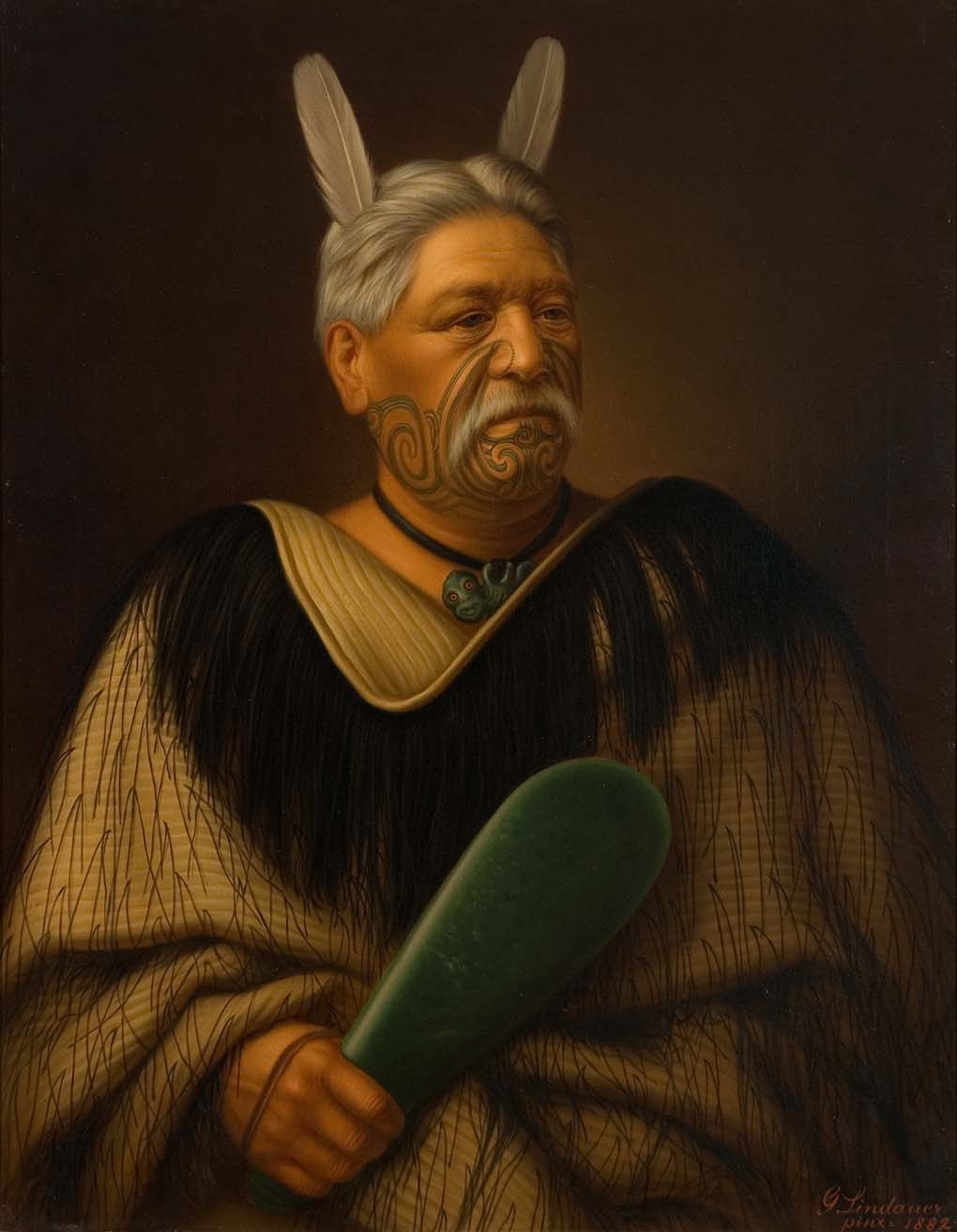
Wahanui Reihana Te Huatare
? – 1897Ngāti Maniapoto
- Date
- 1882
- Medium
- oil on canvas
- Measurements
- 863 x 685 mm
- Other titles
- Wahanui Reihana Te Huatare, [title, 2026]Wahanui, [1930 catalogue]Wahanui, [Deed of gift, 1915]Wahanui, [1901 catalogue]Oil Painting. Portrait of the Ngatimaniapoto Chief Wahanui, [copyright certificate, 1898]Wahanui, Chief of the Maniapoto tribe, Waikato, [Lindauer's inscribed title]
- Inscriptions
- Front, LR: G. Lindauer pinx 1882Back, LR: Wahanui, Chief of the / Maniapoto tribe, WaikatoBack, LR: G. Lindauer pinxit 1882
- Takiwā / region
- Waikato-Maniapoto
- Credit line
- Auckland Art Gallery Toi o Tāmaki, gift of Mr H E Partridge, 1915
- Accession no.
- 1915/2/70
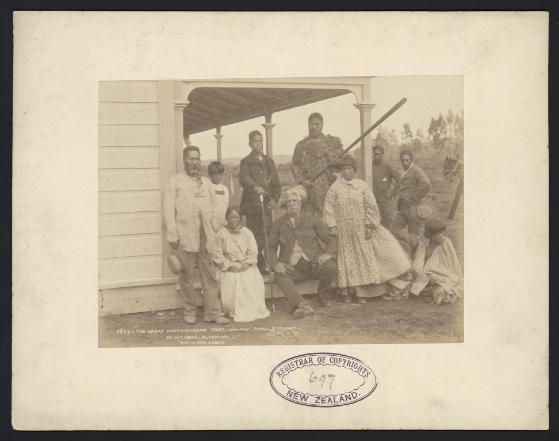
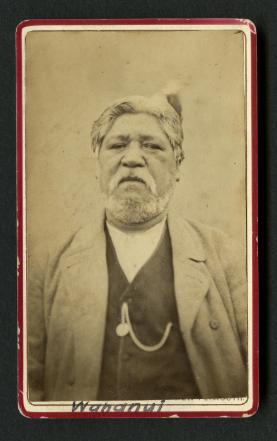
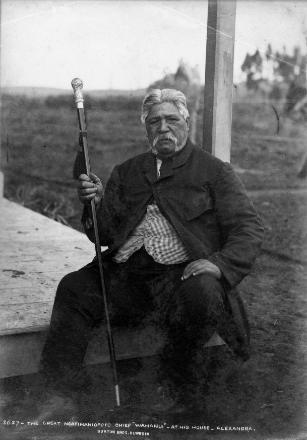
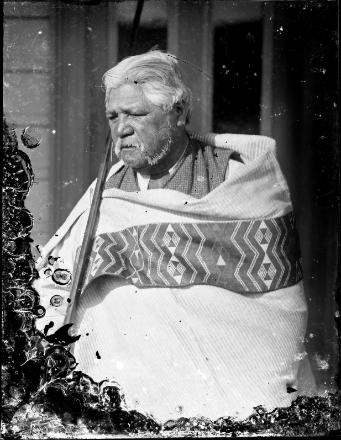
Probably born in the late 1820s, Wahanui Reihana Te Huatare was a Ngāti Maniapoto chief, renowned for his gifts of oration and diplomacy, and formidable intellect. He was also known for his commanding physical presence, standing at six feet seven inches (two metres).
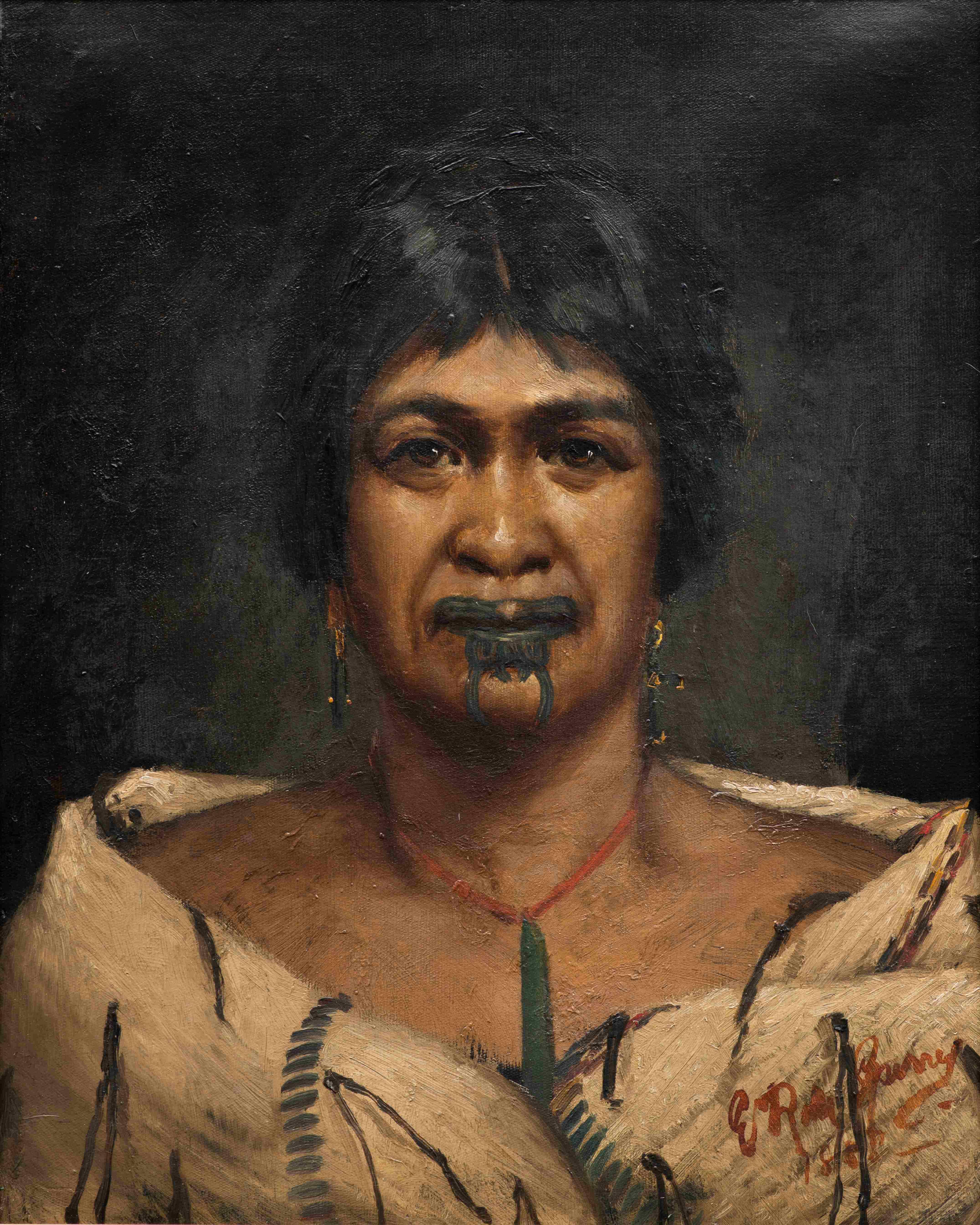
Tracing his whakapapa back to Raka, Hotunui and Tūrongo, Wahanui’s father was Te Ngohiteārau, also known as Te Huatare, and his mother was Tārati of Ngāti Waiora, from the Piopio area. He married Te Wairingiringi from Kāwhia, who was portrayed by the artist E Kate Sperrey. The couple adopted children, among whom were Tūwhāngai Hounuku and Tuaārau.1
Wahanui was educated at Three Kings Wesleyan College in Tāmaki Makaurau Auckland and remained a lifelong Christian.
He returned to live in the Waikato just before the Kīngitanga faced invasion by Crown forces in July 1863. Wahanui was active throughout the resulting conflict, becoming a key advisor to the Kīngitanga, and was known among Pākehā as the ‘power behind the throne’, reflecting the influence he was believed to have over Tāwhiao, the second Māori king.
Wahanui died at Whataroa in 1897, his obituary appearing in newspapers around the country.
Wahanui’s great size is suggested by his presence in Lindauer’s portrait. His large right hand grasps an enormous mere pounamu, a taonga that symbolises not only Wahanui’s chiefly status but also his authority and warrior background. Dressed in a korowai hukahuka, he also wears a heitiki pounamu, hanging horizontally from a thick cord about his neck. Wahanui’s lower face is incised with a mataora. His thick, silver hair is ornamented with two rare kōtuku feathers, again symbolic of his high rank.
Manuka Henare, ‘Wahanui Huatare’, Dictionary of New Zealand Biography, first published in 1993, Te Ara – the Encyclopedia of New Zealand, https://teara.govt.nz/en/biographies/2w2/wahanui-huatare, accessed 26 July 2023.