Erueti Tamaikōhā
1835-1836 – 1915Tūhoe
- Date
- 1903
- Medium
- oil on canvas
- Measurements
- 867 x 714 mm
- Other titles
- Eru Tamaikoha Te Ariari, [title, 2026]Tamaikoha , [1930 catalogue]Tama-i-Koha, [Deed of gift, 1915]Oil Painting of Chief Tama Koha / Urewera Country, [copyright certificate, 1905]
- Inscriptions
- Front, LR: G. Lindauer pinx 1903
- Takiwā / region
- Waiariki
- Credit line
- Auckland Art Gallery Toi o Tāmaki, gift of Mr H E Partridge, 1915
- Accession no.
- 1915/2/68
Eru Tamaikōhā belonged to the Ngāti Tama hapū of Waimana, in the northern Te Urewera. His father was Te Ariari o Tu and his mother was Tiramate, and he could trace his whakapapa back to the original people of Te Urewera, Te Hapū-oneone.
In 1870 land court hearings, Tamaikōhā gave evidence that in the 1820s Ngāpuhi musket war parties from the Far North forced exile on his father Te Ariari and other Tūhoe leaders, who were defenceless without firearms. Rangatira Te Ariari returned to Waimana during the early 1830s when Tamaikōhā was still young. Although its chiefs did not sign the Treaty of Waitangi, Tūhoe was the only tribe in the 19th century to be recognised and granted the legal right to self-govern.
Tamaikōhā defended his chiefly hapū authority as distinct from Tūhoe tribal authority. He denied that his mana had been absorbed by Tūhoe and maintained that his mana motuhake was derived from his tupuna Haeora. Tamaikōhā was renowned throughout Mātaatua and Whakatōhea rohe for his vow of sovereignty at any cost. Nonetheless, Tamaikōhā became a significant Tūhoe leader, part of a generation that fought tirelessly to prevent the loss of land to government forces.
Following conflicts with the Crown, Tūhoe established a governing council of chiefs to safeguard the mana motuhake of Tūhoe, invoking the words: ‘Kaua te rori, kaua te rūri, kaua te rīhi, kaua te hoko’ (No roads, no survey, no leasing land, no selling land). Tūhoe’s relationship with the Crown today reflects the foresight of chiefs such as Tamaikōhā who were Tūhoe nationalist and peacemakers.
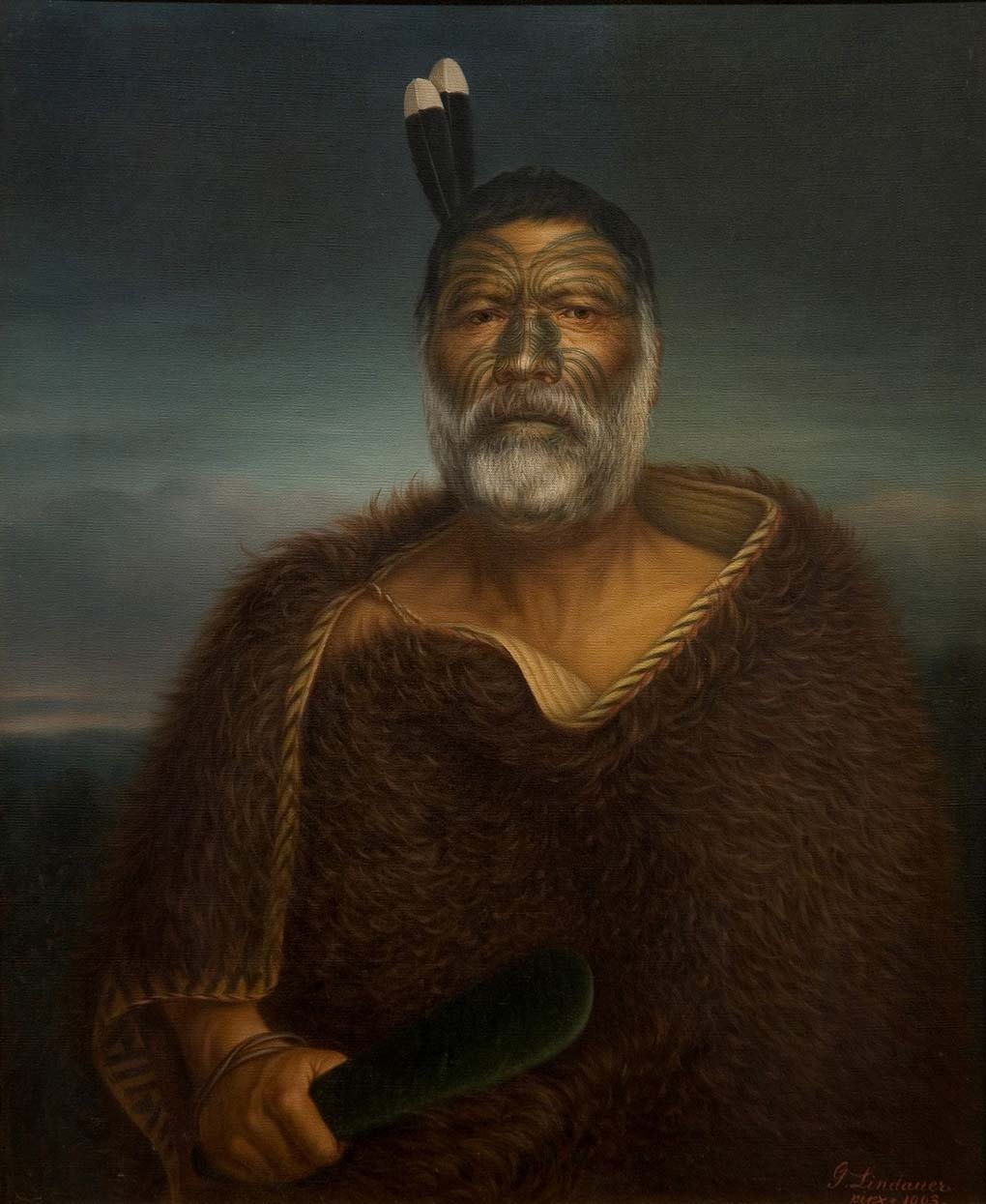
In this 1903 portrait, Lindauer portrayed Tamaikōhā wearing two huia tail feathers in his hair, a kahu kiwi over his shoulders and holding a mere pounamu in his right hand.
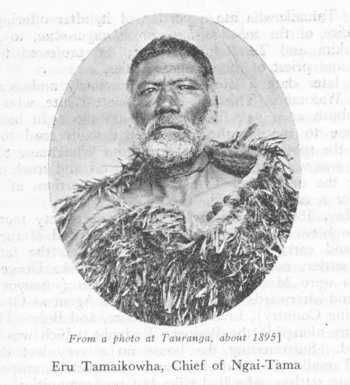
Lindauer’s portrayal was based on an undated photograph by an unknown photographer. In 1921, James Cowan wrote in the Journal of the Polynesian Society that Tamaikōhā’s uncle Nētana Whakaari, the renowned tohunga tā moko from Waimana, told him that Tamaikōhā wore a rape on one side only.
- Bay of Plenty Times article quoted in: ‘Page 3 Advertisements Column 4’, Timaru Herald, vol XXIV, issue 1394, 17 April 1876, p 3, Papers Past, accessed 3 March 2010.
- Judith Binney, Encircled Lands: Te Urewera, 1820-1921, Bridget Williams Books, Wellington, 2009.