![Hōri Kerei Taiaroa [Hon, MLC]](https://cdn.aucklandunlimited.com/lindauer/assets/media/hon-hori-kerei-taiaroa-mlc-image.jpg)
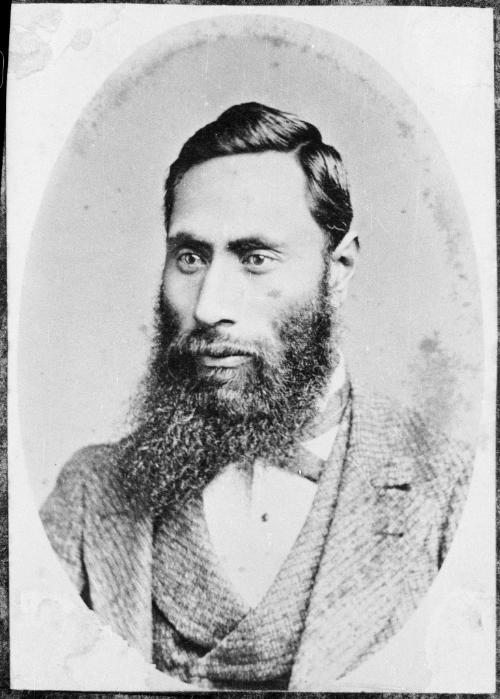
Hōri Kerei Taiaroa [Hon, MLC]
? – 1905Kāti Māmoe, Kāi Tahu, Waitaha
- Date
- 1901
- Medium
- oil on canvas
- Measurements
- 510 x 435 mm
- Other titles
- Hon Hori Kerei Taiaroa, MLC, [title, 2026]Hon. H. K. Taiaroa, M.L.C., [1930 catalogue]Hon. H. K. Taiaroa, M.L.C., [Deed of gift, 1915]Hon. H. K. Taiaroa, M.L.C., [1901 catalogue]Oil Painting of Hon. H. K. Taiaroa, [copyright certificate, 1902]The Hon. Taiaroa M.L.C., [Lindauer's inscribed title]
- Inscriptions
- Front, LR: G. Lindauer 1901Back, LR: The Hon. Taiaroa M.L.C.Back, LR: G.L. Pinx 1901
- Takiwā / region
- Te Waipounamu
- Credit line
- Auckland Art Gallery Toi o Tāmaki, gift of Mr H E Partridge, 1915
- Accession no.
- 1915/2/9
The son of Te Mātenga Taiaroa of Ngāi Te Ruahikihiki hapū, a prominent Kai Tahu chief, and Mawera of Ngāti Rangiwhakaputa, Hōri Kerei Taiaroa, as he was later known, was born around the 1830s or early 1840s at Ōtākou, on the Otago Peninsula. His father named him Huriwhenua to mark peacemaking between Kai Tahu and Te Atiawa in 1844. In early adulthood Taiaroa was christened Hōri Kerei after former governor Sir George Grey but elders continued to refer to him as Huriwhenua. Growing up at Ōtākou, he was taught to read and write by Wesleyan missionaries.1
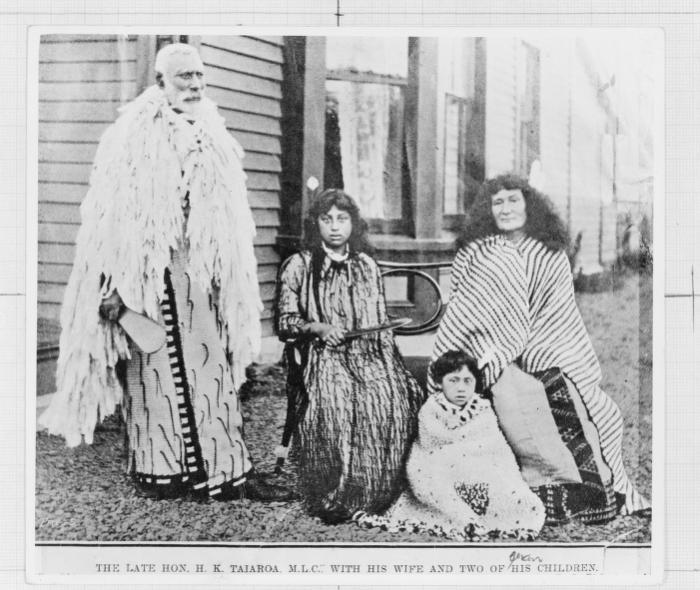
He married Tini Pana (Jane Burns) around the late 1850s or the early 1860s and together they had six sons. An assessor for the Native Land Court (until 1881), Taiaroa was elected to the House of Representatives for the Southern Māori district in 1878, serving two terms in office and leaving Parliament in 1884. A year later, he was called back to parliament to serve on the Legislative Council as a life member. An outspoken yet pragmatic politician, he worked to advance Kai Tahu land claims against the government but did not live to see a settlement outcome.
Taiaroa died at Te Whanganui-a-Tara Wellington on 4 August 1905 and was buried in the churchyard at Ōtākou.
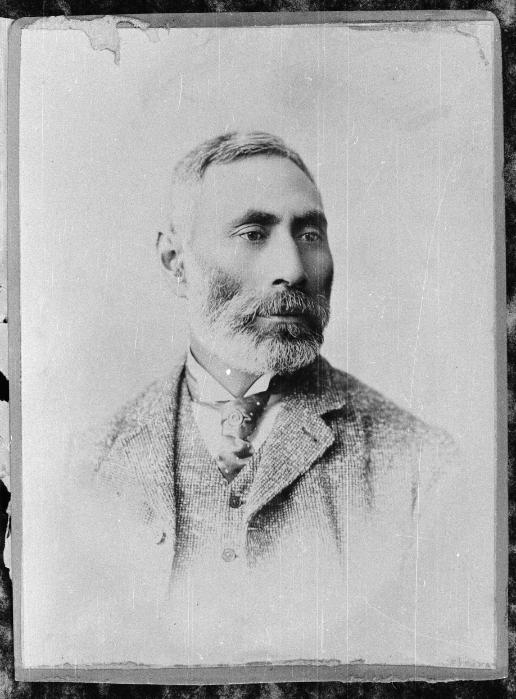
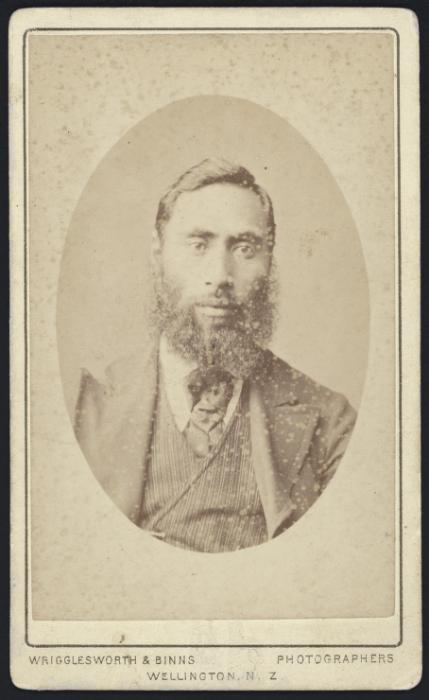
Lindauer’s portrayal of Taiaroa is based on an undated parliamentary photographic portrait, which shows Taiaroa in a tweed suit of a much lighter colour. In the 1901 painting, he is attired as a stately politician wearing a black three-piece suit and a wing-tipped white shirt with a knotted silk tie; the pin at the centre of his tie, made of gold not pounamu, emphasises the changing times. Lindauer painted a much earlier portrait of Taiaroa and also his wife. In a list of portraits made ‘In Wellington 1877’, he recorded at 15 ‘Mr Taiaroa M.H.R (M.L.C)’ and 16 ‘Mrs dto [ditto]’. The initials after Taiaroa’s name refers to his service as a Member of the House of Representatives, and the subsequent pencil annotation records his change in rank to a Member of the Legislative Council. The reference to Taiaroa’s wife as ‘Mrs dto’ was a standard shorthand Lindauer used throughout his notebook to indicate spousal portraits.2
Harry C Evison. ‘Taiaroa, Hōri Kerei’, Dictionary of New Zealand Biography, first published in 1993. , Te Ara – the Encyclopedia of New Zealand, https://teara.govt.nz/en/biographies/2t1/taiaroa-hori-kerei, accessed 23 December 2025.
Gottfried Lindauer’s Notebook, E.M. Lindauer Papers, Alexander Turnbull Library, Wellington, MSX-3092, p.5.