Wāhine Weaving Kākahu
- Date
- c 1905
- Medium
- oil on canvas
- Measurements
- 2070 x 1880 mm
- Other titles
- Women Weaving, [title, pre-Sep 2026]Maori Women Weaving Flax Garments, [catalogue 1930]Wahines Mat Weaving, [Deed of gift, 1915]Oil painting Wahines Mat Making, [copyright certificate, 1906]
- Credit line
- Auckland Art Gallery Toi o Tāmaki, gift of Mr H E Partridge, 1915
- Accession no.
- 1915/2/62
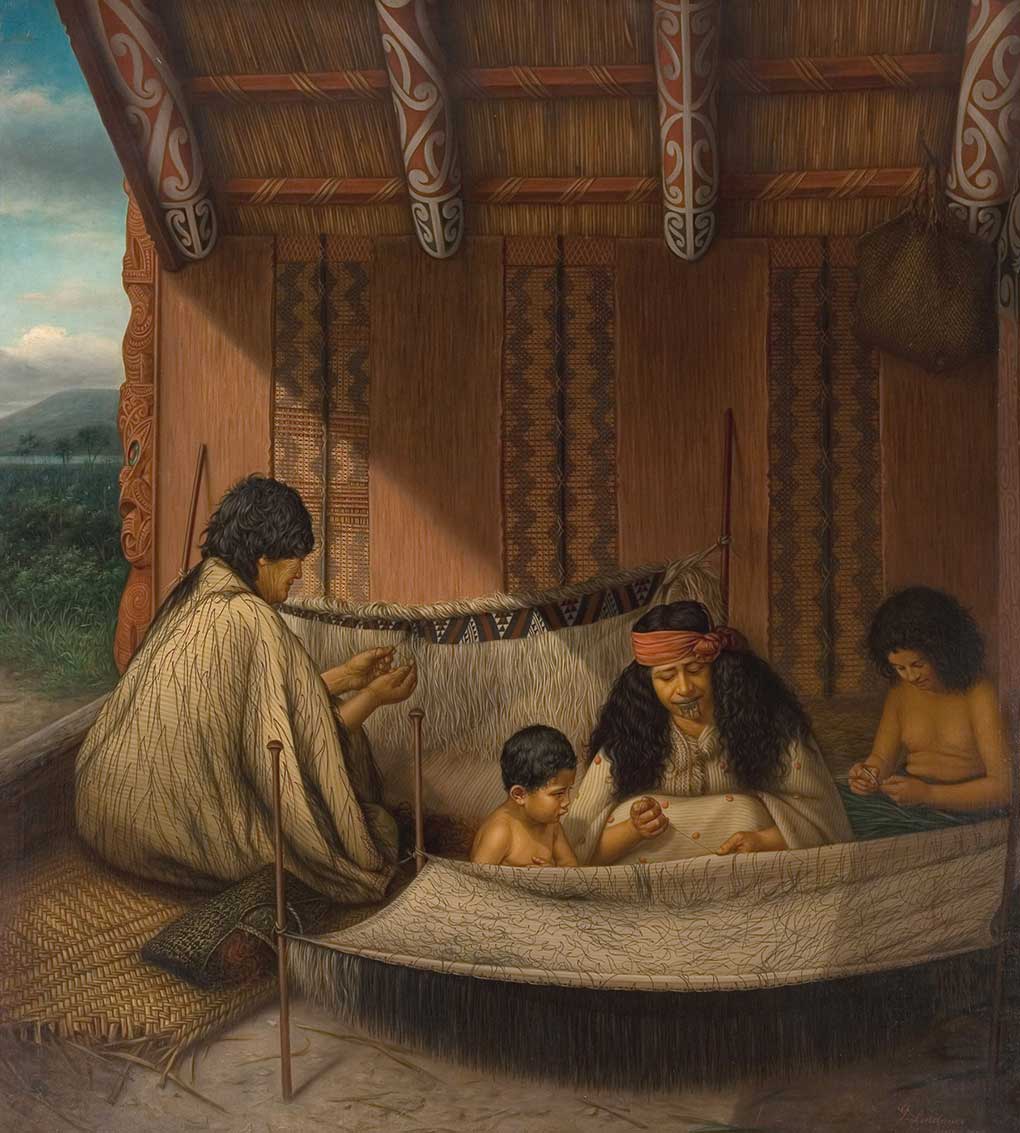
A rich weaving and textile tradition is illustrated in exquisite ways in Lindauer’s paintings. His portraits of Māori include a diverse range of cloak and garment styles that show customary techniques, materials and technology related to this art form. The ornately carved mahau setting of this large scene painting is based on a Samuel Carnell photograph, now in the Alexander Turnbull Library, taken in the 1890s recording the porch of a Hawke’s Bay meeting house. In Wāhine Weaving Kākahu, two weavers are in the finishing stages of making a large korowai in the immediate foreground with a kaitaka behind. The cloaks are held by turuturu at the corners to maintain the shape and structure of the garment as it is being made. Hukahuka are being attached to the korowai, while the tāniko border of the kaitaka is being woven.
The sun is casting afternoon shadows on the porch, revealing a quiet, contemplative environment perfect for the meditative process of weaving. The weavers seem absorbed in their work and are not distracted by two inquisitive youngsters being gently introduced to the world of weaving. Their presence in this painting emphasises that weaving is the domain of women.
Although Lindauer has painted a tranquil scene, visually it is very active and full of colour and texture. Art forms related to the whare whakairo are illustrated: the whakairo that grace the front of the house and in the porch the painted heke with kōwhaiwhai in bold red, black and white pigment. The turapa of the porch show another weaving tradition: tukutuku panelling in long geometric patterns similar to the tāniko patterns on the borders of garments.
Beyond the meeting house on the left there is a pā harakeke and a distinct waterway in the distance, indicating a location among a well-established supply of weaving resources.