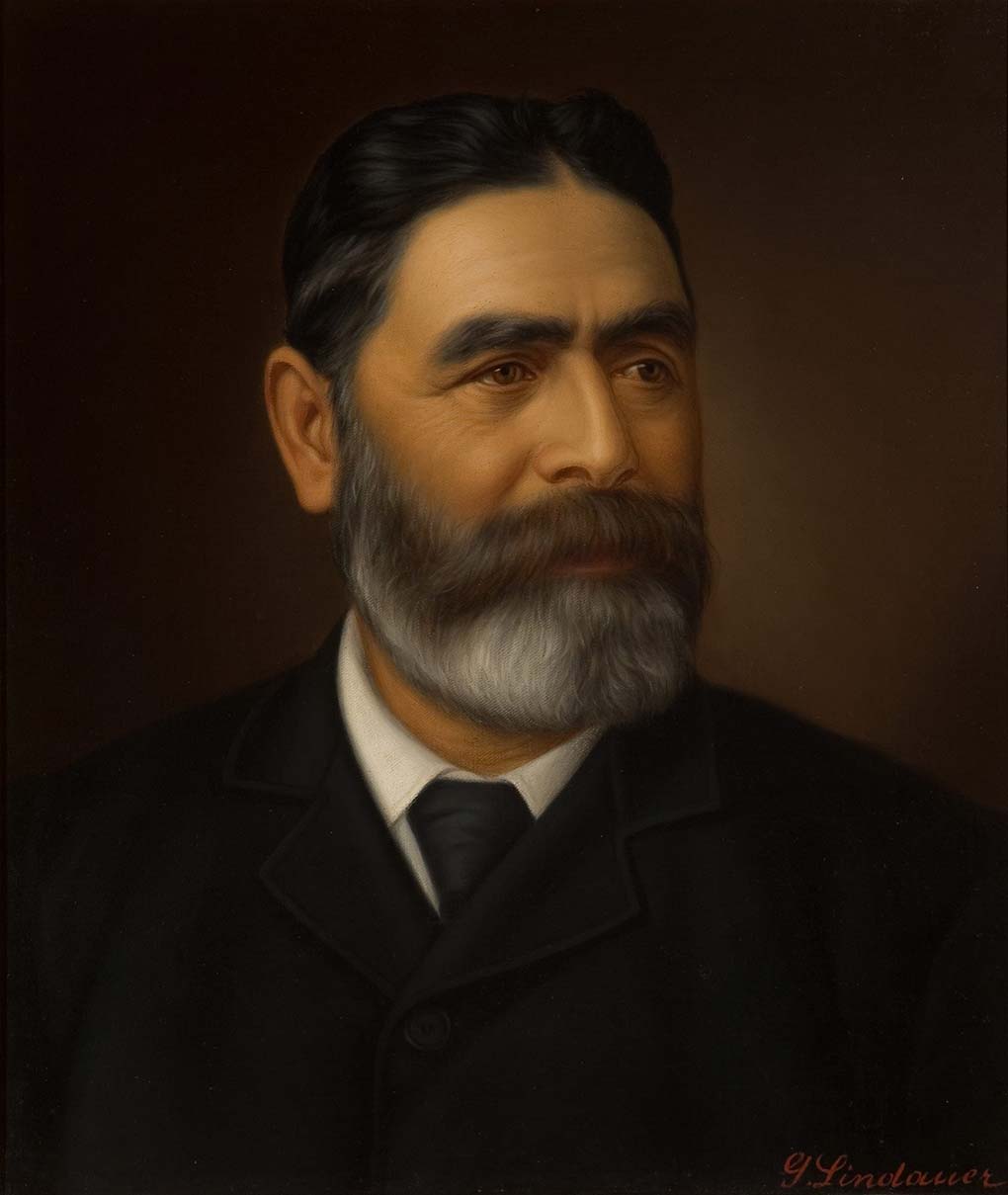
Wīremu Parata Te Kākākura Waipunāhau
? – 1906Te Atiawa, Ngāti Toa
- Date
- 1901 or before
- Medium
- oil on canvas
- Measurements
- 522 x 450 mm
- Other titles
- Wi Parata Te Kakakura, [title, 2026]Wi Parata, [1930 catalogue]Wi Parata Kakakura, [Deed of gift, 1915]Oil Painting of Wi Parata M. H. R., [copyright certificate, 1902]Wi - Parata M.H.R. [no pic - so has not been checked][Lindauer's inscribed title]
- Inscriptions
- Front, LR: G. LindauerBack, Wi - Parata M.H.R. [TBC]
- Takiwā / region
- Te Tai Hauāuru
- Credit line
- Auckland Art Gallery Toi o Tāmaki, gift of Mr H E Partridge, 1915
- Accession no.
- 1915/2/58
Wīremu Parata Te Kākākura Waipunāhau was born on Motungārara Island, near Kāpiti Island, in the mid-1830s. Te Kākākura, his birth name, was taken from the dying speech of Te Pēhi Kupe, while Wīremu Parata was a baptismal name, a transliteration of ‘Brother Williams’ referring to missionary William Williams. Parata’s mother was Metapere Te Waipunāhau, the daughter of Te Rangihīroa and niece of Te Pēhi Kupe, the upoko rangatira of Ngāti Toa. His father was George Stubbs, a first generation Jewish-Australian who was a whaler based on Motungārara Island.
In 1871 Parata was elected to the House of Representatives as the second member for Western Māori. The following year, he became the second Māori person appointed to the Executive Council. By 1876, Parata had left Parliament to devote himself to seeking justice for colonised Māori, becoming a prominent figure in litigating Māori land issues and supporting pacifist leader Te Whiti-o-Rongomai at the settlement of Parihaka. The inscription on his tombstone acknowledges him as:
He tangata i whakairihia iho e ona tupuna nga manaakitanga ki runga i a ia hei pupuru i o ratou mana rangatira, hei pupuru i o ratou kupu, hei manaaki tangata, hei whakaaro pai, hei aroha ki te tangata, hei haere ki runga ki nga iwi i runga i a ratou kupu me to ratou mana rangatiratanga.
A man who was bestowed with the blessings of his ancestors to be a repository of their chieftainship and their words, to care for the people, to show goodwill, to be compassionate, and go among them as directed to be a steward of their chiefly authority.
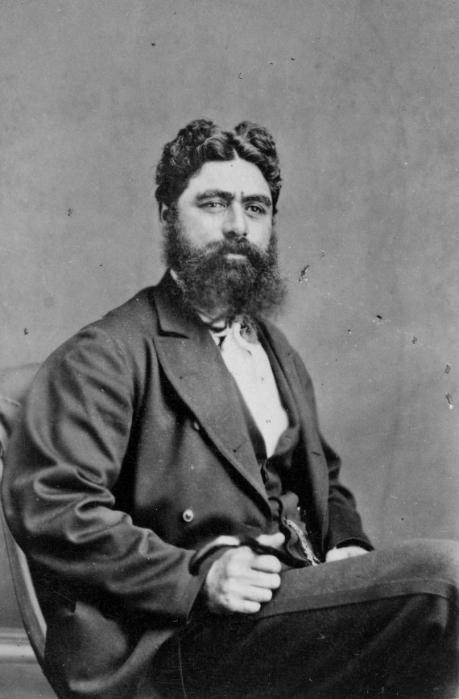
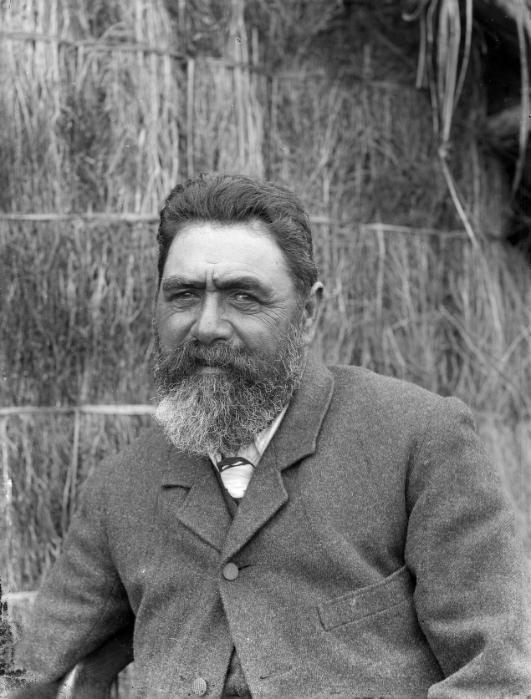
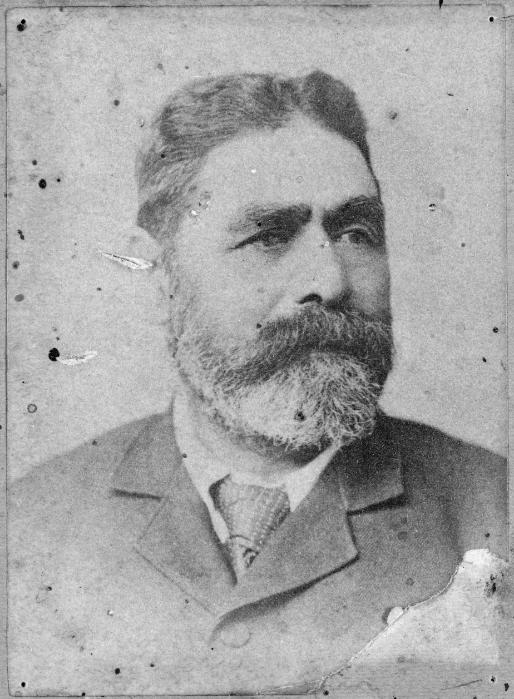
Gottfried Lindauer portrayed Parata at least twice. While in Wellington in 1877, he painted half-length portraits of Parata and his wife, Ūnaiki, which were commissioned as a pair. This late bust-length portrayal, painted sometime before 1901, is based on Parata’s parliamentary photographic portrait.
A number of Parata’s whānau and friends visited the Lindauer Art Gallery on Queen Street, including members of the House of Representatives Wī Pere, Hēnare Parata, Te Rongokahira Parata and Irihapeti Parata.
- Hohepa Solomon, 'Parata, Wiremu Te Kakakura ? - 1906', Dictionary of New Zealand Biography, updated 22 June 2007, accessed 2 March 2010.
- Judith Bassett and J.G.H Hannan, 'Prendergast, James 1826 - 1921', Dictionary of New Zealand Biography, updated 22 June 2007, accessed 2 March 2010.