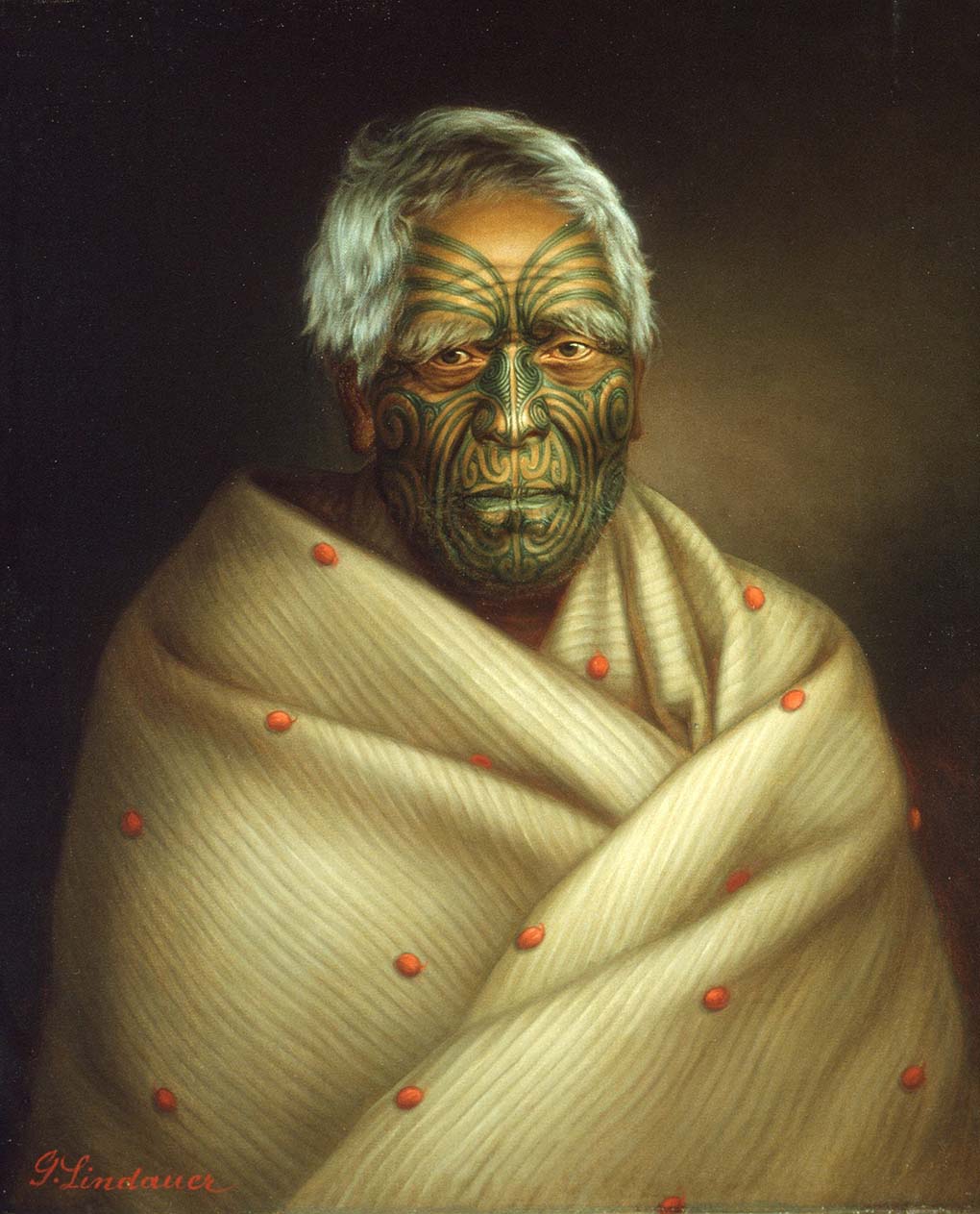
Paratene Te Manu
? – 1897Ngātiwai
- Date
- 1901 or before
- Medium
- oil on canvas
- Measurements
- 679 x 559 mm
- Other titles
- Paratene Te Manu, [title, 2026]Paratene te Manu, [1930 catalogue]Paratene te Manu, [Deed of gift, 1915]Paratene Te Manu, [1901 catalogue]Oil Painting of the Maori Chief Paratene te Manio [sic][copyright certificate, 1902]Chief Paratene te Manio, [Lindauer's inscribed title]
- Inscriptions
- Front, LL: G. LindauerBack, LC: Chief Paratene te Manio.
- Takiwā / region
- Te Tai Tokerau
- Credit line
- Auckland Art Gallery Toi o Tāmaki, gift of Mr H E Partridge, 1915
- Accession no.
- 1915/2/67
Paratene Te Manu was the son of Kau Te Awha of Ngāpuhi.
He was active during the New Zealand Musket Wars of the 1820s and, in his own account of his long life, recounted eight separate campaigns, noting the terrible loss of life that muskets enabled warring parties to inflict.
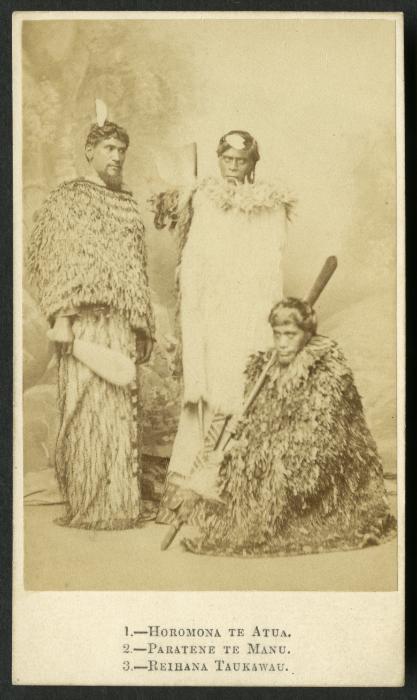
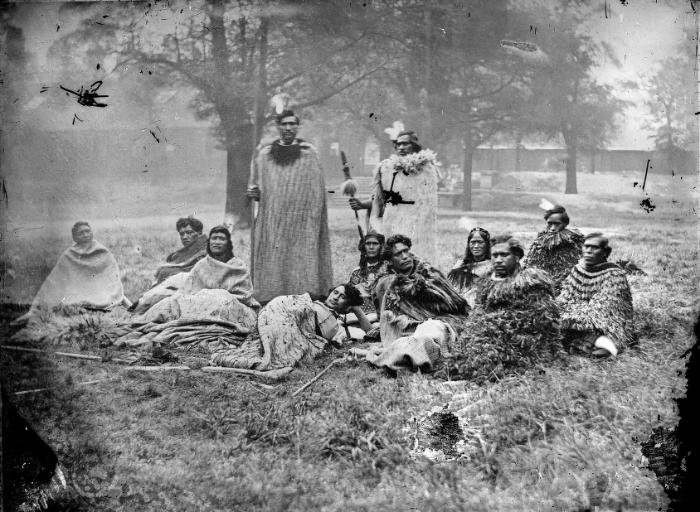
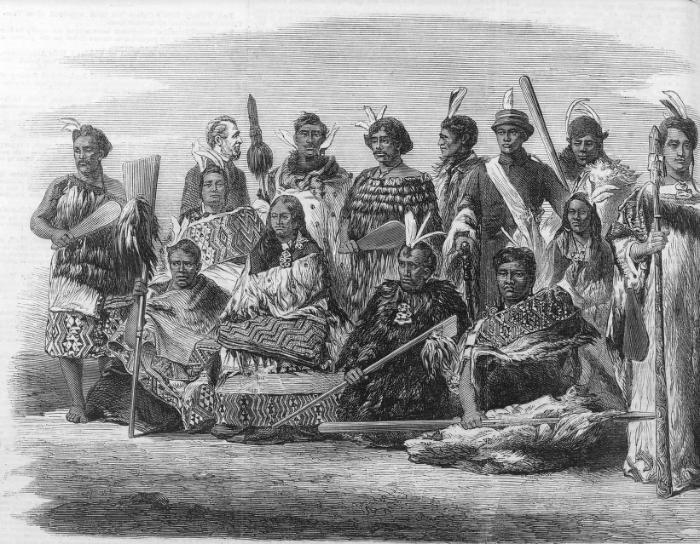
In 1863, Te Manu joined the ill-fated touring party of Māori which travelled to England with Wesleyan preacher William Jenkins which included Kamariera Te Hautākiri Wharepapa who Lindauer also painted.1 The party was required to travel in steerage and Te Manu described the notorious journey thus:
I had three shirts, two pairs trousers, one coat, one cloak, a summer coat and one pair of stockings. I had two blankets of my own and one I bought out of Jenkins’ money. Don’t ask me about the sheets for I had none. A pair of trousers was my pillow . . . None of our Englishmen came and had prayers with us, neither did any of our Pakehas read the Bible to us. We went to service when it was held on Sunday for the soldiers. Everyday I read prayers in Maori and read the Bible. I brought books with me. We were allowed by sufferance to walk on the people deck; it was objected to but we persisted.2
In England, Te Manu and other members of the group met with senior members of the government and royal family, including Queen Victoria herself at Osborne House on the Isle of Wight. Two of the party died on the return sailing.
In old age, Te Manu lived quietly among his hapū on Te Hauturu-o-Toi Little Barrier Island, which he, along with the other residents, agreed to sell to the Crown for the establishment of a bird sanctuary. A dispute over the agreed price and the reluctance of one family to leave led to an act of Parliament to conclude the purchase. In January 1896, the last of the island’s inhabitants were evicted. Paratene Te Manu died the following year at Ngunguru in Te Tai Tokerau Northland, reportedly at over 90 years of age.3
A photograph taken in Auckland in 1886 was the model for this Lindauer portrait. For the painting, however, Lindauer excluded a peacock tail feather that Te Manu wore in his hair and replaced his kaitaka aronui with a fine kaitaka ornamented with small red woollen pompoms. And rather than looking down, his eyes directly address the viewer. Te Manu’s elaborate mataora speaks of his years as a warrior.
Steven Oliver, ‘Pōmare, Hāre and Pōmare, Hariata’, Dictionary of New Zealand Biography, first published in 1990, Te Ara – the Encyclopedia of New Zealand, https://teara.govt.nz/en/biographies/1p21/pomare-hare, accessed 6 July 2023.
MS-Papers-0075-030, John White Papers, Alexander Turnbull Library, Wellington.
‘Death of an Old Identity’, Auckland Star, 12 January 1897, p 5.