Taonui Hīkaka
Ngāti Maniapoto
- Date
- c 1910
- Medium
- oil on canvas
- Measurements
- 625 x 525 mm
- Other titles
- Taonui Hikaka, [title, 2026]Taonui , [1930 catalogue]Taonui, [Deed of gift, 1915]Oil Painting Portrait of Chief Taonui, [copyright certificate, 1913]Chief Taonui, [Lindauer's inscribed title]
- Inscriptions
- Front, LR: G. LindauerBack, LC: Chief Taonui
- Takiwā / region
- Waikato-Maniapoto
- Credit line
- Auckland Art Gallery Toi o Tāmaki, gift of Mr H E Partridge, 1915
- Accession no.
- 1915/2/40
Taonui Hīkaka lived on the upper Mōkau River in Taranaki. He was probably born at Paripari (near present-day Te Kūiti) in the early 1840s. His father was also named Taonui Hīkaka (also known as Hīkaka) and belonged to Ngāti Rora, a hapū of Ngāti Maniapoto. His mother may have been Niapo of Ngāti Hia.
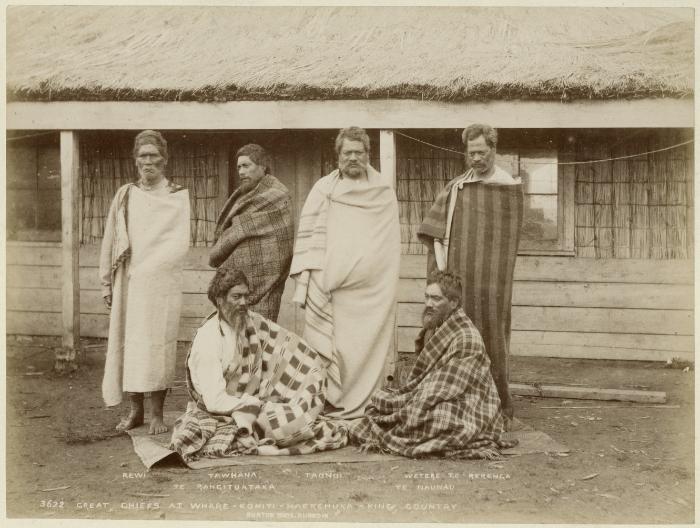
Hīkaka is believed to have had four brothers – Te Kurī (Ngāturi), Tanirau, Te Naunau Hīkaka and Tautau – and a sister, Te Rangituatahi, who married the French trader Louis Hetet.1
Hīkaka fought alongside his father, gaining a considerable reputation as a fighting leader. When his father died, Hīkaka assumed leadership over his people.2
Hīkaka is known to have protested against the Native Land Court. Conflicting value systems, an unfamiliar administrative process and sometimes unfair dealings often forced Māori into leasing and selling land. These pressures were complicated by political and philosophical differences between Ngāti Maniapoto and Waikato Tainui about how to retain tribal self-determination under the Kīngitanga.
Hīkaka died in 1892, aged about 50, and was survived by his wife, whose name is not remembered. They did not have any children.3
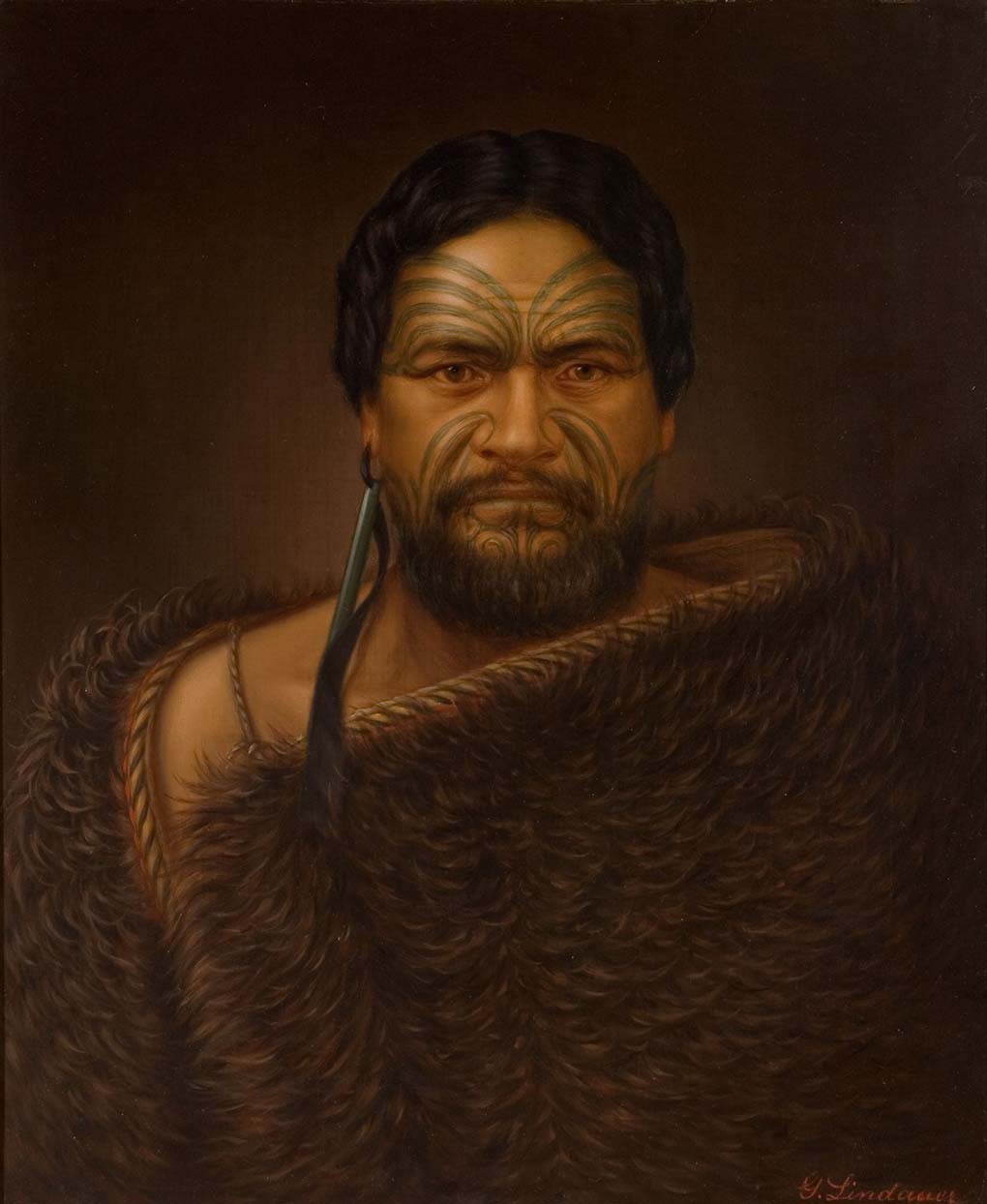
Lindauer portrays Hīkaka as a man of great presence. Dressed in a resplendent kahu kiwi and sporting a kuru pounamu that hangs from his right ear by a long piece of black ribbon, he looks every part a rangatira.
Hīkaka’s biographer suggests that a George French Angas watercolour of Hīkaka’s father might have been one of Lindauer’s sources for this painting; this seems highly unlikely however as the watercolour portrait was not included in Angas’s 1847 publication The New Zealanders Illustrated.4 There have also been suggestions that Taonui Hīkaka is the young chief being tattooed in Lindauer’s painting The Tohunga Tā Moko at Work.
Gary Scott, ‘Taonui Hīkaka’, Dictionary of New Zealand Biography, first published in 1993, Te Ara – the Encyclopedia of New Zealand, https://teara.govt.nz/en/biographies/2t8/taonui-hikaka, accessed 21 July 2023.
As above.
‘Death of Taonui’, Evening Post, 6 December 1892, p 3.
Angas’s original watercolour is in the collection of the South Australian Museum.George French Angas, 'Tatau. Youngest son of Taonui. Niapo. His wife. Taonui. Principal Chief of all Mokau. Kiahari Tribe. Oct 17. 1844', accession number: AA 8/7/32, https://www.samuseum.sa.gov.au/collection/archives/provenances/series/items/aa-8-7-32, accessed 12 August 2026. See also plate 35 in George French Angas, Angas's Portraits of the New Zealand Māori Painted in 1844 A.H. & A.W. Reed, 1972.