Wiremu Nēra Te Awaitaia
? – 1866Ngāti Mahanga, Ngāti Hauā
- Date
- c 1910
- Medium
- oil on canvas
- Measurements
- 625 x 522 mm
- Other titles
- Wiremu Nera Te Awaitaia, [title, 2026]Wiremu Nera te Awaitaia, [1930 catalogue]Wiremu Nera te Awaitaia, [Deed of gift, 1915]Painting Portrait of Chief "Wiremu Nera te Awaitaia", [copyright certificate, 1913]Chief Wiremu Nera Te Awaitaia, [Lindauer's inscribed title]
- Inscriptions
- Front, LR: G. LindauerBack, Chief Wiremu Nera Te Awaitaia
- Takiwā / region
- Waikato-Maniapoto
- Credit line
- Auckland Art Gallery Toi o Tāmaki, gift of Mr H E Partridge, 1915
- Accession no.
- 1915/2/59
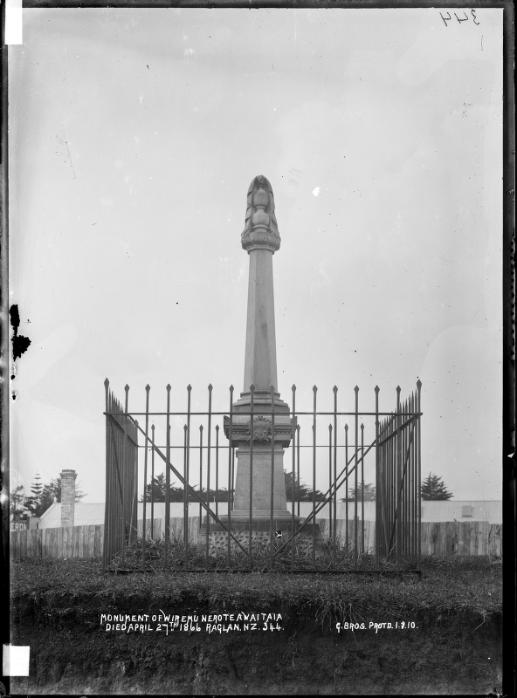
Wiremu Nēra Te Awaitaia is likely to have been born late in the 18th century. His mother was Purehina and his father Te Kata. Te Awaitaia lived on the Waipā River and is known to have had nine wives, among them Rangihikitanga, Hinu, Kararaina, Pirihira and Raimipaha.1
He led war partiesto Whāingaroa Raglan and Kāwhia, alongside Pōtatau Te Wherowhero, the first Māori king, and Te Waharoa of Ngāti Hauā, the father of kingmaker Wiremu Tāmihana Tarapīpipi Te Waharoa.
Te Awaitaia came under the influence of the Wesleyan missionary William White while the latter was setting up mission stations along the Kāwhia coast.2 Te Awaitaia became patron of the Kāwhia station, which was built on Ngāti Māhanga land, and is credited with converting many Ngāti Māhanga ki Whāingaroa Māori to Christianity. He was baptised at Kāwhia by the resident Wesleyan missionary, James Wallis, on 17 January 1836 and took the name Wiremu Nēra (William Naylor). Following missionary teaching, he gave up eight of his nine wives.
Te Awaitaia signed Te Tiriti o Waitangi on 11 April 1840 when it was brought to Whāingaroa Raglan by the missionary Robert Maunsell.3
He acted as an intermediary between Pōtatau Te Wherowhero and the Crown before and after the 1863 invasion of the Waikato by British forces, though chose not to join the Kīngitanga. His decision seems to have been related to a commitment to securing the future of his people through coexistence with settlers and the Crown.
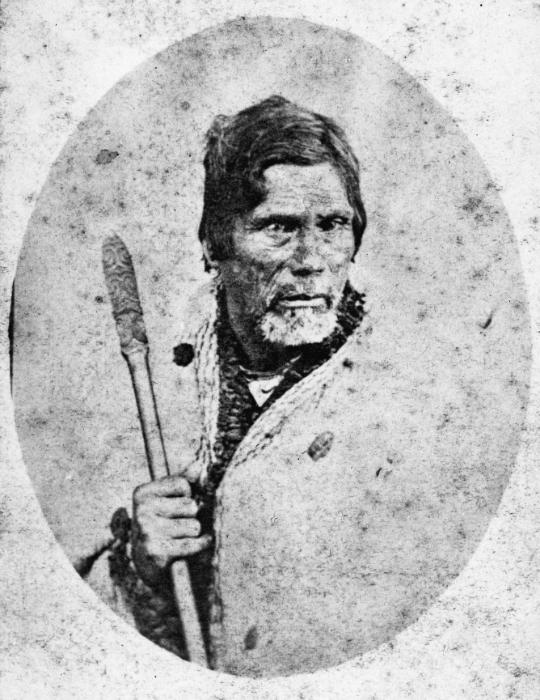
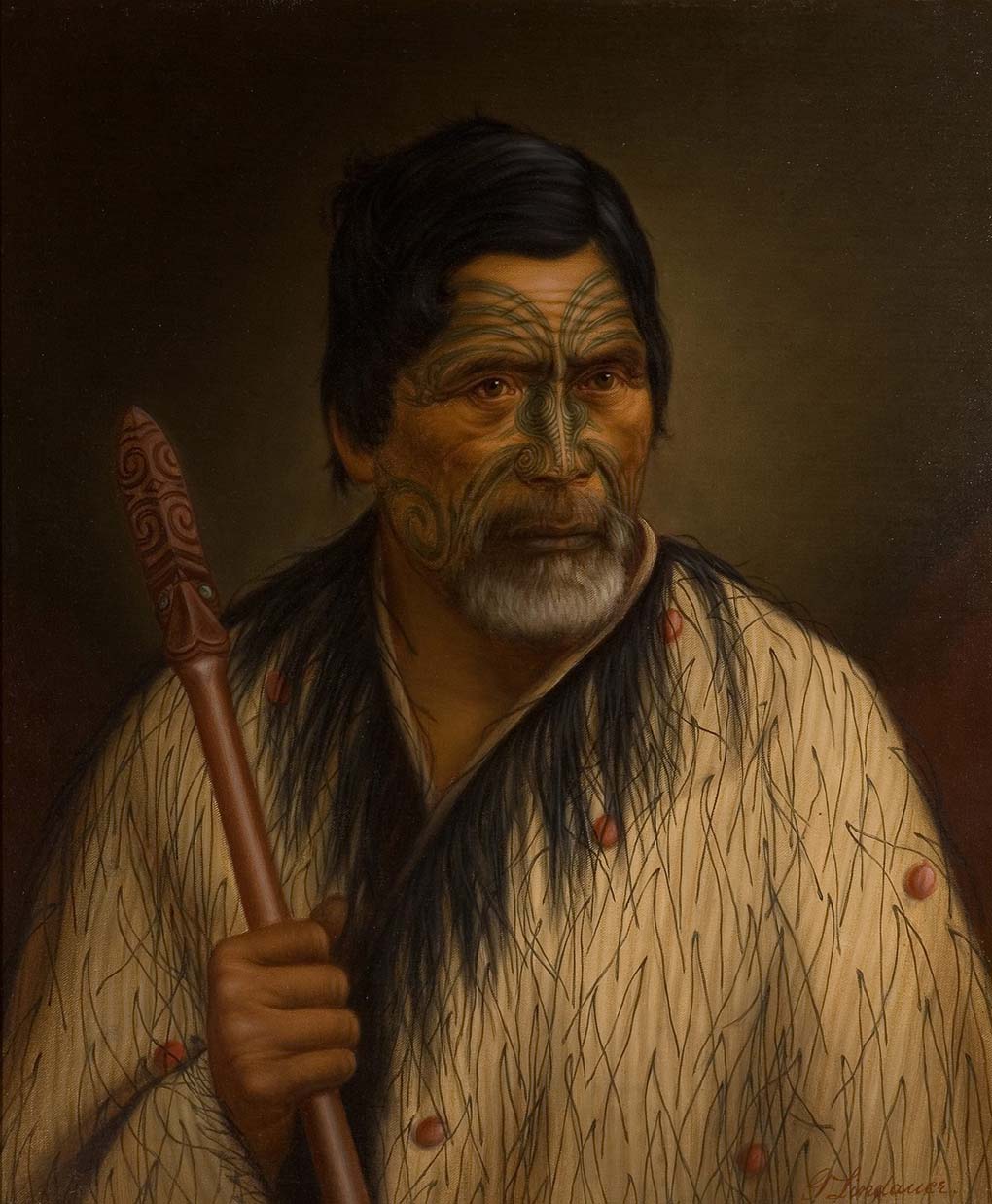
Lindauer’s portrait of Te Awaitaia is based on an 1886 photograph by Auckland photographer Hartley Webster and closely follows the source image. As he often did, Lindauer portrays his subject as a fighting rangatira with a chiefly garment around his shoulders, in this instance a korowai hukahuka, and ornate mataora. The taiaha held firmly in his right hand is not a prop; it appeared in the photograph and indeed belonged to Te Awaitaia. It was donated to the Raglan Museum in 1957 by a descendant of James Wallis.
Gary Scott, ‘Te Awa-i-taia, Wiremu Nēra’, Dictionary of New Zealand Biography, first published in 1990, Te Ara – the Encyclopedia of New Zealand, https://teara.govt.nz/en/biographies/1t26/te-awa-i-taia-wiremu-nera, accessed 26 July 2023.
M B Gittos, ‘White, William’, Dictionary of New Zealand Biography, first published in 1990, Te Ara – the Encyclopedia of New Zealand, https://teara.govt.nz/en/biographies/1w19/white-william, accessed 26 July 2023.
John Wilson, ‘Nation and government – The origins of nationhood’, Te Ara – the Encyclopedia of New Zealand, http://www.teara.govt.nz/en/nation-and-government/page-1, accessed 26 July 2023.